Considering Catholicism from a Vatican perspective
I want to share with you a valuable resource for understanding Roman Catholicism at the top levels: Leonardo De Chirico's Vatican Files.
Slovenia is traditionally a Roman Catholic culture. Due to Slovenia's communist history and the rise of the new-atheists in the university system, many younger Slovenes would claim to be atheist. Yet the majority of people would say still they are members of the Catholic church (and I suspect that their attendance would really stretch a normal definition of the word 'member').
Consequently, we consider it to be important to know and understand the Catholic culture if we are going to proclaim Jesus Christ in Slovenia. We have found the trick here is that every person has a very different perception of their Catholic culture. One person you meet may be very critical of the RC church from their experiences of it, but they'd never consider leaving it. Another person you meet may have a great desire to share their RC faith with others. Another person may be fascinated by the spiritual (or rather, political) situation in Rome. Another might be somewhat indifferent to Catholic traditions, desire to read the Bible with you, and even visit other churches with the full knowledge they're not RC churches. Once you start adding in people's different understandings of practices, different definitions of biblical terms, life experiences, and so on, then you really have to view every person as unique and placed by God in their own context (1 Cor 7:17-24). I've learnt boxing people in neat categories just causes frustration.
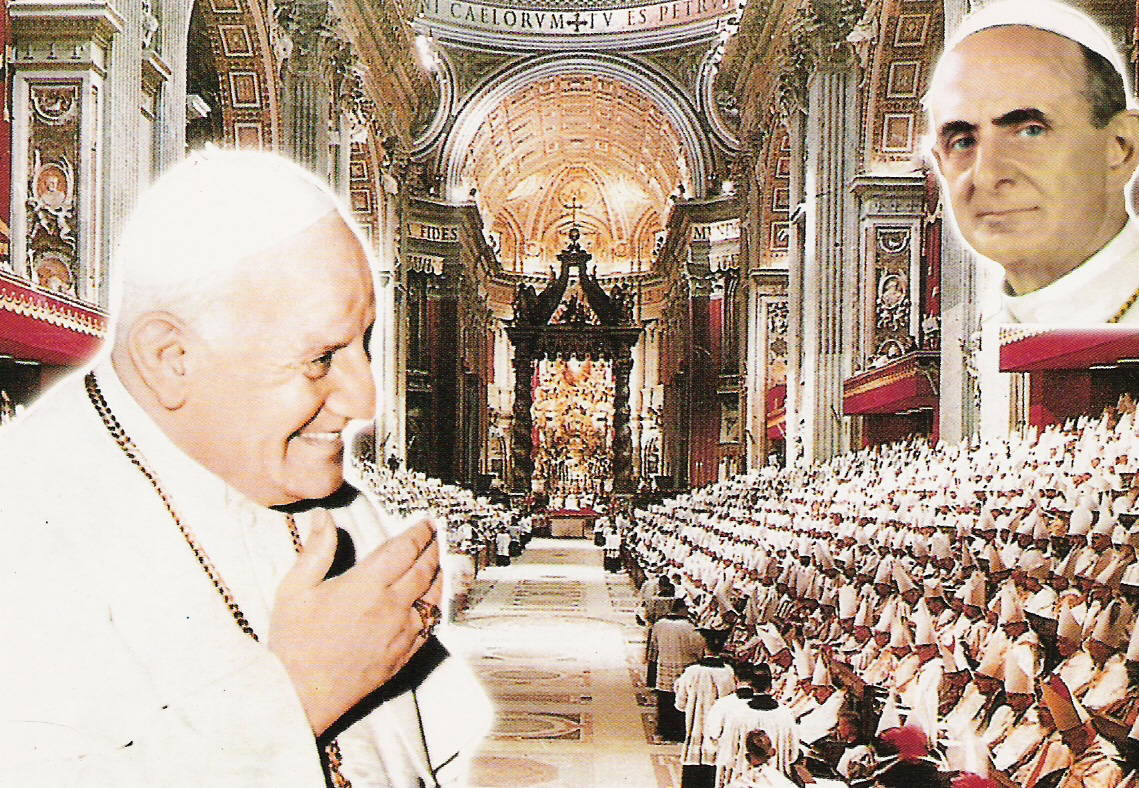 However, I have also found that I do not want to be ignorant of what the RC church is doing and thinking at the top levels. For example, although Vatican II was 50 years ago, it has certainly impacted some Slovenes in their view to the Bible. And to a lot of Slovene's disgust, the RC church tries to be very influential in Slovenian politics. While Slovenes may not be regularly attending church, the RC church will still have some influence on people. So it is worthwhile tracking what they're thinking and doing.
This is where Leonardo De Chirico's Vatican Files are very helpful. Each month Leonardo briefly address an event, issue, or theological concern in the Vatican. Although these things will have little immediate impact on Slovenes, these briefings are helping me to understand Catholicism better. Rather than me telling you about them , here is the Vatican File from March 2012:
Vatican files n. 34
A Vatican Exhibition on the History of the Bible, with Some Blind Spots
by Leonardo De Chirico
If you visit St. Peter’s square before the 15th of April an unexpected and interesting attraction will be waiting for you. In the Braccio di Carlo Magno (i.e. Charlemagne wing) next to St. Peter’s basilica under Bernini’s colonnade on the right-hand side of the square, an exhibition entitled Verbum Domini (i.e. the Word of the Lord) will call for your attention. The colorful Italian-English brochure that will be put in your hands invites youto “Take a walk through the history of the Bible in this private collection of rare biblical texts and objects of enormous importance”. Admission is free.
Verbum Dominiis also the title of the 2010 Post-Synodical Apostolic Exhortation by Benedict XVI in which the Pope summarized the present-day Roman Catholic interpretation of the Word of God, i.e. a living Tradition which includes the Bible and which the Magisterium of the Church interprets faithfully. The connection between the papal text and the exhibition is clear and signalsthe intent to underline the importance of this topic.
1. A Fascinating Exhibition …
The exhibit was put together from private collections from around the world, mainly from the Green Collection – the largest private collection in the world of rare biblical texts and documents. Displayed in 8 galleries, 152 rare biblical texts and artifacts showcase the history of the Bible: from ancient scrolls to copied texts to printed volumes of the XVII century; from Hebrew to Greek to Latin and other vernacular languages; from Qumran to Europe to the rest of the world.
Here are some of the highlights of the exhibition:
- Codex Climaci Rescriptus—one of the earliest-surviving, near-complete Bibles containing the most extensive early biblical texts in Jesus’ household language of Palestinian Aramaic.
- Scrolls
- The Jeselsohn Stone or Gabriel’s revelation, a three foot tall, 150 pound sandstone tablet discovered near the Dead Sea in Jordan containing 87 lines of first century BCE Hebrew text.
- The Gutenberg Bible Book of Romans, the first book printed in the West with moveable typeset printing.
- Complutensian Polyglot, the first multilingual edition of the entire Bible.
In the first gallery, there are also two half-burnt scrolls of the Torah that escaped from total destruction attempted by theNazis and Stalinists. They are a moving testimony to the on-going battle that surrounds the Bible.
2. The Inter-faith and Ecumenical Intentions
The exhibition has an ambitious goal. In the organizers’ words, “the Verbum Domini, specifically, is a way of celebrating the interfaith love that many traditions have for the Bible, and we believe that is a way of sharing that with the world”. Jewish, Eastern Orthodox, Catholic, and Protestant traditions are all represented in it. From the Vatican side, here is what Cardinal Farina, Prefect of the Vatican Library, said about the exhibition at the inauguration: “The title Verbum Dominiwas chosen to highlight the ecumenical conception of this exhibition, and also its venue here at the Vatican. The origin of the documents, the prevalence of the Green Collection, and those from other collections highlight the participation of the Christian denominations. Because in reality, the Bible unites, even though so many think it does the opposite, it’s actually a very strong point of union”.
Fair enough. But why is it that on the brochure that is distributed at the entrance one reads that “this exhibit celebrates the dramatic story of the Catholic contribution to the most-banned, most-debated, best-selling book of all time”?Has the broad contribution to the history of the Bible become a Catholic contribution alone? Perhaps this is a mistake madeby a zealous editor, but it reflects the provincial culture that each institution (Vatican included) can fall prey to.
3. The Missing Story
The most puzzling point, however, is what the exhibition does not say about the history of the Bible. The unsaid is as telling as what is said. The whole trajectory of the suggested narrative is “linear” to the point of being historically untenable. The given picture is that the “modern” translations of the Bible in vernacular languages spread out across the Christian spectrum and that each sector of the Christian church championed their diffusion.
The reality is very different. Since the XII century the Roman Church has in various ways banned the circulation of Bibles in the peoples’ languages. These bans lead to the compilation of the 1559 Index of Librorum Prohibitorum (Index of Prohibited Books) by Pope Paul IV where Bible translations were among the forbidden books. The vehement attack by the Tridentine Church towards the translations of the Bible allowed historian Gigliola Fragnito to speak of “the Bible on stake” to describe what happened up to the XVII century in countries dominated by the Catholic Church[1]. That ban lasted for centuries. The true story, therefore, is not the mild, peaceful, ecumenical account of the Verbum Domini exhibition.
The Bible is a shared heritage for Christians and this truth is beyond dispute. Therefore historical exhibitions on the Bible should aim at telling the story in a fair and accurate way rather than pursuing wishful ecumenical readings which are partial, selective, and therefore misguiding.
[Copyright 2012 Leonardo De Chirico. Used by permission]
If you would like to regularly receive these briefings, send an email to Leonardo (leonardo.dechirico [at] ifeditalia.org).
Again, you can't box every Roman Catholic or Slovene into a neat category of agreeing or disagreeing to what is happening in Rome. But knowing what the top hierarchy is thinking and doing may be helpful to understanding their culture better.
[1]Gigliola Fragnito, La Bibbia al rogo. La censura ecclesiastica e i volgarizzamenti della Scrittura, 1471-1605 (Bologna: il Mulino, 1997). More recently the same scholar edited the volume Church, Censorship and Culture in Early Modern Italy(Cambridge: Cambridge University Press, 2001).