European Leadership Forum 2012 Conference Review
What is the greatest need for Christianity in Europe at this present time?
|
|
|
|
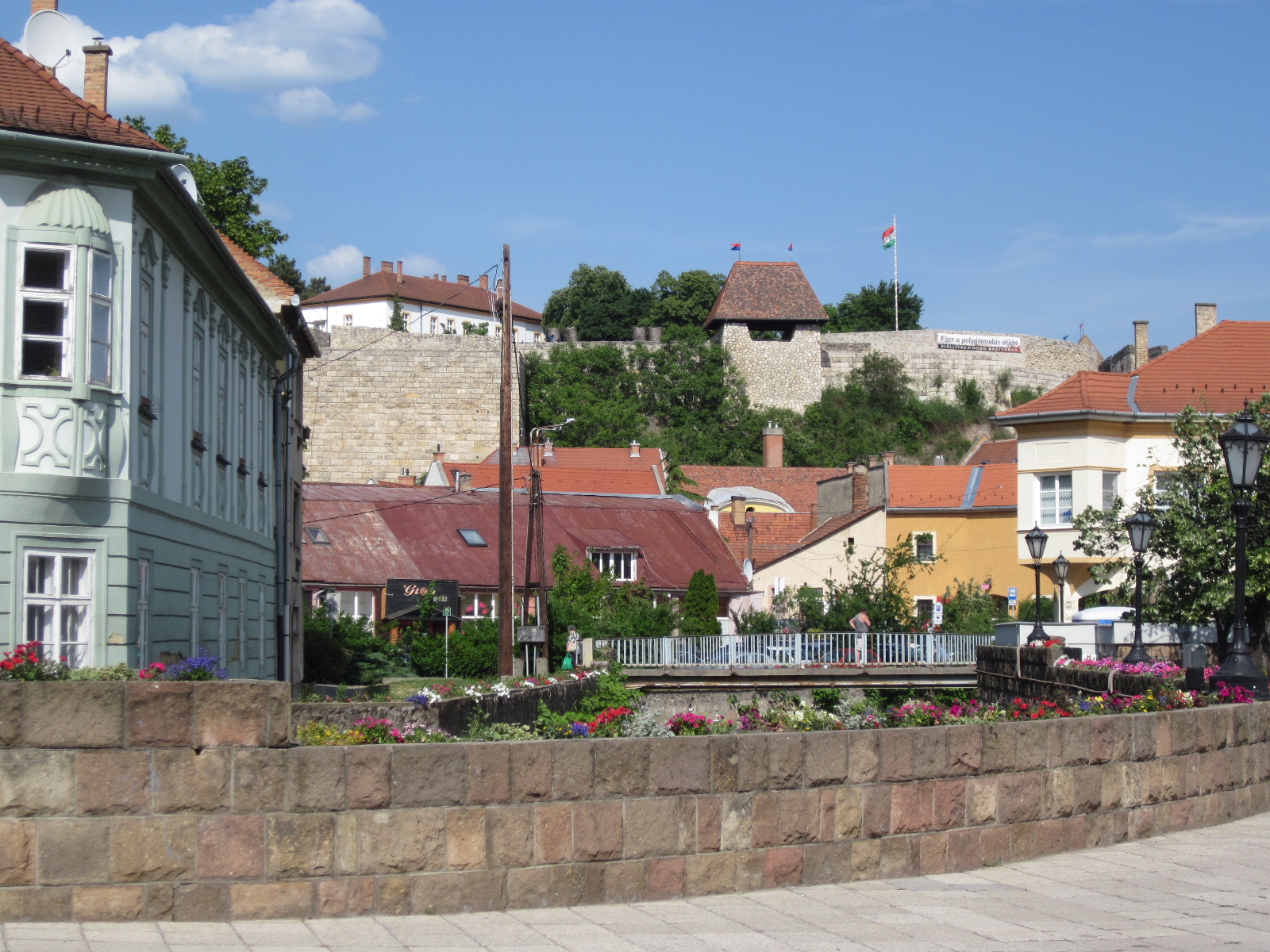
Eger's castle |
That is a pretty broad question to ask, but it was in the back of my mind as I went to the 2012 European Leadership Forum (ELF) conference in Eger, Hungary. In order to make the most of this conference, I had considered this broad question as well as what are some of my personal and the Slovenian issues we face as Christians, and how such a conference could aid in answering these things.
The Forum is clear on what its is trying to achieve, not just at a conference, but throughout the year through their networks (see the conference website for a list of the Forum's goals). Our work in Slovenia would fit into several of their categories. For example, we all want to present the gospel confidently, lovingly, and persuasively. Likewise, we want to find efficient and effective strategies to reach into Slovenian culture with the gospel. As a pastor, I want to develop my gifts and abilities in teaching and pastoring. At a conference there is obviously an opportunity to have a concentrated time of working through these aims and organising leaders to achieve these goals.
So let me reflect upon how the conference went about fulfilling these aims and how they are seeking to answer the needs of God's church and gospel work in Europe. Firstly, some background on the participants and what actually happened.
The ELF Conference
|
|
|
Main Sessions |
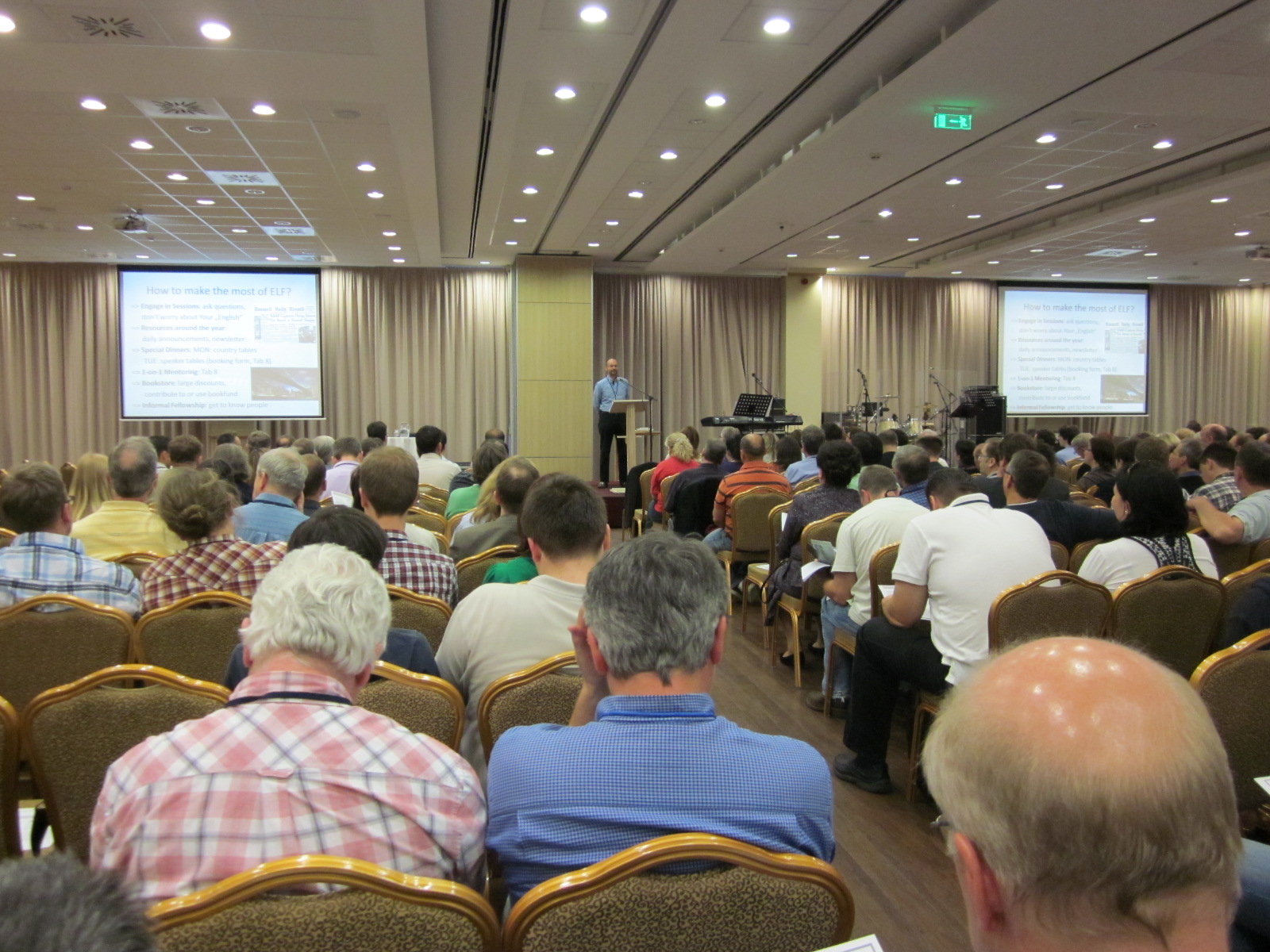
This year the conference hosted over 600 participants from countries all around Europe. The main speakers for the morning and evening talks came from England and the USA, and featured influential Christians like John Lennox (mathematics professor), Oz Guiness (influential social commentator), and Lindsay Brown (of the IFES Gen Sec and Lusanne fame). The various sessions were lead by Europeans like Stefan Gustavsson (who did some debates in Slovenia at the universities in ~2009/10). There was also a large group of Americans at the conference who basically served everyone through ushering, recording all talks and sessions, videoing all talks and sessions, organising feedback forms, running an information desk and book shop, etc.
After a large buffet breakfast (I promise I ate sensibly!), John Lennox gave Bible talks on the book of Daniel (you can find a large collection of similar ELF 2011 talks here and I believe the 2012 talks are now available). Then we all split into various network groups until lunch time. I attended the Bible teachers and Preachers Network strand for first time participants. There are about 18 different networks from University Evangelism, to church planting, to Apologetics, to Scientist and Theologian strands.
After lunch there were two workshop sessions each day which covered a large range of topics. I suspect some of these topics were making specific strand information available to a wider audience, for example, preaching techniques or apologetic issues. However these sessions were mostly new material and covered topics from recent archeology discoveries to family issues to numerous other passions and concerns from a Christian perspective.
Each evening sessions was primarily a talk by different speakers on different topics, but all were probably of concern to European leaders e.g. families, freedom, pressure and stress in life, and mission. One evening was an arts/culture appreciation night.
So how did the ELF conference help me and help towards addressing gospel needs in Slovenia? From my perspective (which I have clarified below in an Appendix), Slovenia needs churches which are lead by men who are able to teach Scripture, who are able to proclaim Jesus Christ as Lord, and who are able to equip Christians with Scripture so that can also make disciples.
An Assessment
Firstly, the Bible Teachers and Preachers network strand was fantastic (although the final day was a bit wasted and we didn't finish all our course material). The main training we did each morning was how to read a Bible passage in its context (exegesis), understand what it meant for its original audience then understanding what the passage means for us (interpretation), and how it applies to us (application). I have covered and even taught such material before on numerous occasions. Am I bored with it? Never! This is exactly the type of training I need to be continually reminded of, especially if I am going to be a faithful Bible teacher and preacher. I need to help people understand God's Word, to allow God to speak to people, rather than using the Bible for proof-texting or as a spring-board. That is, I need to be reminded and shown how not to use Scripture to tell people what I want them to hear, and to show from Scripture what God is saying. My understanding of God's Word calls me to be an expository preacher and anything less is not evangelical.
|
|
|
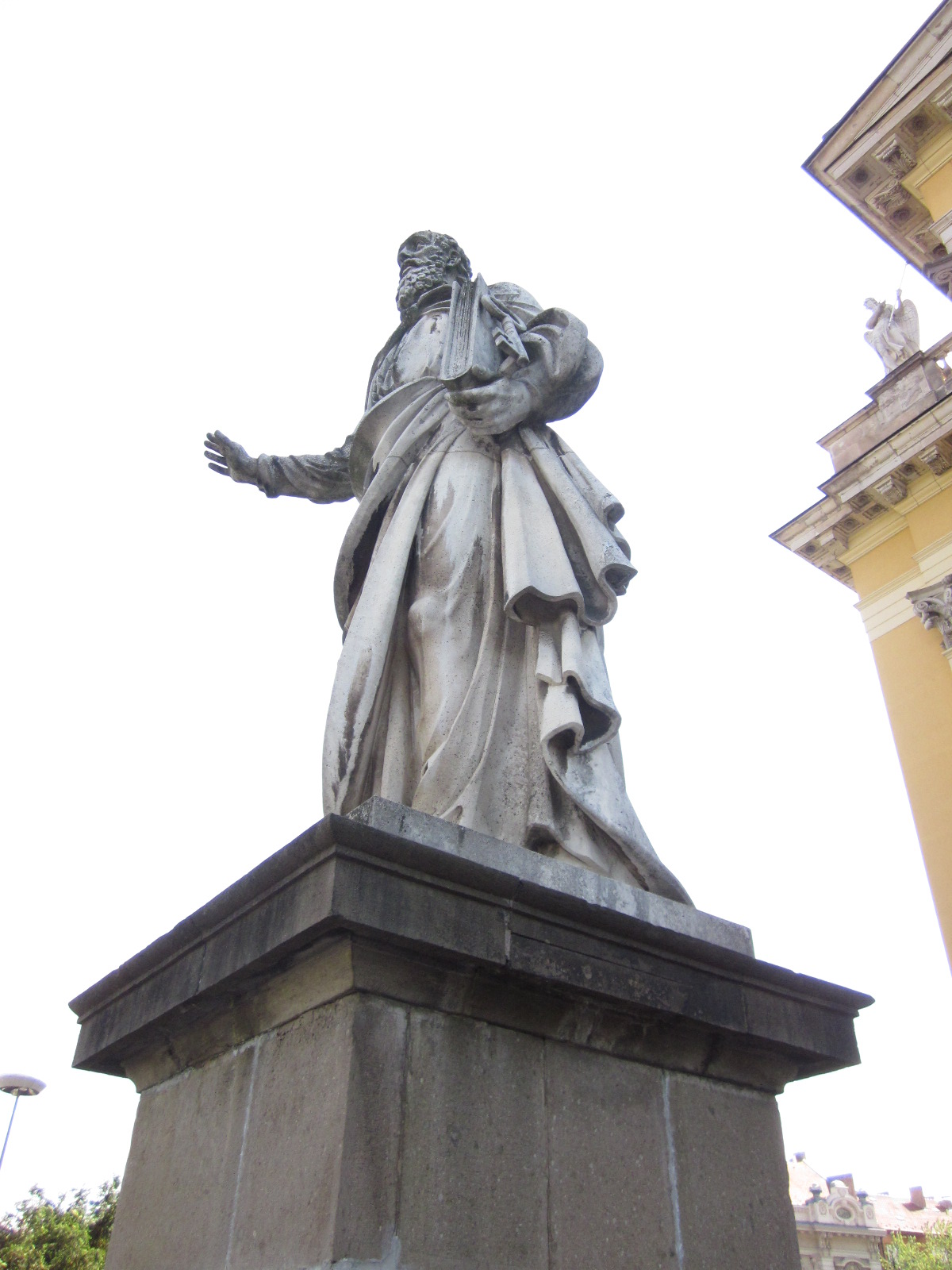
Statue of Apostle Peter outside Eger Cathedral |
Unfortunately this strand was not particularly good for networking. The other men and women in the strand are working in their own contexts (e.g. churches) throughout Europe. Likewise for the men teaching the material. I hope in the future that similar training from experienced pastors will be run for other Slovene pastors through working with organisations like the Langham Partnership. I'm praying that God will be raising up godly, evangelical Slovene pastors with whom we can network and utilise such training.
Furthermore, I think it is unfortunate that the methods and material we looked at during the Bible Teachers and Preachers network was not illustrated in the main sessions of the conference. Consider John Lennox's studies from Daniel. His talks were excellent as far as illustrating how God speaks to us now through his Word, showing us how we can face similar opposition from society as its wants to change our identity, values, worship of God, and so on. A whole first talk on the structure of Daniel was probably excessive, but it showed us the need to understand all passages in their literary context. And John's teaching against liberal theology was excellent, showing how God used prophecy to tell Daniel very specifically what would happen in the future.
However, John seemed extremely hesitant to mention Jesus Christ. Often it seemed John held some sort of dispensational perspective that didn't allow him to see Jesus Christ as the fulfillment of the prophecies (as per, say, Luke 24:26-27, 44-49). The final talk ended with a very powerful call to remain faithful and know the Scriptures, but I still can't see from the passages he was working on how he came to this application. Powerful and right, but it was more John's message and passion than God speaking to us from Daniel. The evening sessions were interesting, however I feel they were a lost opportunity to feed and encourage us even more in the Scriptures. It seemed there was enough opportunity to hear these speakers during other afternoon sessions, so I am unsure the reasoning for the general topics covered during the evening times.
Although the question "what is the greatest need..." is probably not the best to ask, it is helpful for considering how we should use our limited time, energy and resources (I am also tempted to say that the word 'greatest' in the question probably misleads us). I think it is vital for God's people in Slovenia and Europe, that we have trained and mature pastors and teachers, who are clearly teaching what God is saying in Scripture, so that Slovene Christians (and Europeans) are equipped for disciple making and serving others. Such pastors and teachers could work in numerous serving contexts (churches, universities, amongst children, etc). The ELF conference was helpful for clarifying this to me, however the whole Forum is so diverse, that 'my greatest need' is lost amongst all the other issues in Europe. However I personally found many talks and sessions very encouraging and continue to pray and work towards the spread of the gospel of Jesus Christ and growth of God's people through the clear explanation and reading of Scripture.
So what would you consider the greatest needs of Europe?
Appendix: The Criteria for my Assessment
It is probably helpful for me to clarify my criteria for assessing such a conference. Some of this will be implicit and other parts it will be helpful to explain. For example, I cannot speak about everything at the conference because I didn't hear everything. Furthermore I cannot comment on all the network strands because I didn't attend them. Consequently, a large percentage of the conference is beyond my assessment. Likewise, the conference was my first major exposure to ELF, so I am well aware I do not have a broad understanding of all parts of ELF.
Before the conference, I had thought that I should approach the conference as "an assistant missionary pastor of REC" and "with a concern for God's church in Slovenia". So my initial focus was seminars which would help me grow as a pastor (including personal life, family, training as a pastor, etc.), rather than considering all areas of ministry in Slovenia (e.g. universities, children, church planting, etc). As a missionary assistant, I was concerned that our Slovenian Pastor, who also was attending the conference, was being trained and equipped as a pastor. So we chatted a lot about what we heard and our impressions of the teaching. Furthermore I wanted to attend seminars which helped train me in leading and serving the people of REC (our church). Because ELF has a primary strategy of networking with other Christian leaders, I also considered how we could build God's church in Slovenia (again, from a pastoral perspective).
|
|
|
Eger Cathedral (or courthouse?) - I like the statue of the Apostle Paul |

To consider what God is doing throughout the world should also be clarified, because people tend to approach this differently depending on their 'church tradition'. My presupposition is that God is continually working by his Holy Spirit as the news about Jesus Christ is proclaimed. The 'gospel' is this message about Jesus, often called the Word of God. The Bible is also called the Word of God, because foundationally it is in the Bible that God and his gospel about Jesus is revealed. So Scripture is everything necessary to knowing and growing as either a non-Christian or a Christian.
Consequently, this work of God through Bible explanation and gospel proclamation both calls non-Christians to trust in Jesus as their Lord and Saviour, and it builds Christians in faith in and obedience to Jesus Christ. So in my mind, to be "Evangelical" is to be of a tradition which has a thoroughly biblical gospel - a gospel completely informed by Scripture, and which allows God to speak to its hearers. God delights in his people proclaiming this message and teaching others so that they can serve God in other ways.
Note: I would love to add lots of Bible verses to this section, but this post has blown out too much already.
[This blog has been reproduced from another blog report I produced for our church.]