ETE trip to Chivay, Tisco, & Cota Cota

11 Oct 2023

Now that the winter chill is retreating, trips out in the sierra are possible once again.  Not even the ETE (Educación Teológica por Extensión) diehards Roberto and René want to do trips during the winter, and the students are certainly happy to stay closer to home.  The streams freeze over, and while there isn't much snow (that falls mainly during the warmer wet season, December to February), it's just bone cold.

A couple of weeks ago Ben and I went to Chivay (about 3 hours from Arequipa along sealed highways) for one of the ETE meetings.  Not many students attended this time; it can be a bit hit-and-miss, as often the students get saddled with last minute family obligations, farming responsibilities, or even have to attend to community work organised by their local alcalde (village leader).  And when the alcalde pronounces that it will be a weekend of working on the local roads, for example, then everyone has to drop whatever else they're doing, and they all head out -- husbands, wives, children, the lot! -- to work on the roads.  Shovels, rakes, baskets for shifting gravel and earth, and babies bundled on the backs of the mothers.  That's how public works get done in many of the villages of the campo (country areas) in Peru.

Anyway, by Saturday afternoon only about 12 or so students had managed to turn up, but that was all that René needed to get the progam happening.  After organising the dates and locations for some of next year's classes, René got a good class exercise going: asking the students to form groups of 3 or so, they had to study Matthew 16:13-23 -- the episode where Peter confesses Jesus as the Christ (Messiah), then Jesus declares that Peter will be the rock on which the church is built, but finally Jesus has to rebuke Peter for his refusal to accept that Jesus must suffer and die in Jerusalem.  Their task was to decide what the text was saying in its context, and then prepare a brief outline of how they would teach from the passage, and finally each group reported back to the whole class to explain and justify their conclusions.

Above: a number of the church people presenting a short play on how we could better prioritise our time.  Various social media platforms were presented as thieves of time that could be spent more profitably for the cause of the gospel.  Some problems are the same no matter where you live in the world!

Of course, for many Protestant Christians here in Peru, this text in Matthew is often seen as 'Catholic' text for establishing Peter as the first pope -- and as such, it's a text they tend to skip over or avoid altogether.  Yet, whatever our Christian denomination or persuasion, the text of the Bible is simply the text of the Bible, and we need to read it as such without fear nor favour.  René, you cunning strategist!

Ben and I each joined different groups, and our role was to help the students ask questions (because good questions are like keys which unlock meaning) and consider a text they weren't that used to thinking about.  We had to be careful not to push our own views of the text, but rather let the students do the work.  And work they did!  With a bit of prompting and encouragement they started to take in the wider context, to think about Jesus' purposes as the Christ, and what Peter and the disciples were thinking (or not thinking, as the case may be).  After about 30 minutes' discussion and pondering, the students reported back and, as usually happens when people study a the text on its own terms, each group came up with quite similar ways of summarising the text and its parts, and how they would teach from it.  Good job!

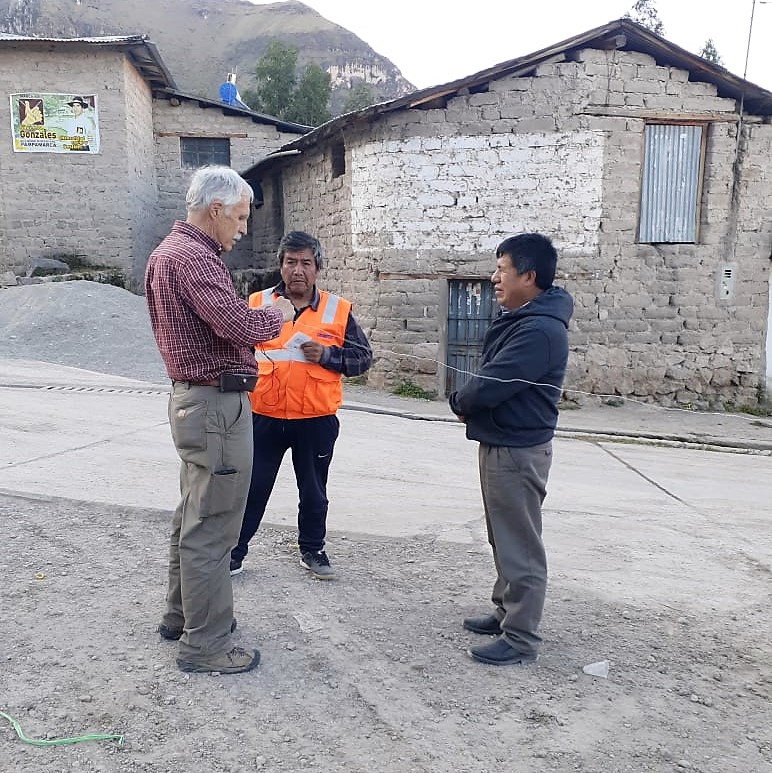
Above: René and Ben having a chat.  Notice how the church has plenty of warm cushions and woven coverings on the benches, and blankets available for people to use during the service.

On Sunday morning René and I left Ben in Chivay (he'd taken his own 4WD), and we headed north to Cota Cota via Tisco to pick up Benigno, his wife and a co-worker.  They had just spent a month in Cota Cota running classes and exams on behalf of IBSA, one of the Bible colleges in Arequipa.  Then it was back to Callalli (pronounced 'cul-yali') where we dropped off René who wanted to catch up with some believers there.

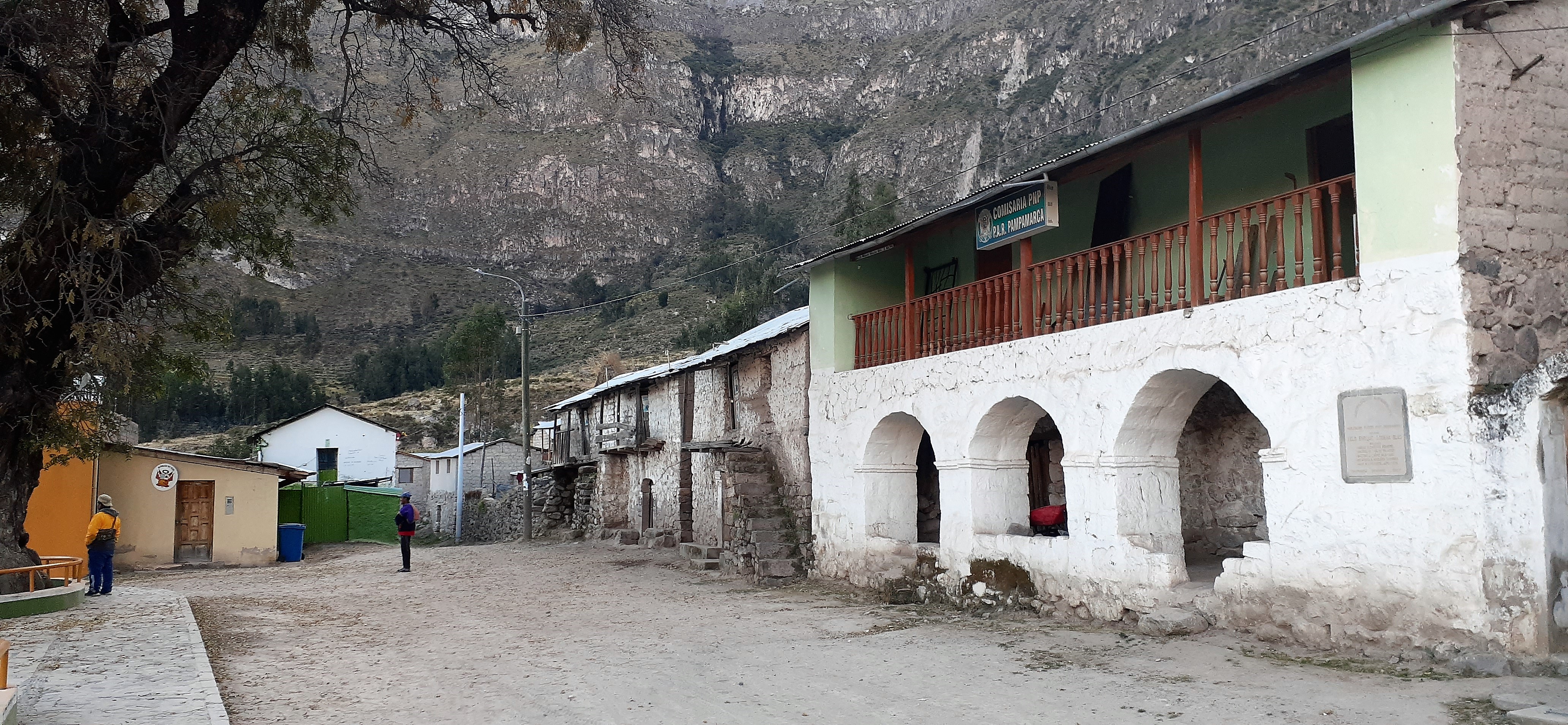
Above: 180 degree streetscape in Tisco.  The altitude, the silence... it's hard to beat.

One excellent thing about this trip was that, as we travelled, René and I got to spend a few hours chewing over the challenges of pastoral training and support in these areas.  I told him that I thought his class exercise was top-shelf: in the one exercise the students had got to think about and practice (i) reading the text in its context in Matthew, (ii) the process of interpreting the text, (iii) how the text applied to their own situation, and (iv) how they might structure a sermon or talk based on the text.  This really is the bread and butter of church pastoral work.  As René and I talked, we came up with a number of future possibilities for encouraging and supporting church pastors, teachers and elders in the sierra.  To quote Big Kev, I'm excited!

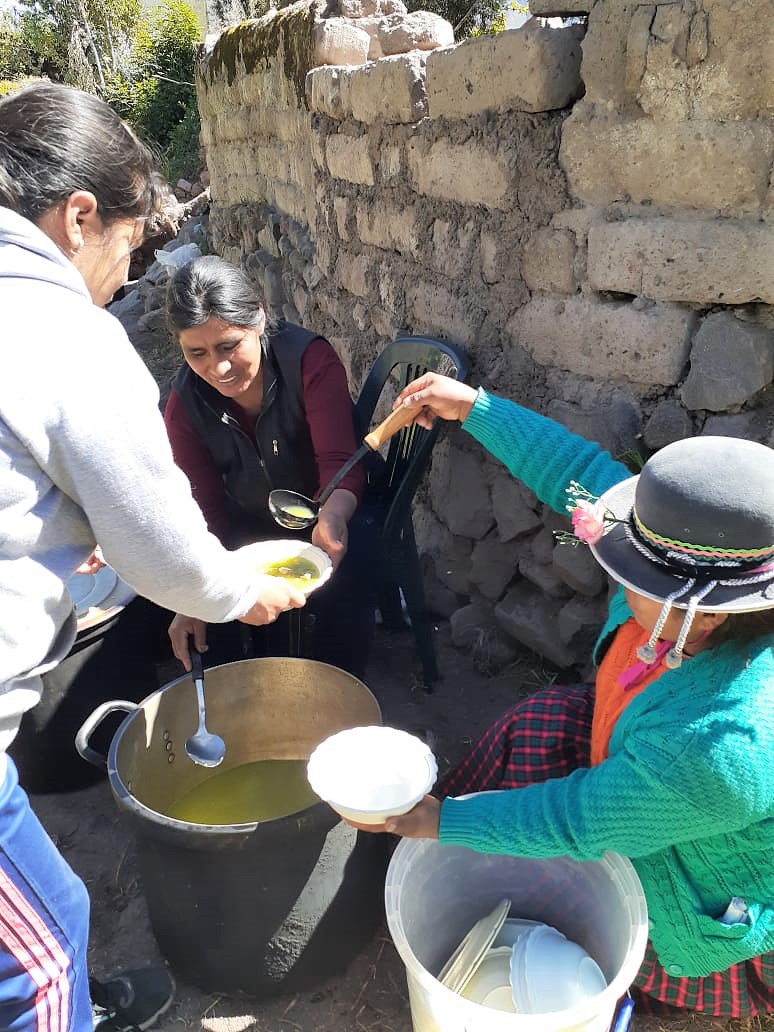
Above: For some reason Ben is looking happy in a rather protracted planning session (dates and localities of future ETE workshops).  It would be easy to complain that these sessions take far too long, but the Quechua way is to discuss and run absolutely everything past absolutely everyone, so that everyone feels like they own the decision.  And that means the students are far more likely to turn up when the time for the workshop arrives, of course ;-)

It was on the way home after dropping René off in Callalli that we came across an utterly destroyed vehicle smashed into an embankment.  Ben (who had headed back from Chivay earlier in the day) later told me that when he went past there had been a huge crowd gathered and a few very badly injured (if not dead) people had been pulled out.  Accidents like these are so common in the Andes; some people drive without any sense of fear or responsibility, overtaking at full speed around blind curves and putting everyone in danger.   Trucks reguarly engage in this deadly game of roulette, too.   We came around one bend on the way to Chivay and were greeted with two trucks and one car, all 3-abreast coming around the bend; there was nothing for me to do but hit the brakes, hit the horn, flash the lights, and squeeze over as far to the right as we could.  You really do have to be on your toes.  It's such a shame, because most of the Andean highways are superbly engineered and would be considered safe roads anywhere else, but the impatient and reckless driving habits of some of the locals are the real danger.

Anway, it was good to get back to Arequipa after nearly 12 hours of driving.  This coming weekend is another ETE workshop somewhere north of Cota Cota.  Looking forward to it!

Why do we have to learn these scientific names?

09 Oct 2023

When I was in 9th grade, we learned about birds in Mr. Brogie's science class.  We also had to learn the scientific names of the common birds in Nebraska.  "Why do we have to learn scientific names?" I asked.  John Chace, a year older and wiser than me, responded, "Well, if you are speaking to someone from a foreign country and you say, 'Barn owl,' he won't understand you, but if you use the scientific name, 'Tyto alba,' he will.  I definitely felt that that was a contrived response and John was probably repeating what he had been told when he asked a similar question back when he was an impressionable 9th grader.  Really? Is reaching an impasse with someone over a bird's name ever going to happen?  Hardly.

Fast forward 42 years, I am at the local bird sanctuary in Peru and we meet up with Michael, the ranger at a bird lookout.  "See anything interesting?"  "Los willets han vuelto (the Willets are back)," I tell Michael.  Blank stare from Michael. I wished I had known its scientific name!  I described it a bit and he taught me its Spanish name 'Playero de ala blanca' and said 'Tringa semipalmata'.  He clearly knew the value of scientific names!  Then he asked if we had seen any Tyto albas.  That was a scientific name I remembered!  A barn owl!  "Yes, we have!" I said, proudly showing him a picture Mary Beth took of one a month ago.  He was duly impressed and even gave us his phone number asking us to let him know if we saw another one!

This is My Nose!

13 Jul 2023

"This is my head!" continued Anthony pointing to his 'cabeza' as he taught parts of the body to his small group.  Anthony Reimer is a pastor from Mary Beth's church in Blumenort, Manitoba.  He and his wonderful wife, Susan, came to visit us last week.  They played an integral part in the English Camp we hosted, teaching students numbers, parts of the body, how to buy things at Walmart, and how to eat a meal together in North America, among other things.  We had 13 students, and one of them has come to three church events since the workshop and two others are baking cookies with Mary Beth as I write this.  

The Reimers were a great encouragement, great helpers and a joy to host!

Ten Days in the Cotahuasi Canyon

26 Jun 2023

Many of us will have heard of the Colca Canyon, with its condor viewing experience that draws tourists from all over the world (well, that's assuming you don't have a pandemic happening, or nationwide rioting for that matter).  But to the north there is another canyon -- much deeper, wider, but less well-known: the Cotahuasi Canyon.

SIM workers Brad and Gina Shaw have been living in the Cotahuasi Canyon for over 20 years, helping establish the church, setting up a radio station, providing health care, and much more besides.  Most recently the Shaws and the Cotahuasi church have been hosting a Bible translation team from the Quechua mission AIDIA, who are working on translating the Bible into the 'La Union' Quechua dialect.

Last week we spent ten days in Cotahuasi, with Mike teaching the Bible overview course, Kerry helping out Gina with the huge amount of hospitality the Shaws provide, and us accompanying Brad on a couple of radio 'reconnaissance' trips to different villages in the canyon.  We also took a couple of days off to visit some hot springs and the awesome Sipia waterfall.

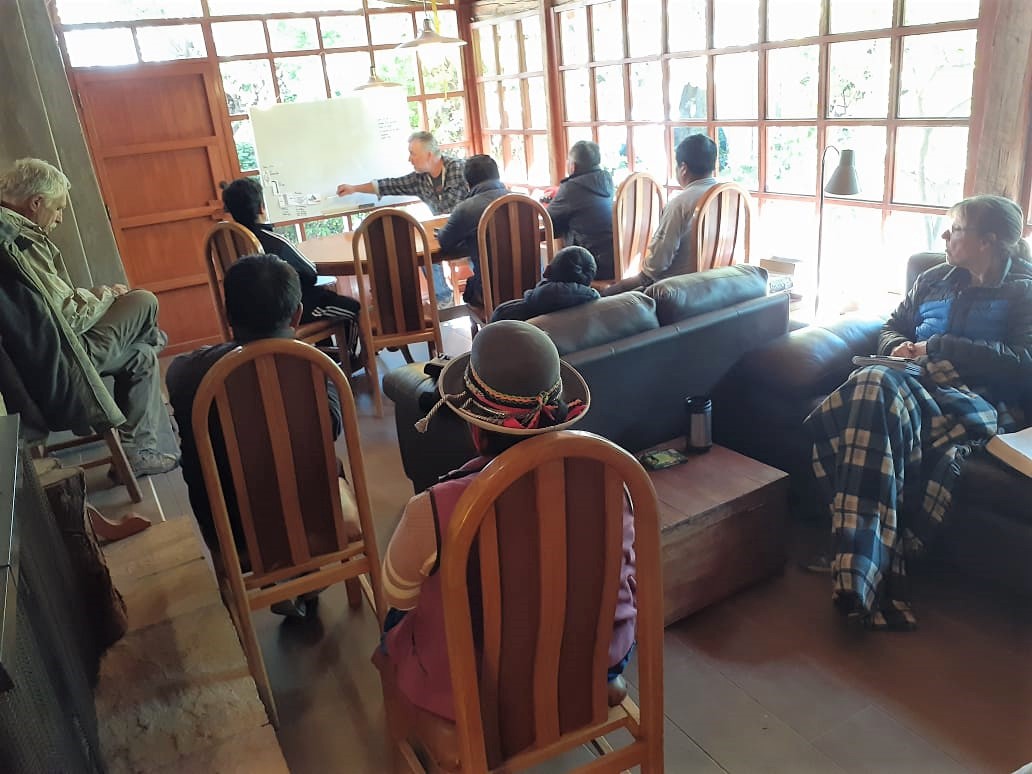
Below: Bible overview course in full swing.

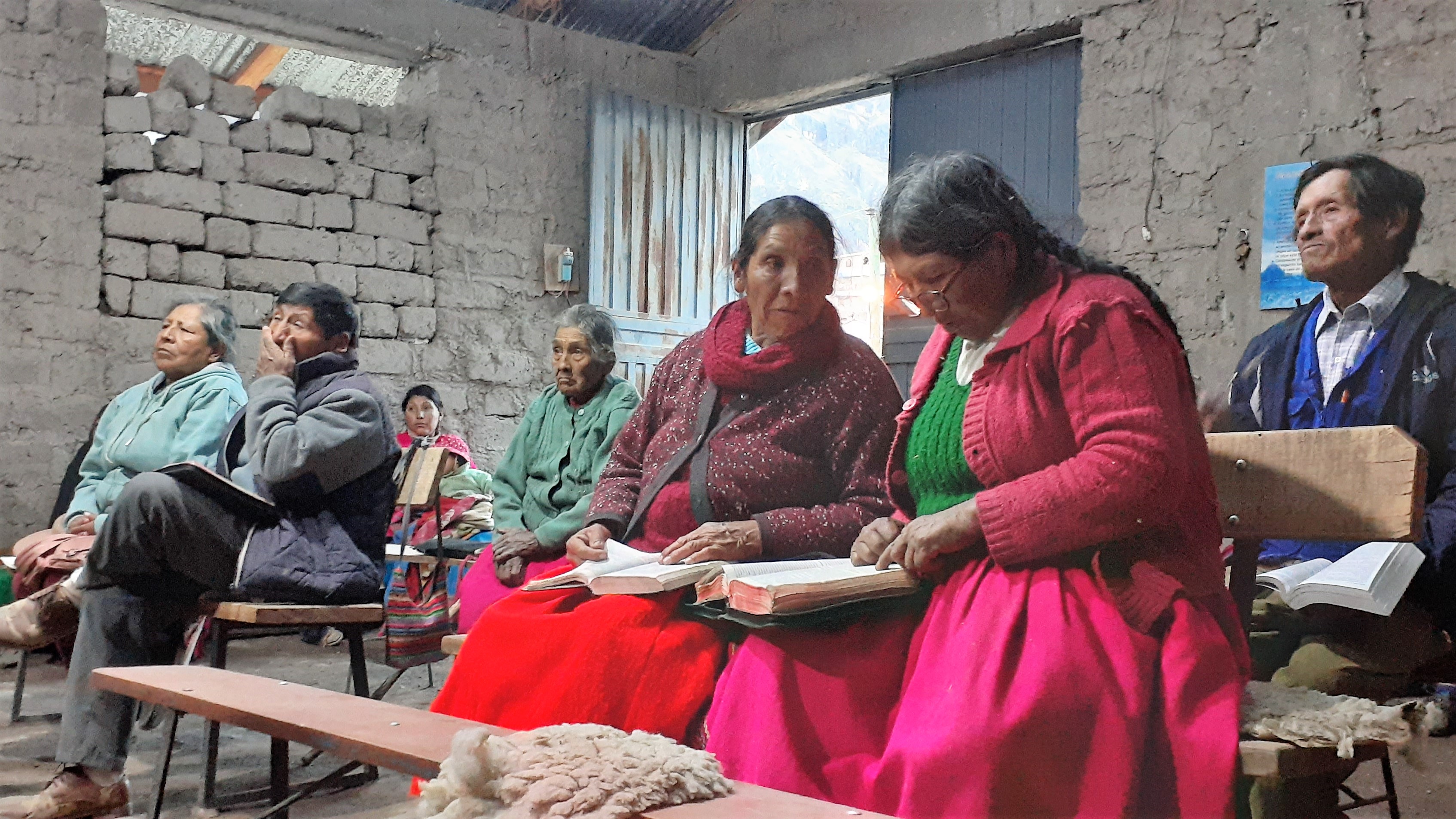
Above: a couple of ladies having a 'Berean moment' (see Acts 17:11) in the IEP church in Huillac, Cotahuasi Canyon.

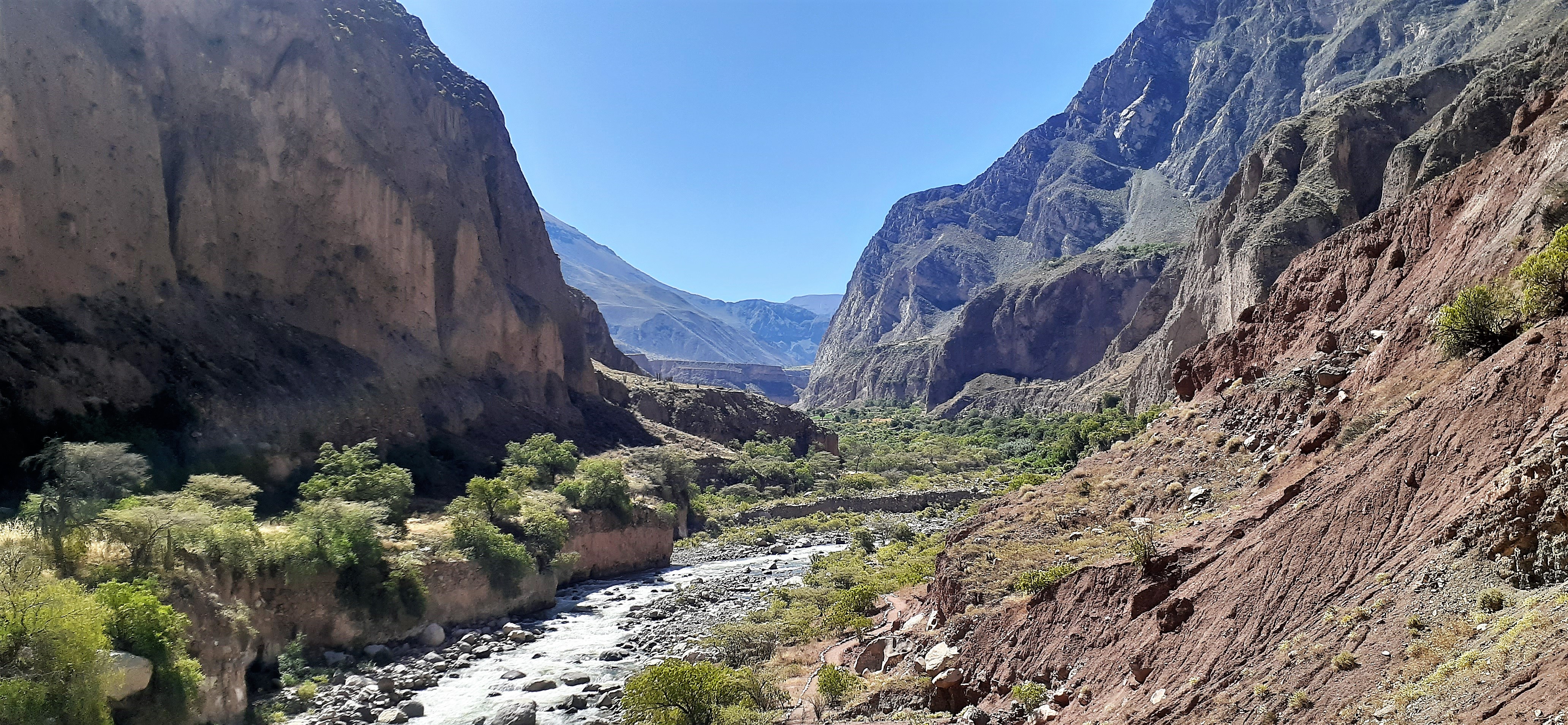
It is about an 8-hour drive to get to the Cotahuasi Canyon.  This takes you across the 4500m altiplano until you come to the rim of the canyon, which is about 2 miles deep.  (The Grand Canyon, by comparison, is a mere 1 mile deep.)  Within the canyon it's another climate: relatively warm, there are trees in abundance, farms, livestock, flowing water.  But up on the rim and across the altiplano it's cold, dry, icy, minimal vegetation (if not just bare dirt), and the air is thin.  The canyon and the surrounding altiplano feel like completely different worlds.

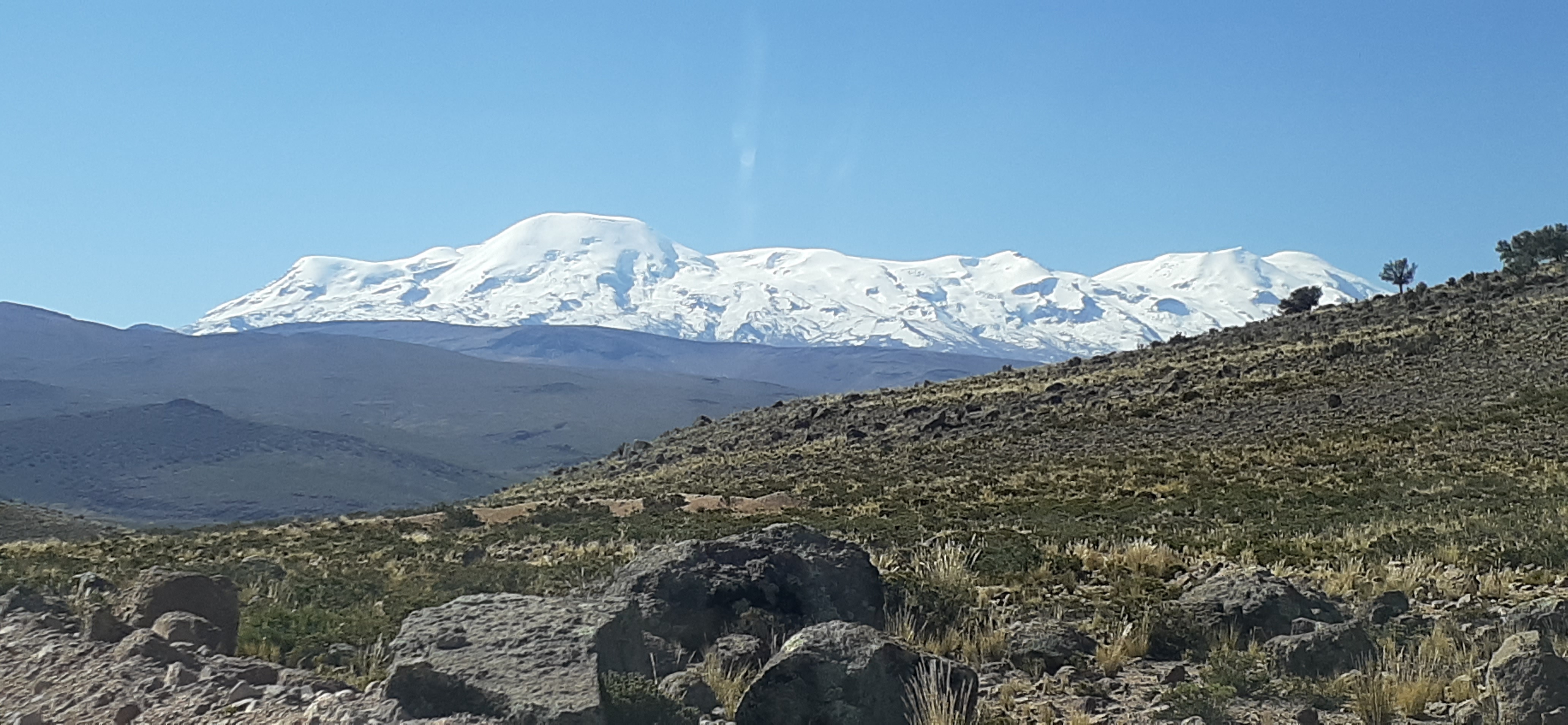
Below: Coropuna, 2nd-highest mountain in Peru (6377m).  From Arequipa you have to drive around the western side of Coropuna to get to Cotahuasi.  As you drive around the mountain, you get to see some of the glaciers that are coming off its flanks.

Above: Brad (l) and Fredy (r) helping a local get his radio reception sorted in the village of Cochapampa.

Below: Police station, Pampamarca.

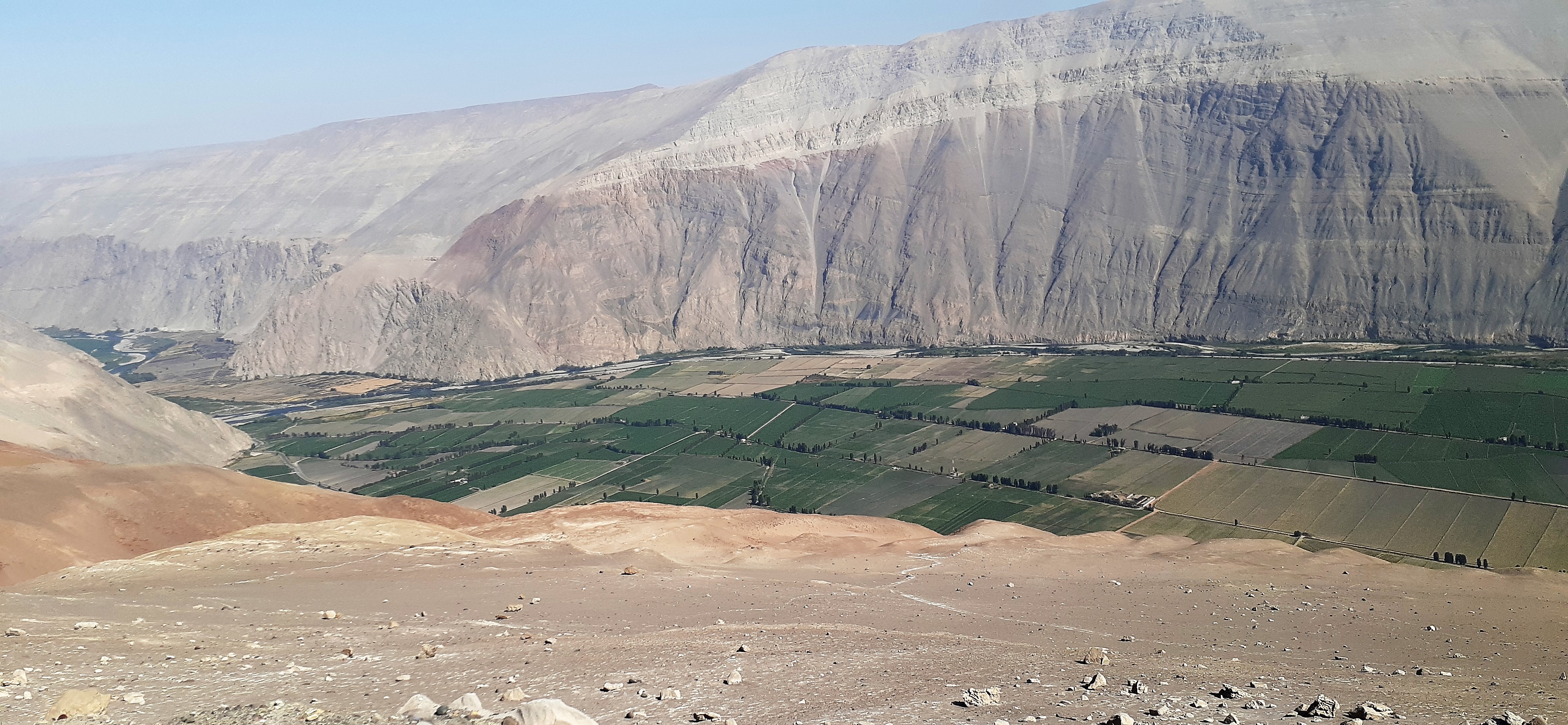
Above: Majes valley.  There are many river valleys like this along the Pacific coast of Peru.  These areas rarely get any rainfall, but they do have permanent rivers that come down from the Andes.  Rice, wheat, oats, corn, peppers -- a whole variety of crops are harvested.  Human habitation of these valleys goes back a long way; many have areas where you can find petroglyphs (carvings on rock surfaces) and hunter-gatherer stone tools.

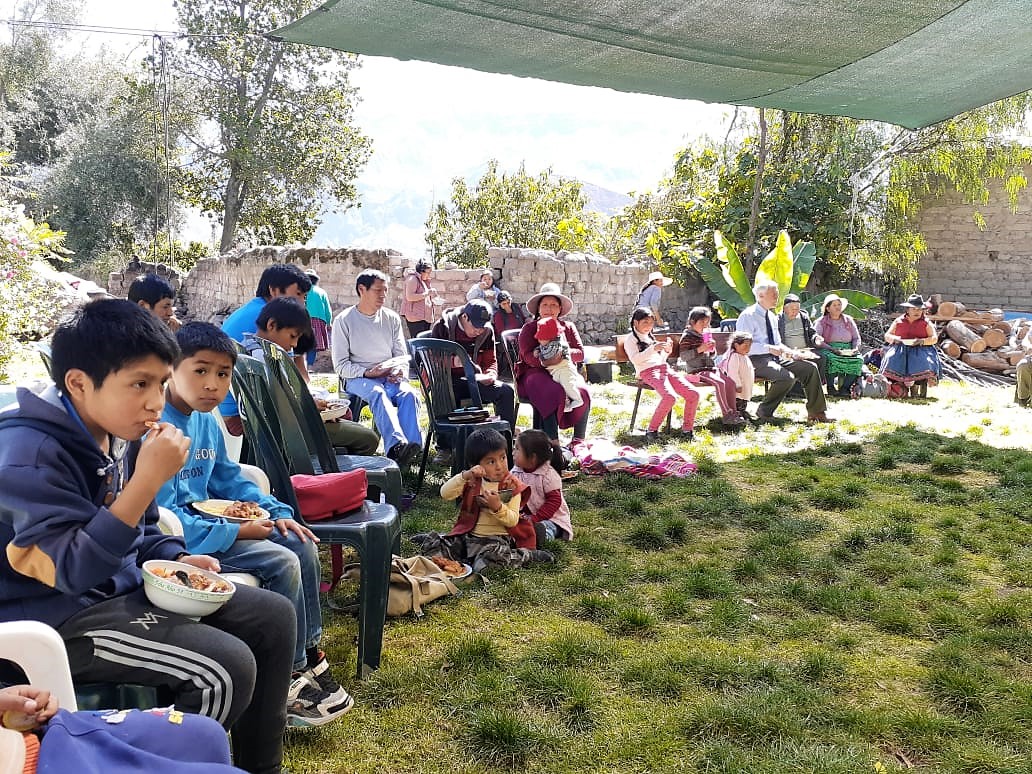
Below: church lunch after the Sunday service, Cotahuasi.  The ladies had got together the night before and peeled a mountain of potatoes, cut up about 10 chickens, and had everything cooking while the service was underway.


I think she'll come to church!

25 Jun 2023

"How is she going to get here?  It's 4 km from her house." Mary Beth reasoned. 

"I think she'll come.  She has her ways to getting around." 

"She doesn't even have a watch!" 

"Maybe she can look at a cell phone or watch the sun.  She's smart.  She's found ways to make things work.  She'll figure something out!" I said confidently as we drove home from her place Thursday morning.  We had gone with Pastor Elvis and his wife Rosita to Ana's house (not her real name) to help her with her well.  It had somehow filled with sand and she had to carry water from a nearby creek (see last post), though it didn't look like her well had gotten flooded as we had understood before.

"What do you know about wells?"  I asked Elvis, hoping he had more experience than I had.  

When we arrived with shovels and buckets, we realized the shovels were useless.  But if one of us crawled down into the well, maybe he could pass buckets of sand up to the other.  Ascertaining that the well walls weren't a cave-in risk and after Elvis' own admittance that he wasn't skinny enough, I volunteered to go down.  I crawled into the bottom of the well (it was about 2-3 meters from the surface to the water level) which was so narrow I could barely bend my knees enough to scoop out a bucket of wet sand and pass it up to Elvis.  After a few minutes of such manouvers, I was standing in water.  I continued digging until I couldn't reach any further down and we drew filthy water from the bottom until it was less filthy and we couldn't get much more out.  Rosita went with Ana to get some forage for her sheep while we dug out her well.  After they returned and the job was done, Ana exclaimed, "Thank you so much!  God really does exist!"  

"He sure does!  Come visit our church Sunday!"

"I'll be there.  What day is today?"

Ana was at the church door at 10 am sharp!  She reports the water comes out clean and tasty now.

Well, Deep Subject

19 Jun 2023

A week ago, Allen and I were passing through the La Punta plaza on our way home after a nice run and we noticed an elderly Quechua lady smashing bottles and putting them into a bag.  Though she was obviously suffering from poverty, my attention was drawn to her two extremely happy dogs.  Many poor people in Peru use recycling to cover basic living needs.  I immediately thought of our small collection of plastic bottles at home and managed to convince her we were safe enough to accompany home (we only lived a block away) to pick them up.  One of our neighbours encouraged us in this, saying the lady could really use the help and that she lived on the beach.  The lady herself was smiley and cheerful despite her many rotted out and missing teeth and difficult life, especially when Allen addressed her in Quechua!  She explained that life had been difficult for her since husband passed away and told us she’d maybe come to church on Sunday.


Mondays are our day off and often-times we like to go on a little picnic to the beach to relax.  Today we ran into her again, bringing a whole flock of sheep home and she showed us where she lived!  Later Allen noticed her carrying two 5 gallon pails to a nearby canal to collect water and he went to help her out.  She was super thankful.  Apparently while we were in the States a number of massive waves hit the coast by La Punta and flooded out her house.  Now her well no longer works.  We are hoping maybe Allen and Elvis can help her get it flowing again sometime this week and maybe Rosita can have a good chat with her in their shared native tongue.


I'm not Dead yet!

08 Jun 2023

Every year I try to file my taxes electronically and every year I get the message, "We cannot accept your return because the primary tax filer is deceased in our records."  In May, while we were in the States recovering from our surgeries at the Mayo Clinic I called the IRS to get Mary Beth's name changed in their system.  I added, "I know you probably can't do anything about it, but I've been deceased in your system since my first wife died 7 years ago and would like to get that fixed!"  The person on the other end of the line decided I had thrown down the gauntlet and took it on as a challenge.  Egging him on, I added, "I've heard it takes an act of congress to solve such issues, and I even called my congressman in Nebraska, but they evidently felt they had better things to spend their time on."  This guys likes a challenge.  "This is going to take a while, but I'm going to get it fixed," he said confidently. 

A few days ago, my sister Carolyn got a letter from the IRS in the mail:

I wasn't convinced until I resubmitted my taxes for 2020 (the IRS happily took my money years ago, but didn't bother to file my forms) and the IRS said it was accepted!  After years of waiting on hold on the phone with the IRS and the Social Security Administration I'm no longer dead!  Hopefully, it is God's will that I keep it that way for a while!

Visits to Cota Cota & Pachachaca

05 Jun 2023

We're now into winter here (southern hemisphere), and therefore the coldest months of the year are just ahead of us.  The ETE (Educación Teológica por Extensión) directors, René and Roberto, aren't total gluttons for punishment, so the previous two weekends (26-28 May to Cota Cota, and 2-4 June to Pachachaca) will be the last trips until September -- because in the Andes during winter it does get a bit nippy...

At about 5:00am it starts to get light, but there is little ice to be seen.  But by 7:00am each morning, this stream at Pachachaca was iced-over.   Not having a thermometer handy, I don't know how cold it actually was, but the last time I had felt such biting cold was when I lived in Canberra back in the late 80's, when -7.0 °C was common in August.  So I'd guess that a crisp June morning in Pachachaca is around -5.0 °C.

At 8:00am, René and a couple of the other men decided it was time for a shave and a freshen-up.  Down to the stream they went, just below the icy section (above).  With a bar of soap and a disposable razor, faces were shaved and hair got washed.  Talk about tough men!  I asked René how on earth he managed with the cold.  The secret, he said, was that if you are washing your face or upper body, is that you must keep your socks and boots on -- because if you do this bare-footed, all the energy from your body will immediately drain straight into the ground and you'll come down with an illness.  Likewise, he said, if you're washing your feet then you must make sure that your upper body is clothed and dry, to prevent immediate loss of energy or your 'vitality'.

That's just one example of the kind of health lore that many Peruvians subscribe to.  Of course, my reaction as a Euro-Australian was to think that energy flows and all that sort of thing are a bit on the 'alternative' side.  That they may be.  But never having bathed in a freezing Andean stream, I'd still be inclined to take René's advice anyway!  I might be 'Euro' in origin, but I'm definitely not one of the those Scandinavian ice-breaking skinny-dippers.

Driving back to Arequipa, René and the other brothers and sisters in the Hilux also had some conversations about the health benefits of drinking urine -- specifically that of donkeys and llamas.  The urine has to be fresh, I was assured, and it's good for curing diabetes and also COVID.  Stifling my cynicism, I asked whether the flavour was an issue.  René paused for just a second, and then said that the flavour wasn't important when you had such effective medicine.  Clearly we are from different planets.

Now it would be easy for me to guffaw at such ideas (and believe me, when it comes to donkey's urine, I do have a laugh -- inwardly!).  But here's the thing: if you're from a culture which has, since time immemorial, had to survive in such a hard and sparse landscape, what are you going to do for medicine, and how are you going to think about maintaining your health?  And these days, even when Western medical technology is available, it's simply not accessible for most Peruvians due to the cost.  So maybe I'd just better keep my guffawing to myself.

You also know you're on another planet when, above the doorway you have just entered, you are greeted by two dessicated hawks:

The building we were staying in belonged to the Pachachaca/Tisco municipality and not the church.  I asked my Quechua friends about the dead birds, and they weren't sure -- but it is something to do with keeping evil spirits out of the building.  Maybe some Australians aren't that different; horseshoes above doorways, anyone?  Anyway, one thing was certain: it had been very bad luck for the hawks.

None of the houses in these altitudes have any form of heating.  There are no trees (it's too high for trees or bushes to grow, at around 4.500 metres) and therefore no wood to spare for burning, and so the only fuel available is dried llama/alpaca dung.  But there's only enough of that for cooking.  During the daytime the sun gives plenty of warmth, but the during the nights you just have to rug up.  For most people, that means a mattress of alpaca hides.

Yes they smell fairly musty, but I can also tell you they are warm and very comfortable.  I use a sleeping bag on these trips, but you also have to add a couple of thick blankets over the top, and sleep fully clothed.  (That's my stylish frazada there with the zebras on it.)

Below: students warming up in the morning sun.

For lighting at night, many huts and houses now use solar panels and LED bulbs.  The municipal building has its own generator available, so here are a bunch of the guys figuring out how to get it running:

I would have thought they'd be dab hands at rigging all this up, but the extension lead without any plug and two bare wires did present a challenge.  After yours truly, with some experience at 'home wiring' (ahem) had a crack at it, we had ourselves some light and the meetings and classes could begin.

Above:  René (left) and Nelsondavid (right) selling course books to a student for the next term of study. 

On the Saturday morning of each of the trips, the students would head out into the surrounding countryside to visit the farms and share the Christian message.  It wasn't just 'Bible bashing', as we might call it; I was impressed with how René, for example, knew pretty-well everyone courtesy of his last 40 or so years of visiting these communities.  "And how is your mother?" "Ah, your uncle used to attend the church in Chivay, didn't he?"  Genuine concern for people's welfare alongside clear and succinct explanation of the gospel were the order of the day, along with an invitation to that evening's church service. 

Above: the IEP church building in Cota Cota.  Note the loudspeaker poking out of the building above the doorway.  It is common practice to broadcast a church service to the whole village or town.  We might look sideways at this, but the fact is that the local municipality and other community organisations do the very same thing.  It's just an effective way to let the whole community know something, and it doesn't seem to raise any eyebrows.

On the way back from Cota Cota (last weekend in May), Roberto directed me along some little-used tracks which took us out near the Condoroma dam.  Along the way, he and René reminisced how as younger men they used to go along these tracks on foot.  It would take them days to get anywhere.  Then motorcycles became the preferred mode of transport.  And now, finally, they were doing it in comfort in a 4x4!

Above (centre of picture): pre-Inca fort, supposed to be about 1100 years old.  It's situated on a hill in the centre of a valley, and has commanding views in all directions.

The drives home on these trips are always an education for me -- be it learning about the benefits of llama's urine, or reflecting on the weekend's services and classes, or discussing the challenges many of these believers face in their traditional Quechua communities.  And as the scenery rolls past... well, there is always a lot to be thankful for.

Day trip to Laguna Salinas

21 May 2023

After getting through a rotten bout of gastro (probably 'norovirus', if you're keen you can look it up), we'd had to cancel a trip to Puno, which was a bit of a let-down.  So yesterday we thought we'd take a trip up to Laguna Salinas, about 2.5 hours' drive from home on the other side of the mountains, just so we could have a picnic and take a break.  Mike has already been there a couple of times (see blog entries below on earlier ETE trips), but this was Kerry and Megan's first chance to see the amazing scenery and the wildlife too.

It was a super-clear day, and as we drove up the slopes between Picchu Picchu and the volcano Misti, we had a superb view of the city behind us.  You always know when you're getting above 3-3500 meters because the Hilux starts running out of puff... so just keep the RPM up so that the turbo can pack enough air into the motor.

Once up at the lake, we made our way around the western shore until we came to the town of Salinas Huito.  We had pit stop and Kerry got chatting to a couple of the locals.

Then we headed back south to the other town on the lake shore, Salinas Moche.  On the way we stopped at an old chapel, 'Santuario Virgen de la Asunta'.  According to the lintel over the main doorway, it was built in the 1860s (couldn't quite make out the last number, either an 8 or a 9).  It certainly is in an amazing location.

In the background you can see the active volcano Ubinas.  On the way around to Salinas Moche, Kerry tried a spot of flamingo photography, but they are cautious birds so unless you have a camera with a good telephoto lens it's not exactly a slam dunk.

We got to Salinas Moche a bit after midday, and to our delight realised we'd jagged the one Saturday of the year that they have their community parade!  Everyone was out in their finest garb, and every community group was respresented in the parade: the school teachers, classes of students, the local health clinic staff, the artesan group... even a bunch of welders carrying their welding gear went marching past, which really warmed Mike's heart.  Every community group got honoured, the band was going full tilt and it was heaps of fun.  

And the final group in the parade were none other than the local IEP (Iglesia Evangelica del Perú) congregation.  Good on them for not hiding under a rock!  Video here.

As the afternoon chill started to descend, we pointed the Hilux back towards Arequipa and enjoyed seeing Misti from angles we're not accustomed to.  It really is a huge mountain, and lots of snow and ice on it this time of year.

Mary Beth has been Disbarred in Arizona!

13 May 2023

After a 4-hour delay to Mary Beth's surgery start time, they were able to get her bars out without problems (only a 45-minute surgery) and she is back 'home' in San Tan Valley.  STV is a suburb of Phoenix and one of Mia's college roommate's great aunt and uncle are Brad and Denise Morris who are loaning us their Arizona home while Mary Beth recovers.  Thanks Brad and Denise!

Mary Beth is not in much pain, and getting by with a naproxen tablet every 8 hours or so.   She is supposed to go for four walks per day, so we're glad there is a walking trail behind the house.  

I am personally thrilled they let us take home her old bars and everyone who sees them finds them fascinating!  One of the bars was broken when they tried to straighten it a bit to remove it.  

Thanks for praying for us!

Pages

Subscribe to RSS - blogs