SWAKOP

08 Nov 2012


And now for something completely different!

Long walks along a sandy beach with a cool breeze rustling the palm trees, sipping cappuccinos in quaint European-style cafes, wide streets with virtually no traffic, German being spoken almost everywhere: were we dreaming or were we really in Namibia?

400 kilometres west of Windhoek, on the coast of Namibia, lies the township of Swakopmund (affectionately known as “Swakop” by the locals). At the end of our second month in Namibia, we were fortunate enough to get away for a long weekend & visit a different part of the country.

On the road to Swakop!

Swakop rises quite literally out of the Namib Desert. At least 80 kilometres before you find the town you are travelling through a moonscape where virtually no plants survive. In fact, it is so barren that currently ‘Mad Max 4’ is being filmed there – we happened to run into one of the crew (a mechanic from the Gold Coast) while having one of those cappuccinos in the European-style café. It seemed so unreal that virtually at the end of every major street the desert would begin; we wondered where they get the water from to sustain this little oasis.

Swakop surrounded by desert

Town surrounded by desert (sorry about the size)

Swakop is an enclave of German architecture and culture and home to about 30,000 people (keeping in mind that Namibia was a Germany colony until the First World War). The buildings are beautiful and grand. The fences are low (no razor wire in sight) and people have gardens; some even with flowers. Here dogs are kept as pets and go for walks on leads (or sometimes without). The town is basically flat, so ideal for walking or cycling, and it has paved footpaths (most of the time). German is almost the expected language of conversation. For almost the first time since we arrived in Namibia, we felt we blended in quite well as there were white faces everywhere.

German architecture around 100 years old

Even though it is a tourist town we were surprised to find that most shops close from 1pm on Saturday and don’t open again till Monday morning. This made for a very quiet weekend where sometimes you felt you were the only people around. We could have joined in the ‘adventure activities’ of quad biking, paragliding, deep sea fishing etc, however walking brought us much pleasure, including finding the lagoon complete with a flock of flamingos.

The pier at Swakop & the Atlantic Ocean

We saw the Atlantic Ocean for the first time. We had been warned that the water was not suitable for swimming as the Beluga Current keeps the temperature very cold and there are numerous dangerous rips along the beach. We were content to walk along the beach and feel the cool wind on our faces. It was SO pleasant to be able to walk, for a start, and do so without breaking into a massive sweat. We even had to put jackets on and were comfortable wearing jeans. Such a different place to Windhoek where we have been sweltering in the mid thirties most days for the past month!

Overlooking the beach at Swakop

This break from routine and humid weather has refreshed us as we head into our final month in Namibia. We can appreciate more the variety of cultures and landscapes within this vast land.

Therefore, a time of rest & worship exists for God’s people. Those who entered his place of rest also rested from their work as God did from his.  (Hebrews 4:9-10)

Another German heritage building (1905)

TEACHERS STRIKE

05 Nov 2012


This past week has been an unusual one. The school teachers of Namibia called an immediate strike for higher wages & the strike is now into its sixth day! Like most workers in this country, teacher’s wages are quite poor compared to many of their contemporaries around the world. The strike was sudden & comes only a few weeks before the students end of year exams.

The strike has had a profound effect upon the After School Program. Why would students come to the After School Program when the usual School Program is just not happening? Many of the students have gone into early holiday mode, which is unfortunate. Instead of the usual 100 young people turning up each afternoon, we have only been averaging around 20.

On one afternoon, I (Mike), set myself up in one of the classrooms with a stack of reading books scattered around adjoining chairs. I love to read & I thought that some of the children might like to come & read also. Surely this could fill in 15 to 20 minutes of what could be a long afternoon. Two & a half hours later I was exhausted & ready to call it quits. The usual volunteer / child ratio does not allow much individual tuition, however one of the advantages of the teachers’ strike has been some great one-on-one opportunities.

Slowly but surely one or two of the children (all girls from Grades 2 to 4) would come in, pick up a book, wander over next to me & ask if they could read it. The books came if all shapes & sizes. Many were large & colourful. Stories about fat cats, stories about going to school, stories about family life, stories from the Bible, stories from Dr Seuss & stories about animals. They would pick up the books, make a tentative start, gain in confidence & turn the page in excitement to see what was going to happen next. What joy it was to see their interest in reading & to find out that the scary white man from Australia was not all that scary at all. He would actually sit & listen as he heard the stories read (sometimes over & over & over again).

Some of the girls were good readers & some were not. Some of the Grade 2 girls were better readers than those in Grade 4. At the end of the day it didn’t matter. What did matter was that they were willing to have a go & practice reading in English out loud. On occasions they would get suck on a word & need a little prompting.  A word here & a nudge there got them through to the next page. As one of the girls was nearing the end of her second or third book & beginning to get restless, another one or two would wander into the room & the whole process would start all over again. Can I read you a book Sir?

What a simple joy & privilege it was to sit & listen to Namibian girls read. I have been thinking about how different their lives will be in comparison to their Mothers & Grandmothers, many of whom may not have received an education at all due to poverty, living in a rural community or war. Whilst many of these girls live in difficult circumstances, thank God that they live in times of peace & have the opportunity to have an education.

The quantum leap over the past decade in regard to computers, cell phones & the internet will have a profound effect on how these girls grow up & take their place in Namibian society. Their Mothers & Grandmothers may have grown up on the farm in a society of order, respect & defined expectations. These girls however will grow up quite differently & have many opportunities their elders did not. Mind you, their expectations, dreams & goals will probably end up well below their counterparts in Australia because we live in a very unequal world.

Many of the students at the After School Program want to grow up to be doctors, lawyers, teachers, nurses etc & by God’s grace let’s hope they do. Let’s pray that their love of reading story books will become a love of reading in general which will catapult them into University & beyond. Lets pray that in generations to come Namibia will no longer be a developing nation, but a developed nation with a good standard of living, low unemployment & sound wages.

On Wednesday we showed the DVD “The Lion, the Witch & the Wardrobe”. We had around 25 children & leaders watching the movie which none had seen before. They were amazed at what they were seeing & it held their attention for the full two hours. I think the leaders enjoyed it just as much as the kids! We explained the Christian undertones & they seemed to understand the analogy between Christ dying on the Cross & rising again, & what they saw happen to Aslan.

The week finished off with Bible devotion & chorus singing. No need for musical accompaniment in Africa! The children know the songs & they are always keen to sing (& sing & sing). The choruses “Here I am to Worship”, & “There’s no one like Jesus” are always popular. Uncertain how much longer the Teacher’s strike will go on for, however the smaller numbers do provide some unique opportunities.        

Some of the budding readers!

One month on ...

03 Nov 2012

I've been back in France for exactly a month after a 2 month Home Assignment. It's been a long landing : the time home was so intense and busy. The main thing I've noticed is how much I felt at home in Australia and how disconnected I felt at first in France. Even after 22 years in this country I have not lost my original Aussie background and identity or mentality. It's a reminder of the challenge of being a missionary in another country. You never really completely fit in.

I had to do a psychological profile for the mission and it was suggested I do one in English and one in French. Interesting result! No, I'm not schizophrenic, but different personality traits come through depending on which language I use! The psychologist can also see where there are conflicts between my natural self and what I think I need to be because of the host culture. This is where tension, fatigue and even low self-esteem or more abrasive character traits can be seen. So remember not only to pray for our ministry efforts, but for our personal well-being and balance. We are always on call mentally and emotionally. Pray we remember to depend on the Lord for understanding, help, energy, humility, and even opportunities to relax and to laugh. Missionaries don't negate who they are, but they are moulded by their experiences and surroundings.

HELPING PEOPLE WITH DISABILITIES

03 Nov 2012


For the past two months we have also been working with a Namibian NGO that supports people with disabilities. This organisation commenced in 2001 & has the following aims:

# To provide an holistic service including residential, day & community based rehabilitation programs for people with a range of disabilities.

# To give people with disabilities the skills to live as independently as possible within their own communities.

# To provide training to families, carers, community members & volunteers on providing care & stimulation for people with disabilities.

# To increase employment opportunities for people with disabilities.

Our commitment to this organisation has been one morning per week & the task set before us was to update their Policy & Procedures Manual, which had not been updated for a decade!

Pictures of the Centre where students come for their daily activities

The Centre has a Day Care Program where some 45 clients (disabled people) come each day to learn & interact with each other. The clients are also fed breakfast & lunch each day & attend classes held in various topics. The day commences with a Bible Study devotion & singing.

Breakfast time. Always a good start to the day!

The Day Care Program also includes education on daily living skills, literacy & numeracy skills, health education (including HIV & AIDS), cleaning & basic kitchen skills, horticultural skills & physical fitness co-ordination.

Some of the clients (students) awaiting the start of classes

Many disabled people in Africa are forgotten people. Disability is considered a shameful thing & many disabled people are kept locked away in homes not to be seen by others. With the help of this NGO, children and young adults with disabilities are integrated into normal life & taught important life skills. They are respected for who they are & encouraged in their daily activities.

Group shot. Like any kids they are always keen to have their photo taken.

This organisation receives very limited government funding & receives most of its income from personal & corporate donations.  Money is very tight & the ongoing viability of the organisation depends on the level of month to month receipts. Monthly fees are applicable for the clients who attend, however the vast majority of fees are not paid as few can afford them.  This is a Christian based ministry where services are provided free of charge in need & without question as to someone’s background or religious beliefs.   

Some of the students chilling out prior to breakfast 

Working in an environment with disabled people is not something we’ve done in the past so it has also been a learning experience for us. Some of the clients have been inquisitive of the strange white people working in one of the offices & have popped in to say hello. Sometimes they give us a little cuddle by way of introduction.

We are now nearing completion of this assignment with the Policy & Procedures document updated. This might sound a pretty mundane task however the Manager (Director) of the Centre has been delighted (perhaps even overjoyed) that after a decade they now have a working document again! Policy & Procedures might be boring, but without an effective reference source any organisation can quickly grind to a halt.

Mural in the dining hall

We have enjoyed our time at the Centre& the people we have met. As with the other organisations we have spent time with, the staff are very appreciative to have employment however wages are very poor & making ends meet is difficult. Volunteers are a great way for the organisation to move forward under the grace of God.

One of our friends who popped in to say hello

“There is no future in the past. My past is my history. My future is my destiny”.(Taken from a poster on the wall at the Centre – based on Isaiah 43:18 & Philippians 3:13).                  

WHAT DO I MISS

01 Nov 2012


A number of people have expressed to me that I must be missing much of home. Surprisingly there has not been as much as I thought when leaving Australia in early September, but there have been a few things. 

I miss speaking with my children on a regular / daily basis. Basically since our arrival our internet access to home has been restricted to email only (no Skype). While I know that this is a vast improvement upon years ago when letters sent by boat were the only means of communication, it still has been a major adjustment. Our kids have been very good at responding to questions we ask them, we just don’t get much detail about what they are doing or thinking.

I miss my washing machine. While I can take comfort from the brownness of the water after I have finished hand washing the clothes in the bath, that I have removed the dirt, I know that I have not removed the stains when I go to iron and wear them next. Hand washing, rinsing and wringing men’s jeans is NOT fun either, let me tell you. Don’t get me started on double bed sheets!

I miss my shower. Many of you may not know this, but I have never been a bath kind of person. I love my showers. Here where we are staying there is no shower, so bath it is. I am getting used to washing my hair (as well as my clothes) this way, but getting used to and liking something are two different things.

I also miss walking (or exercise in general). Those of you who live in Cherrybrook can testify that I enjoy walking. We’ve been advised that for our own safety (we are easy targets as we stand out so much) that we limit our walking in the daytime in Katutura to going to the church and back (about a 5 minute walk). No one walks around after dark (7pm) unless they are looking for alcohol, a sex worker or trouble. We are thus very limited in our exercise opportunities. We do try to walk around town a bit when we go there for shopping on Thursday mornings, but it is not the same.

The other thing we both really miss is grass. Grass is very limited in Namibia. There is a park in the centre of town and one here in Katutura that have grass. The Parliament buildings also have grass around them. That is about it. In a country with little rain and which needs to conserve its water, grass is a luxury item.

Grass at Parliament House. A real special treat! 

And that basically is it!

What do I find comfort in? The Word of God and the love of His people remains constant around the world. We have been greatly reminded that God’s family is big and wide and takes many forms, yet we all have common ground in Jesus.

Youth Choir at Soweto Evangelical Church - "All One in Christ Jesus"

We look up in the night sky and see the Southern Cross (not quite as easily as at home as there are so many more stars to view here) and are reminded of the Maker of Heaven and Earth and know that He watches over Namibia and Australia (and all other nations too).

We look at the city streets passing by as we travel in yet another taxi and see jacaranda trees in bloom – their purple is most distinctive in this dry landscape. This was an unexpected present from God – a real taste of home.

So while I do miss home, I also feel in some small way “home” here too and am content.

Kate

And everyone who has left houses or brothers or sisters or father or mother or children or fields for may sake will receive a hundred times as much and will inherit eternal life.            Matthew 19 : 29

AFRICA FOR BEGINNERS

29 Oct 2012


Since arriving here in Namibia we have been told that this country, and in particular this capital city of Windhoek, is “Africa for Beginners”. We have been introduced to the wonders and challenges of living in Africa in a very gentle manner.

The old & the new in Windhoek

In many respects this is a correct description. Here we have electricity at the flick of a switch (not so if we lived in the informal settlement areas of Hakahana or Havana).

The water coming out of the tap is clean (no need to boil or sterilize) and runs basically whenever you need it. We did, however, have one week where it was turned off regularly in the morning while some pipe was being repaired. While the water in Etosha was ‘safe’ to drink, it had a high mineral content and was quite warm and so did not taste particularly good. We ended up buying bottled water for 2 days. Apart from those two days, it has been water straight out of the tap for us.

The roads are generally wide and well maintained in and around the capital and between the regional centres and tourist destinations. Tourism is a major income generator for the nation and so they need a good road network. Having said this, the drivers in Namibia are fast, unpredictable and think they are the only ones on the road (generalization but basically true). Transport of people, including children, is common in the open back of utes (called bakies here), tip-trucks, or other vehicles. Car accidents, deaths and injuries are commonplace. While we think wearing seatbelts is law, very few people actually do it, and hardly any taxis have them in the back seat.

Traveling in the back of a ute (bakie) is very common in Namibia

We have access to a well-stocked supermarket where we can buy similar foods to what we are used to in Australia.  Even costs are roughly the same in both countries. We are fortunate to have an income to be able to buy food. The basic minimum wage here is between N$3.80 and $5 per hour. A loaf of bread costs N$8, one litre of milk costs N$12 and the 500g of mince I buy for dinner costs around N$30, so you can see that the 51% of Namibians who are unemployed or underemployed or earning a very basic wage struggle to feed their families, even if there is a supermarket to buy food in. (For those of you mathematically inclined N$8 = $1 Australian approximately.)

Within the city centre the dress code is reasonably “Western”, however as soon as you start to head into the suburbs you find much traditional dress. Around us, much to our surprise, are a number of Herero ladies who still prefer to wear the traditional attire including the ‘cow horn’ hat. Upon advice we have chosen to be quite conservative in our dress. Kate wears skirts that hang below the knee and a dress on Sunday. Mike wears long trousers whenever he is out of the house, but shorts inside the house as the weather is hot.

Traditional Herero dress complete with cow horn hat. We see many ladies walking around Katutura in this attire

English has been understood by basically all people that we have come across. While Afrikaans is still the preferred language of many (mainly whites) we have not found this to be a problem in the area in which we live. During the times that we are meeting with Herero people (church, Bible study, prayer meeting) everything is translated from one language into another – in which direction depends on who was the initial speaker. We have found that our most difficult time making ourselves understood in English is when working with the younger children, either at the Preschool or in the Grade 1-2 room at the After School program. We depend on our African colleagues to interpret for us at these times.

Even meal-wise we have had a gentle introduction to Africa. Kate has been doing the majority of the cooking since we have been living here in Katutura and so there has been nothing too weird or wonderful on the menu. We have had Oryx stew and eaten traditional Pap (porridge made from maize meal which is a staple here in Namibia) but neither of these were a great stretch for our stomachs!

There is a regular garbage collection once a week and recycling is just being introduced in some parts of the city (not ours). Yet we look about and there is rubbish everywhere. Kate is always nervous walking on the dirt and stone “footpaths” going to church most days as there broken bottles, rusty tins and all sorts of household garbage items to try to avoid in her lightweight shoes. Even at church the grounds are littered with rubbish. We try to set an example and pick up some of the larger pieces when we go; the kids and volunteers deserve a place to go to of which they can be proud.

Despite all this, there is a real sense of need and of poverty that we do not see in Australia, which at times can be quite confronting. The Africans have a different way of viewing the world and how to operate within it; there is an emphasis on relationship rather than task, of time later rather than now, and not always a sense of openness or teamwork. Unexpectedly, there is very little sense of customer service and most people seem very surprised when we thank them. These things take time and effort to adjust to and work with. Nevertheless we are humbled and grateful to have this experience of Africa and are quite happy to be “beginners”.

The Bible Marathon 2012

29 Oct 2012

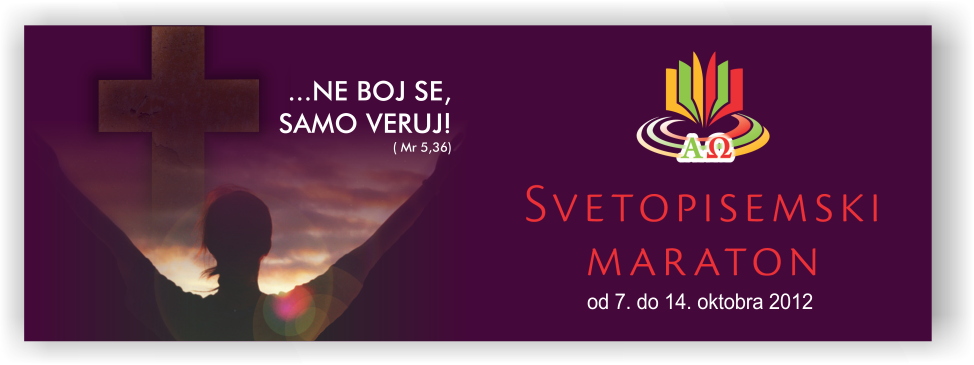
Each year the Bible Society of Slovenia organises a week when the Bible is read for 24 hours a day for 7 days. They call it the Bible Marathon. People from around Slovenia can come to a chapel in central Ljubljana and read the Bible aloud. Usually churches organise a few hours one day when they all come together and take turns to read chapters. The event opens and ends with pray and throughout the week there are some talks to accompany the theme of the Marathon. This year the event was held at the beginning of October and theme came from Jesus' words in Mark 5: "Don't fear, only believe".

I am very supportive of the work of the Bible Society throughout the world. For years this society has been involved in publishing the Christian Scriptures into all the different languages of the world. My eyes have also been opened to the vital role this society plays within Slovenia. They have been publishing the Bible here for many years, but within a diverse theological context. For example, they have to accommodate a very large Roman Catholic presence in Slovenia. There may be a few Catholic influences in the Slovene Bible translations, yet it means that everyone has access to the Bible. The society helps people read it, whenever they hold their Bible Reading marathon. Furthermore, one of the aims of the society in Slovenia is to engage in evangelism whenever and wherever they perceive the church is failing in this.

This year Peter Novak, the pastor of the Reformed Evangelical Church (REC), who also happens to be my boss, organised for us to give two talks in conjunction with the Bible Society Marathon. The titles for the talks were "Do you understand what you are reading?". This was Philip's question to the Ethiopian eunuch in Acts 8. Our goal was to help people consider an appropriate approach to read, understanding and applying Scripture. Using the narrative from Acts 8:26-40 as my main example for this approach, I spoke on the basics of comprehension skills, the centrality of Jesus Christ for understanding Scripture, and the importance of reading a passage in its context. Peter Novak's talk picked up these ideas, and focused more on reading the Old Testament.

If you would like to look at the talks, follow these links to Youtube:

Mark's Bible Society Marathon Talk 2012 - English with Slovene translation

Peter's Bible Society Marathon Talk 2012 - Slovene

Personally, I found the preparation for this talk rather challenging. Usually I speak to audiences which understand the importance of reading the Bible and then put this into practise. In Slovenia I might assume that some people would say the former, but there would be no evidence of the latter in their lives. The questions at the end of my talk confirmed that there was a very broad spectrum of attitudes towards the importance and place of reading the Bible. So I had to work hard in preparation, making my presuppositions and assumptions clear, being practical, as well we faithful to Scripture.

Overall, I think the Slovene Bible Society Marathon is an excellent opportunity. It really is just a start too, since it seems that it is the only exposure to the Bible that a lot of Christians receive throughout the year.

PRE-PRIMARY SCHOOL (UPDATE)

27 Oct 2012


Two mornings a week we continue to work at the Pre-Primary School in a disadvantaged community near where we live.  When we walk in the door we get mobbed by 20 pre-school children who run up & give us a big hug whilst calling out “teacher, teacher, teacher”!

For many of these 3 to 6 year olds they have not seen white folks up close before & certainly not to speak with. They take great delight to looking & touching the unusual features of white folks bodies (e.g. freckles & hair). They are not backward in telling you “your nose is too sharp” & recently a number of them were in hysterics when looking at Mike’s elbow (uncertain what was so funny here & we did point out that they had one too).

During the week Kate was teaching them how to count backwards from 10 & then “blastoff”. When she reached the number zero & finally blasted off into the air, she momentarily exposed her belly button to the great delight of the children who could not believe her tummy was also white. Amazing the things you learn in one day at pre-school.

Kate continues to work with the children in a teaching capacity & in mentoring their teacher with new ideas, songs & material. The children’s discipline & behaviour are below expected standards & this will be a focal point to address in the coming month.

Kate with some of the Pre-School children during morning tea

The great majority of children in Namibia do not get to attend pre-primary school, which can have a big negative effect on their education. They start Grade 1 at age 7 where all lessons are taught in English. Many of these children who do not go to pre-primary school arrive at school speaking little or no English, which places them at a significant disadvantage to others.

We have seen this evident in the Bible Club class we teach at the After School Program for Grades 1 to 4. There are number of “naughty” Grade 1 boys that find it very hard to sit still & participate in the lesson. We now realize, that despite being at school for nearly a year, some still do not speak English & this is why they misbehave during the lesson – they simply can’t understand what Kate is saying!    

Mike continues to work as the Pre-School’s Administrator. Over the past month the Constitution has been re-written, finance budgets have been drawn up, a funding proposal submitted, computer security addressed & banking arrangements reviewed.

Mike learning to be a Pre-School Administrator

Computer classes begin in 2013 for those parents you can afford to pay a little extra & would like their children to learn the basics. This would be a computer illiterate community so this is a big step forward for those who will participate. The computer classes will also assist the pre-school to become financially self-sufficient which is very important.

SIM is just one of four Christian partner organisations that the pre-school works with. It’s all about “capacity building”. Some give people & their skills, whilst others provide assistance with Curriculum & others to the funding of specific items (e.g. craft materials, blankets, food, first aid equipment). 

The pre-school will receive five second hand computers from one partner to enable their computer classes to begin in February. They will probably be four or five year old desktops that still have some life left them. There is no money anywhere to purchase the requirements of the pre-school so we look to the Christian community to assist where they can.  

Some of the boys posing for the camera

The partner supplying the computers is a Christian Welfare & Poverty Relief Association backed by the Dutch Reformed Church. We have been blessed by the people we’ve met & the organisations we’ve come across. So many people reaching out to help others stuck in the mire of poverty. This particular organization has a Latin name, which means “Image of God”. An organization which provides a bridge between the community of needs & the community of means.

The Director of the pre-school remains committed to his vision of providing quality Christian education for this community of need. Remember he does not draw a wage & lives essentially by faith. He is intelligent, humble & overjoyed that he can serve God in this community project. He crossed the border into Namibia many years ago following the long running civil war in Angola. He walks to work at the pre-school each day, as he has no other means of getting there. The walk is around 45 minutes each way.

Please pray for the Director & the pre-school that lives would be changed one child at a time.              

In the classroom

Play time at the Pre-School

Teacher power!

WHAT'S IN A NAME?

25 Oct 2012


When you know the name of someone or something communication is established and connections are made. Those of you who are teachers will also know that knowing the names of the children in your class is an important part of establishing discipline and order, as well as relationship. At the After School program one of our biggest challenges has been learning the names of the children in our group.

While there are a few children with ‘English’ names we can easily identify and remember (Queen, Precious, Charity) because they are more familiar to us, there are many more whose names contain sounds that are unfamiliar. They are  Otjiherero names and when we look at them on paper we have no idea how to sound them out ( the phonetics are different ). For most of the names we lack the cultural context to work out whether this is a boy’s or girl’s name so it has even been difficult to match names to faces / personalities to try to make the task of learning them easier.

One Friday afternoon, during the planning and preparation meeting, we took aside one of the volunteers and asked them to help us work out the pronunciation of each name. I wrote each down in English phonetics and so now we are working our way through this list each day trying to get them into our heads. Please pray that we will be able to learn these kids names so that we may make a real connection with them.

As a taste for you here are two lists of names. Can you work out which list contains the boys names and which is the girls? How would you pronounce them? Answers to follow.

List 1 : Tjijandjeua; Undamije; Uendjipa; Ugia; Mypangure

List 2 : Tjaimba; Veteeruaije, Vetjiua, Vinomaandero; Naanda

Answers:

List 1 is the girls. Pronunciation = She-an-jay-wa; Und-a-moi-air; When-jee-pa; Why-a; Mu-pan-gur-eh

List 2 is the boys. Pronunciation = Shy-im-ba; Vair-te-rua-ear; Vair-she-wa; Vino-marn-dero; Narn-da ( he is one of the easier ones I have to admit )

Jesus said,” I am the good shepherd. I know my sheep and my sheep know me- just as the Father knows me and I know the Father – and I lay down my life for the sheep.”                        John 10: 14 - 15

Kid's at the After School Program are always keen to have their photo taken!

FHS

22 Oct 2012

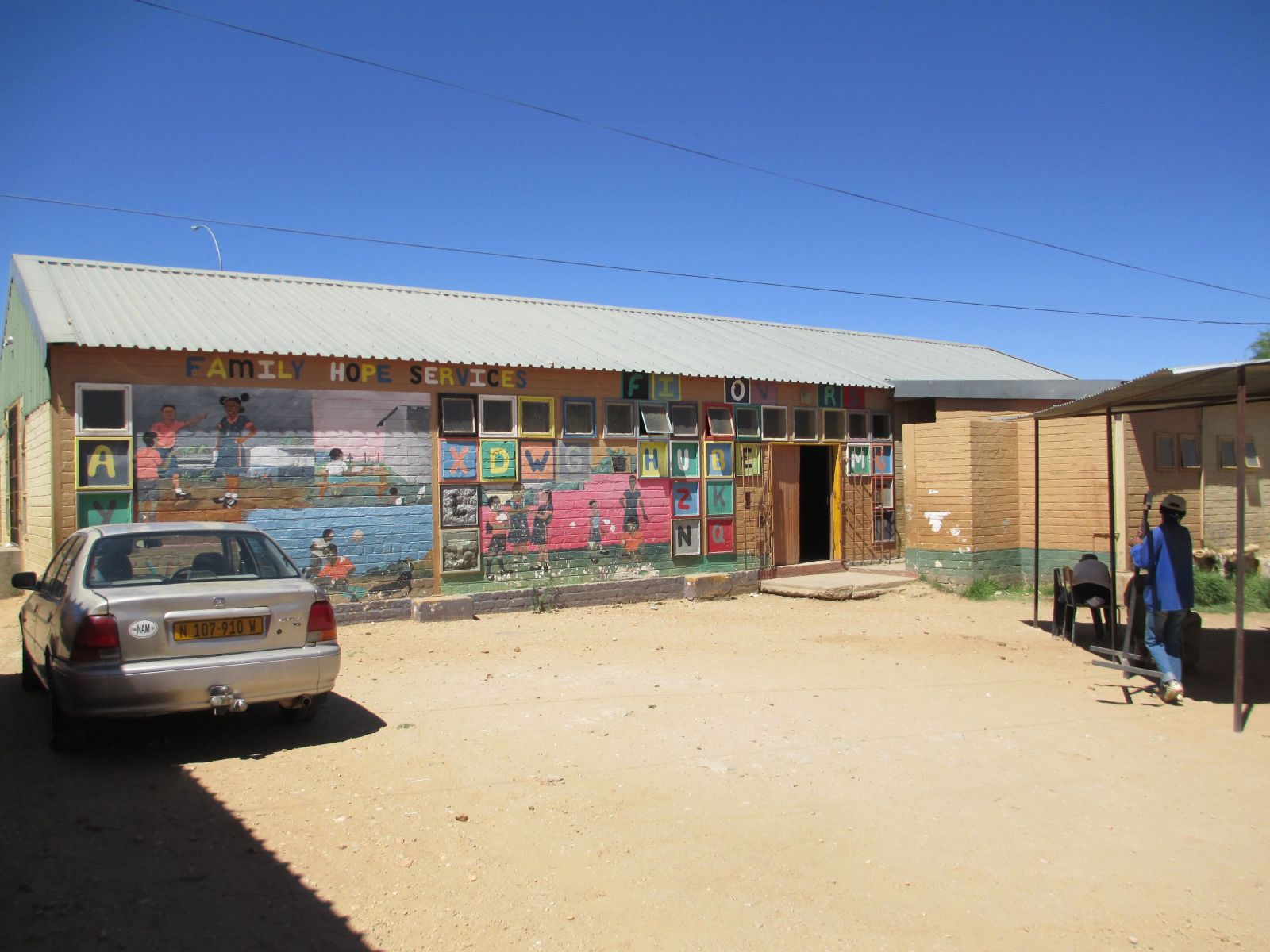
One morning a week we have the privilege of working with FHS (www.familyofhopeservices.org).  This NGO is located in the poorest part of the city in what is called the “informal settlements” of Hakahana  & Havana. Approximately 100,000 people live in these informal settlements & squatter camps. FHS has a motto “Restoring Hope, Empowering Families”.

This non-profit welfare organization commenced a decade ago when the founder saw the huge need within the community. Poverty & desperation were very evident but little was being done to assist those who lived there.

“Shantytown” is perhaps the best way to describe these informal settlements, which continually grow as rural folks leave their land to look for a better life in the city. Unfortunately this better life is usually not found.

FHS commenced in 2003 with 18 children but now supports 450 children of which some 250 receive a mid day meal six days a week. The organization seeks to provide for the basic needs of many families. This includes health care, a feeding program, protection of vulnerable children, education, counseling & teaching income generating activities. FHS also has a child sponsorship program where hundreds of children are under direct sponsorship of caring patrons. A bike workshop assists in the generation of income. Second hand & pre-loved bikes are shipped from a supporter in Canada where they are restored in the workshop & then sold.


The feeding program (lunch) gets underway. This photo shows some of the early arrivals receiving their meals.  

We have spent some time out at the community facility meeting the staff, volunteers & some of the children. There is a strong Christian presence within the team & weekly team meetings commence with Bible Study. On one occasion we played board games with a small group of children who took great delight in meeting the white strangers & displaying their skills in whatever board game was on offer. These children are from the poorest part of town & many need assistance with their schooling in addition to meeting their basic living requirements.

Kate watching over the board games tournament

A few weeks back we attended the final day of a three day workshop for community leaders / health workers. There were about 35 people in attendance (95% female) & we were treated as honoured guests.  This was the first time we drove deep into the squatter camps & saw firsthand the living conditions people endured.

Homes are simple tin shacks with bits tacked on here & there. We saw people urinating in the street as sanitation is poor throughout the community. There are some communal toilets however it is about one toilet to every 20 homes. The same is true for water points. There is no electricity so it is very dark in the evenings. The local council has erected some floodlights in some parts to assist in the evenings. 

The bike workshop

Tenants pay rent to the council  & if the rent is not paid then the shack can be physically moved to the very outskirts of the settlement or ultimately bulldozed.  We also saw a tent school erected as no permanent school has yet to be constructed. It was in the mid thirties on the day we visited so one can only imagine what the temperature must be like for the students in the heat of the day.

At the workshop a representative from Legal Services spoke about the importance of Namibian citizens obtaining a birth certificate & how to go about doing this. Unfortunately many babies are born & their births go unregistered! There are many & varied reasons for this, & one of the roles of FHS is to empower the community to know their rights & know how to go about obtaining them. Not having a birth certificate is a breach of human rights & many complications follow as a child gets older if they do not have one. At the workshop we heard the story of a 71 year old man who recently received his Birth Certificate for the fist time!

There are Government services available in Namibia to assist needy individuals & families however the average citizen does not know this, & even if they did would not know how to go about applying for them (assuming of course their education was sufficient to complete the required paperwork & they had a birth certificate to formally identify themselves).


FHS has its office in the local community hall

The workshop also discussed teenage pregnancy which is a becoming a national issue. 15% of Namibian girls aged 15 to 19 already have a child.  In one regional area, there were 68 pregnancies in six schools in nine months in 2007. Of course there are many flow on effects to teenage pregnancy, especially the ongoing education of the mother. Statistically speaking, a child born out of wedlock to a teenage mother will have a very difficult life ahead of them.

The workshop concluded with an African celebration lunch as the workers left to return to their communities empowered to pass on their knowledge. Unfortunately our involvement in this workshop was a last minute decision & we did not have our camera with us to share some of these visuals. Hopefully another opportunity will avail.

Our involvement with FHS at present sees us compiling a booklet, which will assist the community in knowing what Governments Grants are available, what the qualifying criteria are & how to go about obtaining them.

In all of the four projects we are currently working on there are needy people who are doing it tough. Our involvement with FHS however has confronted us as we have now seen firsthand the poverty that exists even in this relatively modern African city. The shantytowns of Hakahana & Havana are a far cry from suburban Sydney & we pray the God would use us in whatever capacity He can to make a small difference in a difficult place. Please visit the FHS website to gain a better understanding of the important work being undertaken by this organization.        

Photo taken from community centre of local suroundings

Pages

Subscribe to RSS - blogs