Dr. Davis!

06 May 2024

Friday, we attended Sarah's graduation from medical school in Chicago!  She will be doing a residency in Emergency Medicine in Chicago starting next month.  Zach is postponing graduation, doing research in pyschiatry, with the plan to start residency in psychiatry next year.  

She got to help take care of her first emergency patient on Sunday morning!  Sarah, Ben, Mia and I (Allen) went out for a chilly, breezy (it is the Windy City after all!) run on the waterfront before church.  On the way home, we saw a man slump forward in his wheelchair on the sidewalk.  We stopped and approached him, "Sir!  Are you okay?"  He didn't respond more than an agonized breath.  We flagged down a police car which stopped.  "Do you have Narcan®?" Sarah asked.  "No, we're coming back from a parade."  "I need to start carrying Narcan," Sarah remarked.  A policeman looked in the man's pocket and pulled out a little ziplock bag with a cut off straw in it.  "What's that?" I asked naively.  "They snort heroin out of these little baggies."  The man's breathing was really slow, depressed by the heroin, just taking 2 or 3 per minute.  Fortunately,  after about 5 minutes, a policeman with Narcan arrived and gave the man a squirt in the nostril.  "This will amaze you," I told Ben who was watching the whole event.  Narcan (Naloxone) is a drug that blocks the receptors that opiods like heroin activate.  If you block the receptor, the drugs lose their effect.  In 30 seconds the man suddenly came to life, moving around and agitated, and most importantly, breathing! 

Later, on our way to Ben's house near Taylorville, IL, we stopped to buy some gas and the gas station had a box of Narcan nasal spray, freely provided by the Illinois government for anyone who wanted it.  We each took one.  

Workshop in Tarucani

26 Apr 2024

The ETE ('Educación Teológica por Extensión') program has gotten off to a bit of a different start this year.  The usual progam organisers/ leaders, Roberto and René, are out of travelling action.  Roberto is slowly recovering from an operation he had a couple of months ago.  I visited him last week to see how he was going, and it's fair to say the poor bloke has had the stuffing knocked out of him (he could really use your prayers).  And René, like the vast majority of Peruvian pastors, isn't paid for his work and so he has to get an income from elsewhere -- in his case, farming the land.  So he's off somewhere in the countryside herding alpacas and all that sort of thing.

So basically that means that I was wondering how yesterday's mid-week workshop at the estancia of Patimayo might go.  I needn't have worried; René had organised people to (i) act as coordinator and (ii) deliver the training material.   I was able to deliver a short study on Jesus' parable of the Pharisee and the tax collector (see Luke 18:9-14), how it fits into its context (18:15-25), and what the implications are for all people generally, and also for us as followers of Jesus.

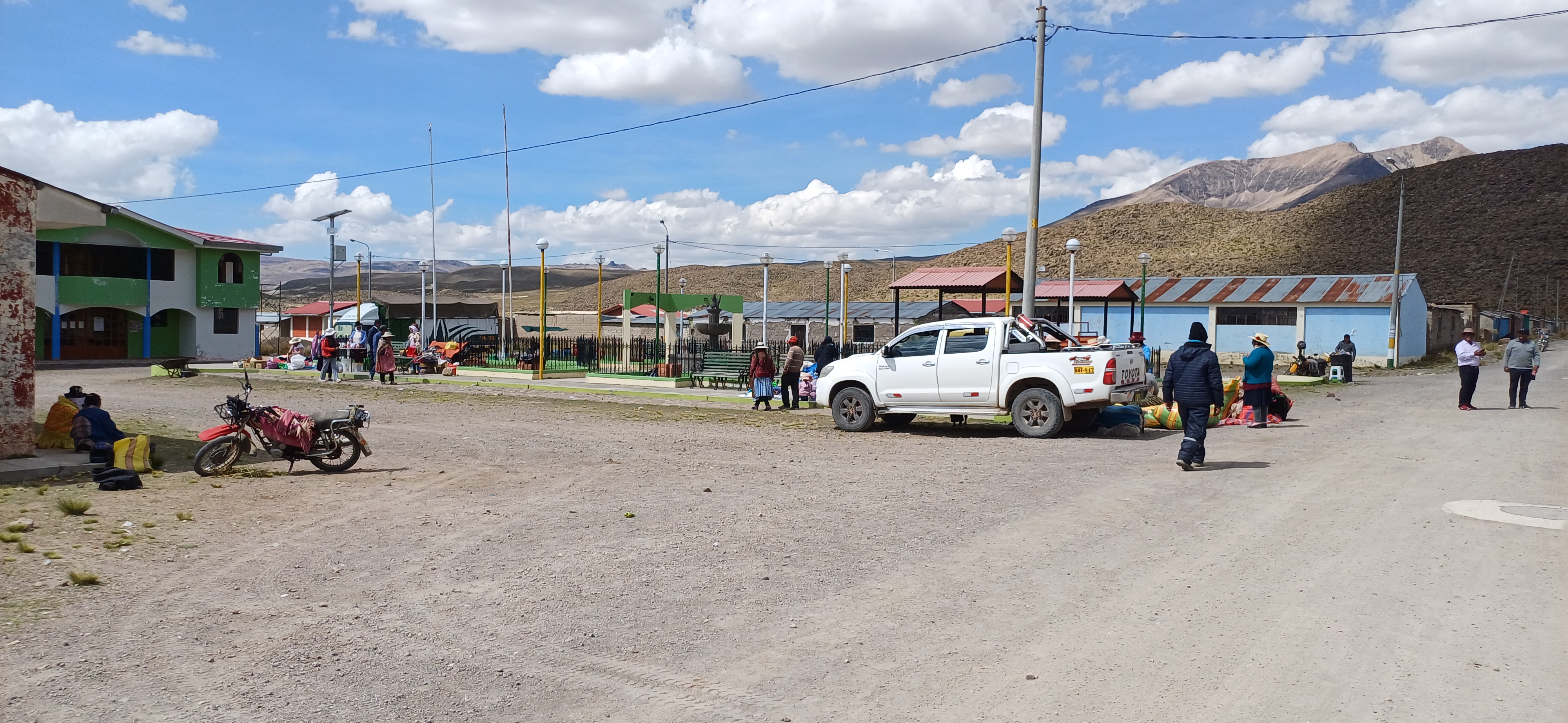
Above: main plaza of Quinsachata, between Tarucani and Patimayo.

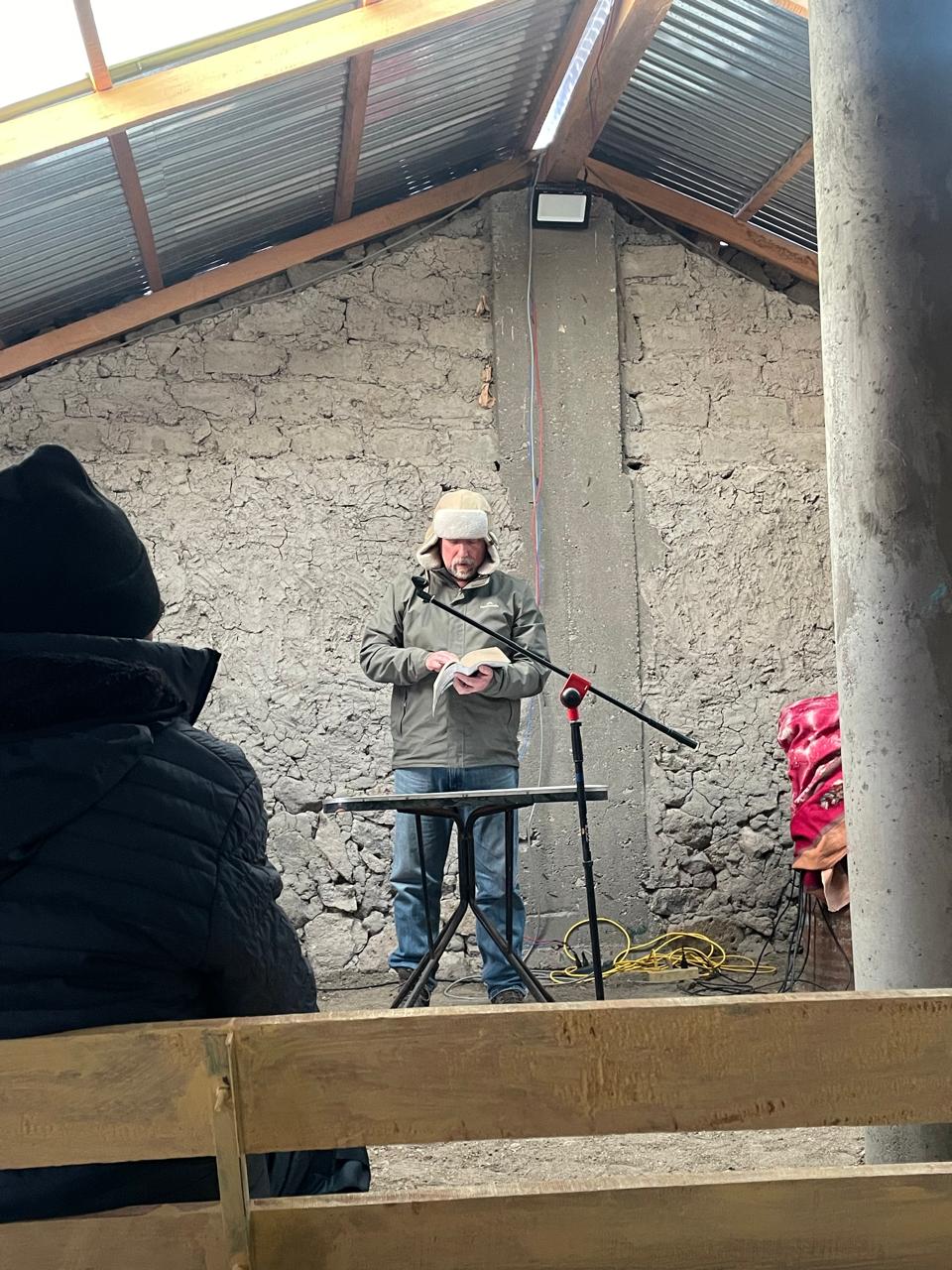
Below: yours truly leading the morning study/ devotional on Luke 18.  And the hat?  Well it was about zero deg. C and I happen to value comfort above appearance.

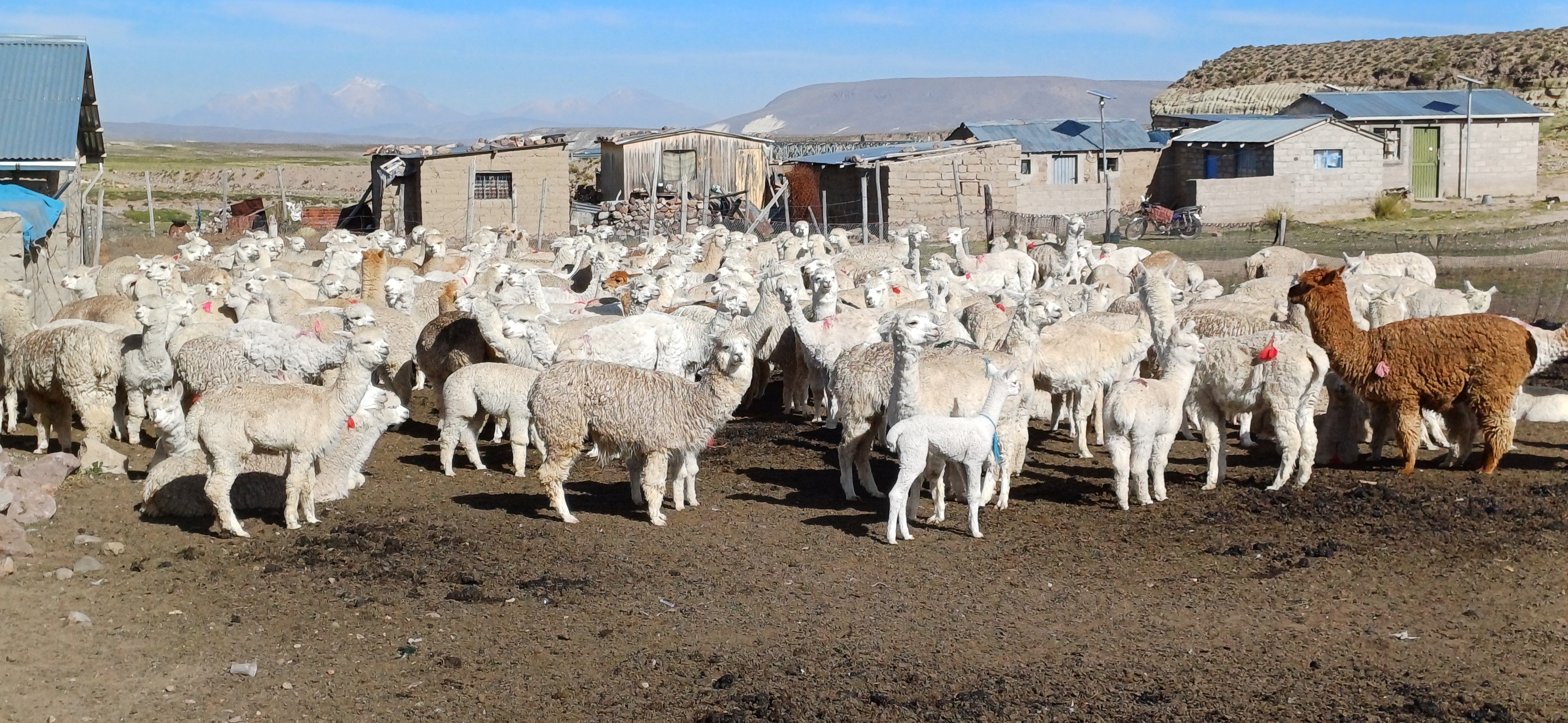
Now, where is Patimayo?  Well, north-east of Tarucani -- which kind of sounds like a frontier town in the 1800's wild west.  But in fact it's a neat, orderly quiet sort of place which even sports a shop for abarrotes (groceries).  Twenty minutes further on you get to Patimayo, which is just a few houses and alpaca corrals.

Above:  Herd of alpacas in Patimayo, just itching to get out the corral gate for a day's feeding.

So why have an ETE workshop in Patimayo?  Because it's a geographically central location for that IEP (Iglésia Evangélica Peruana) parish, and so it means that most students can make it there without too much travel (be that on foot, on motorcycle, or codging rides with local traffic).

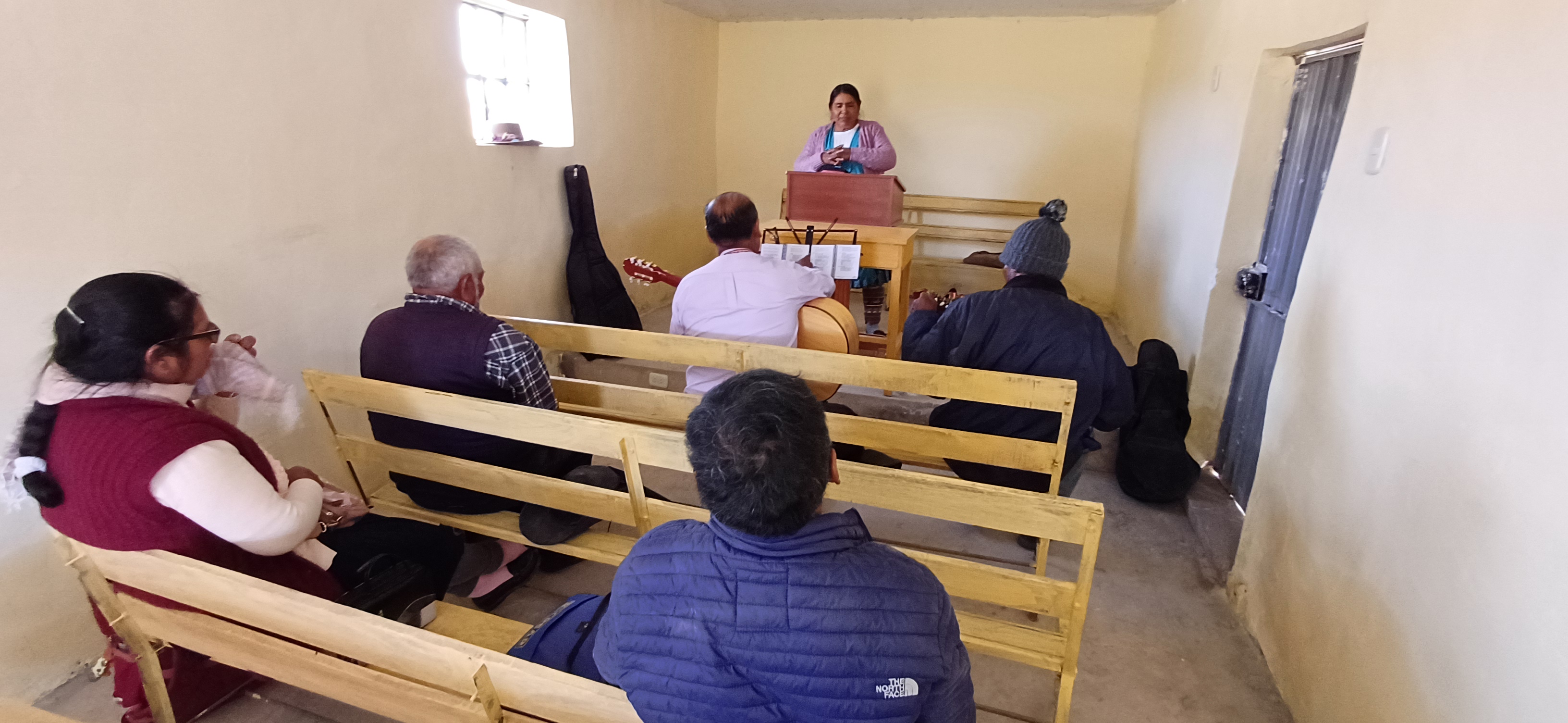
Above:  Hermana (sister) Antonieta leading the Thursday afternoon service in the chapel.

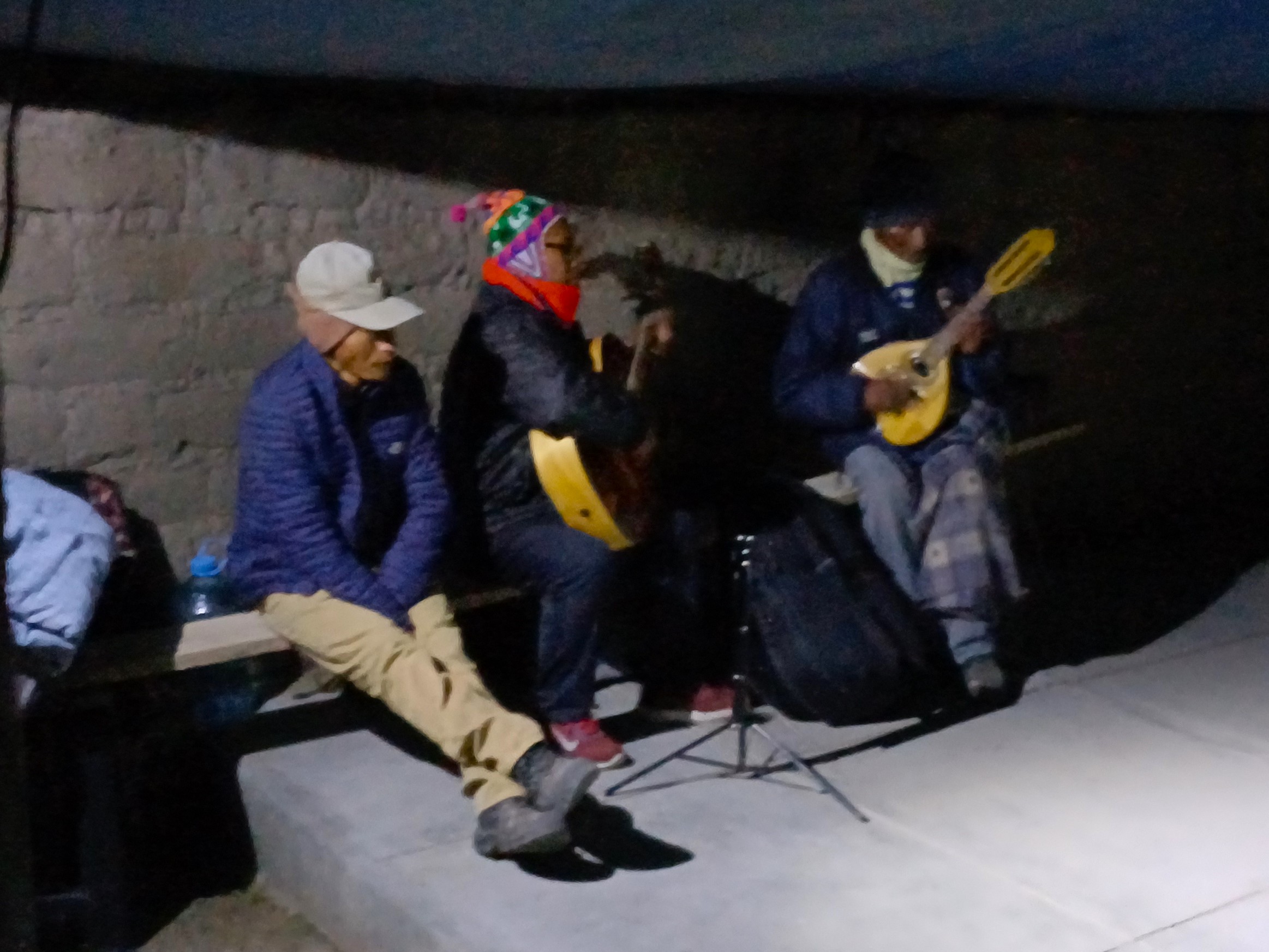
Thursday evening was the usual session of traditional music and singing by these Quechua Christians.  Some songs were in Spanish, others in Quechua, but it was all heartfelt and great to participate in.  Different people stood up to bring greetings from their families and churches, to thank all involved in organising the workshop.  So much of this would sound repetitive and even unnecessary to you or me, but it is the Quechua way.  They really are into honouring others in a way that the average Australian certainly isn't.

Below: tuning up for the evening's music session.

As my first highland trip for our second 2-year stint in Peru, the altitude knocked me about a bit, but I was kind of expecting that.  I wasn't the only one; Jimmy (Peruvian pastor mate) was also struggling with a low-grade headache.  But we kept our fluids up (lots of maté, the traditonal herbal tea) and popped a few aspirin which always seem to help.

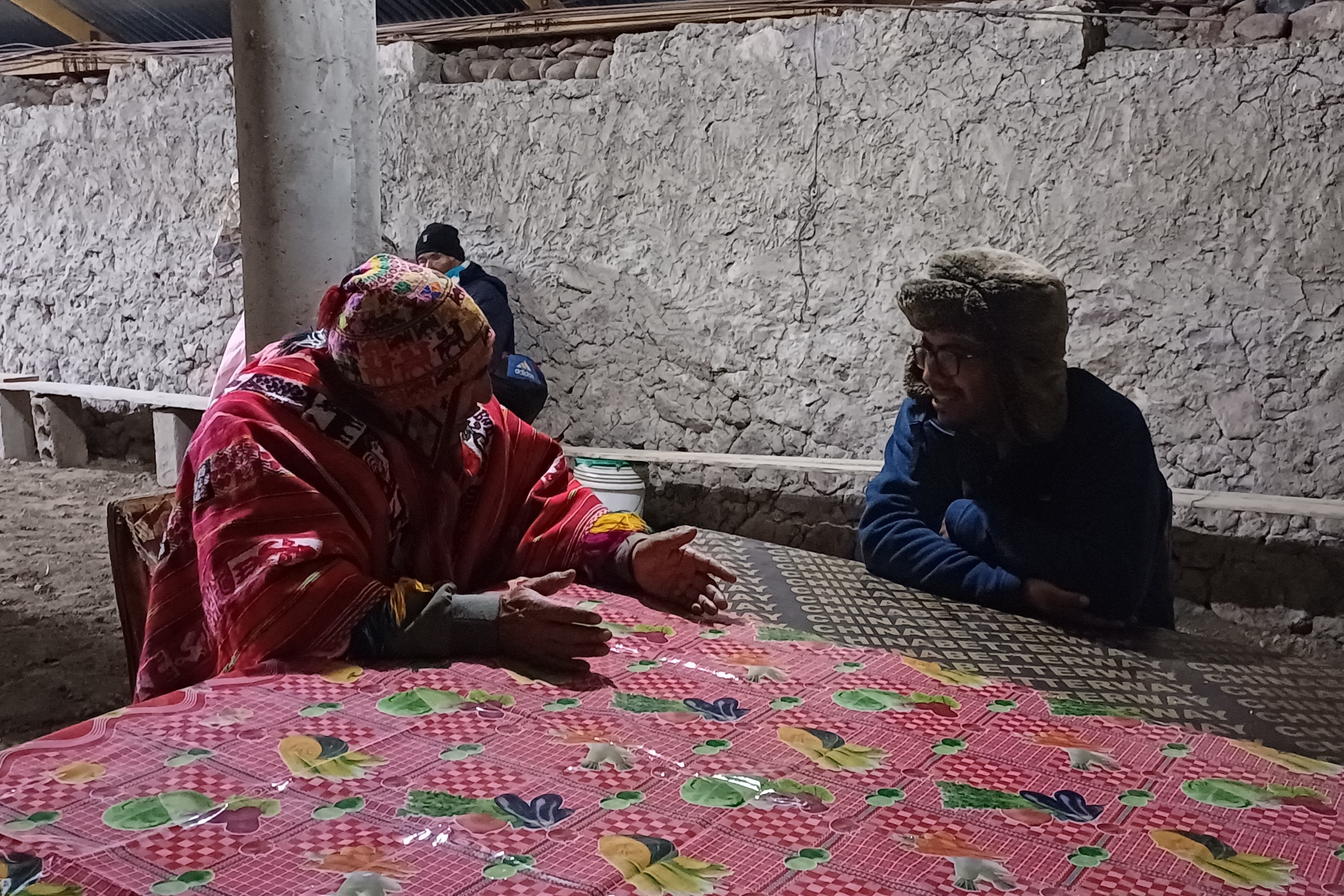
Below: Jimmy (right) chewing the ministry fat with an IEP pastor.


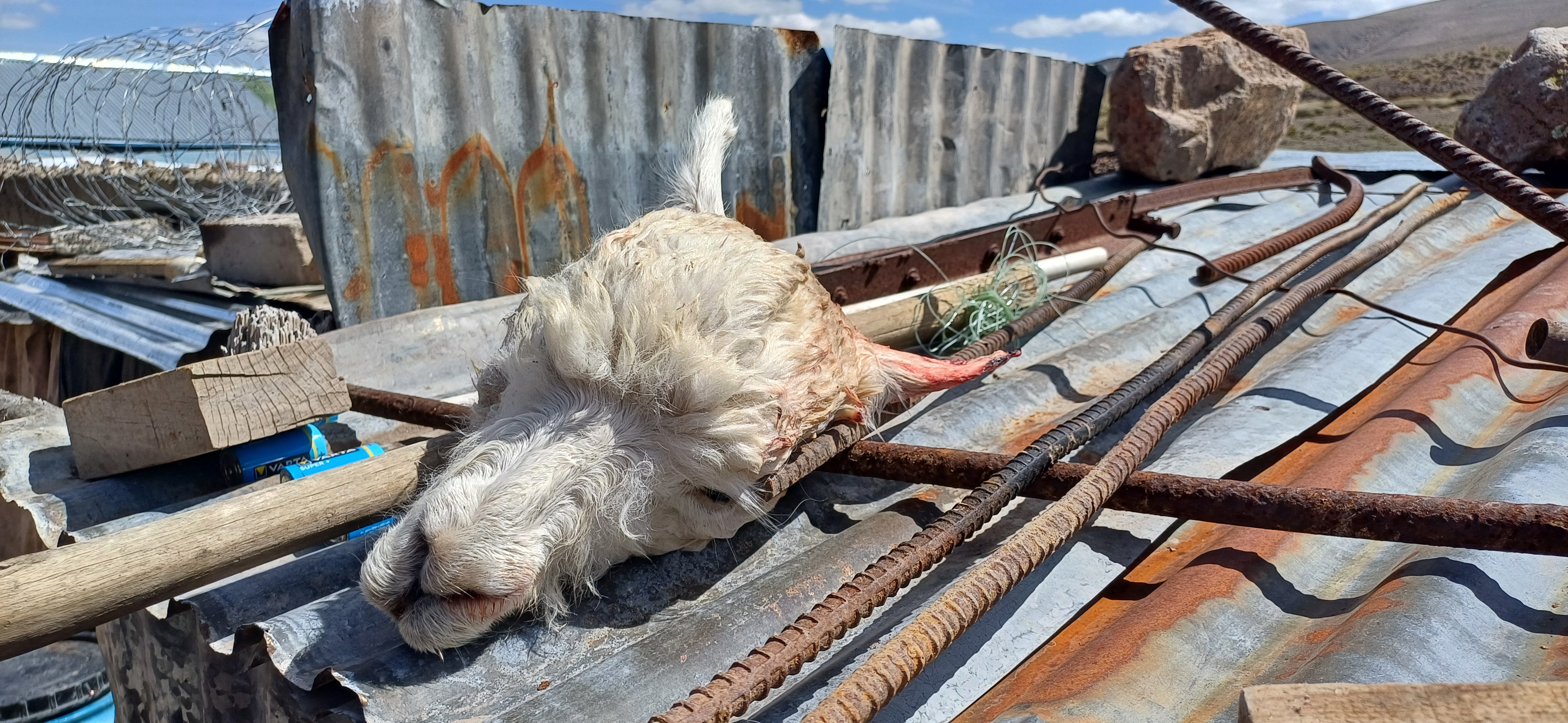
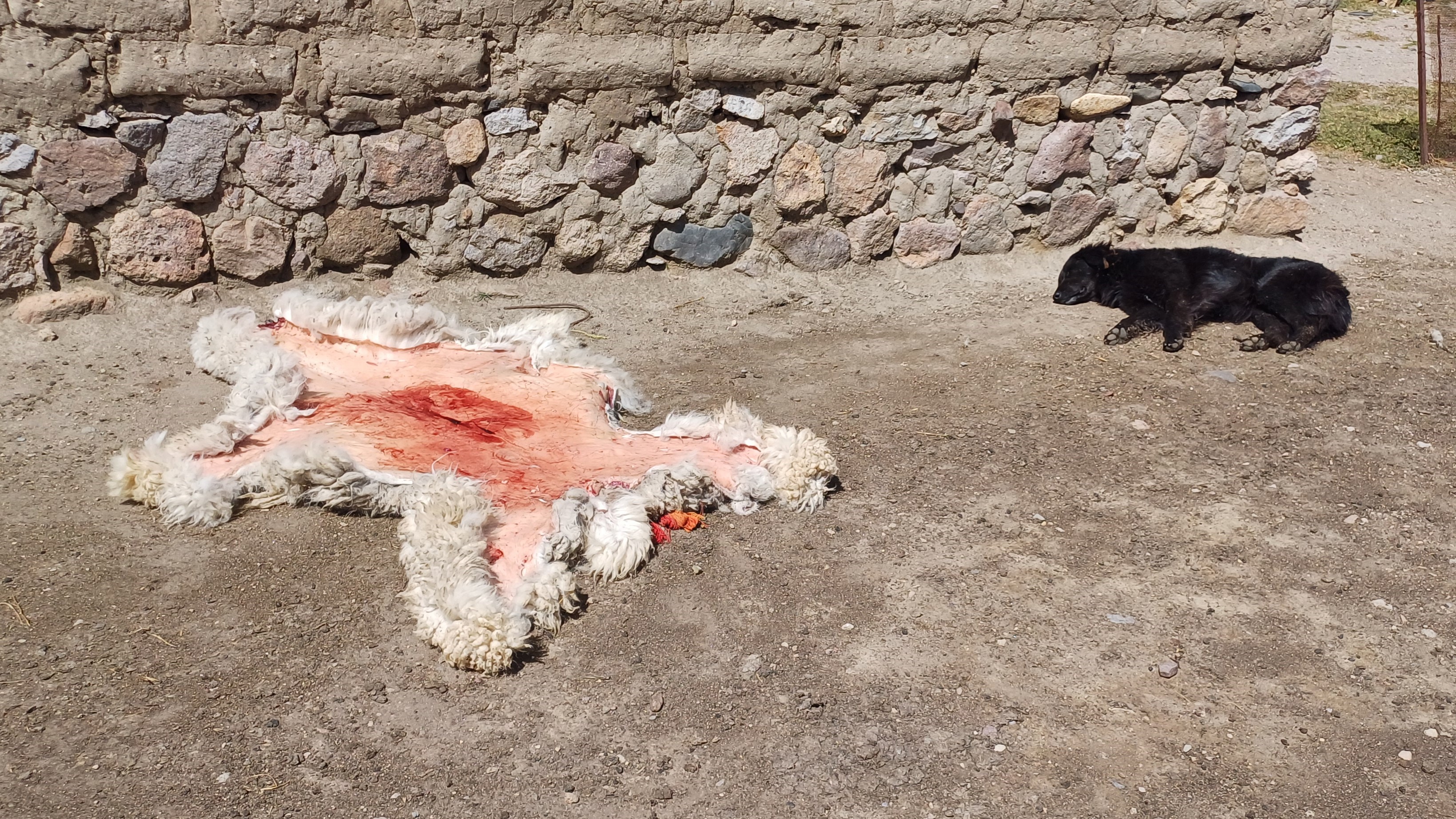
Below: the unlucky alpaca which got turned into soup for everyone (and guess who got the bones).

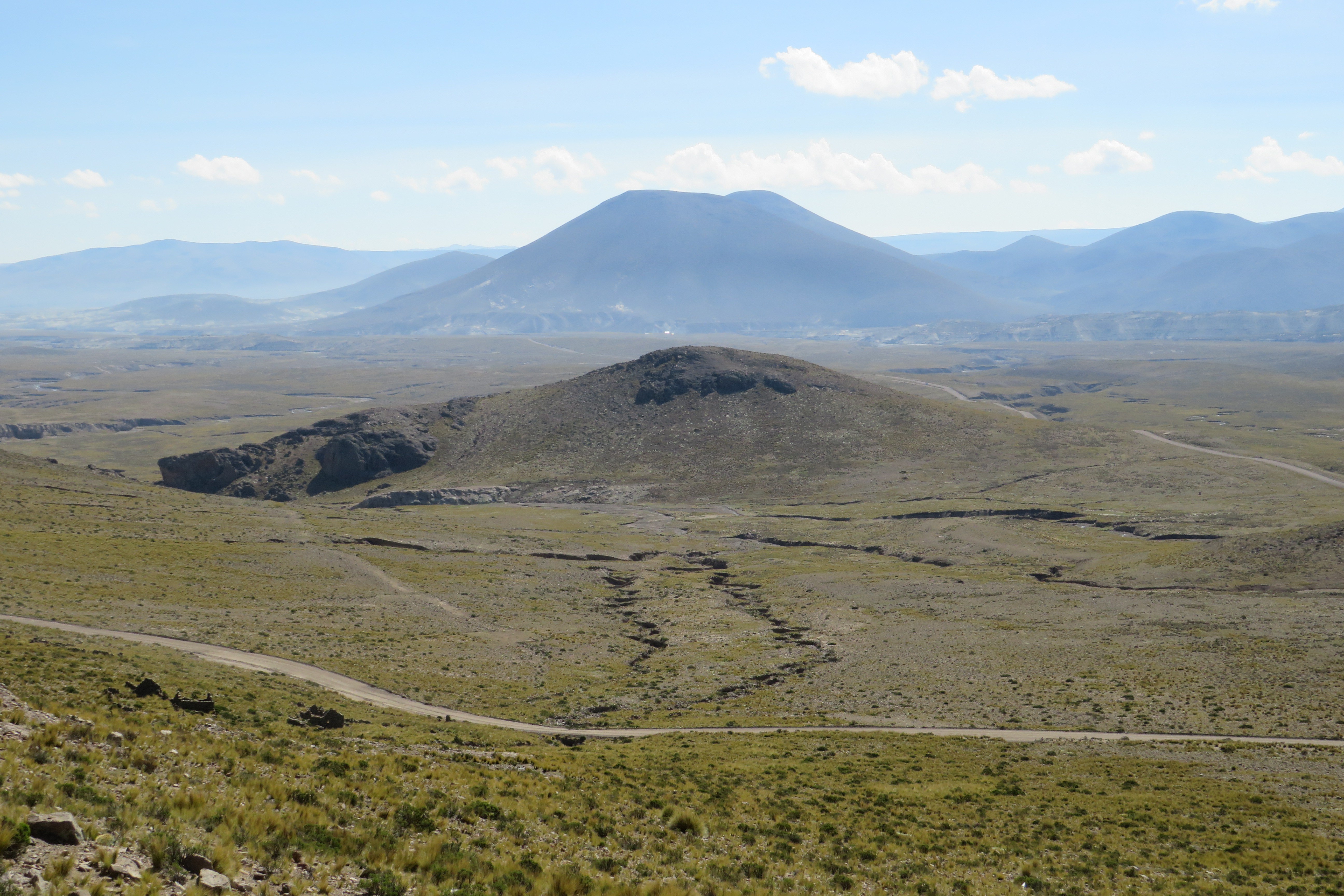
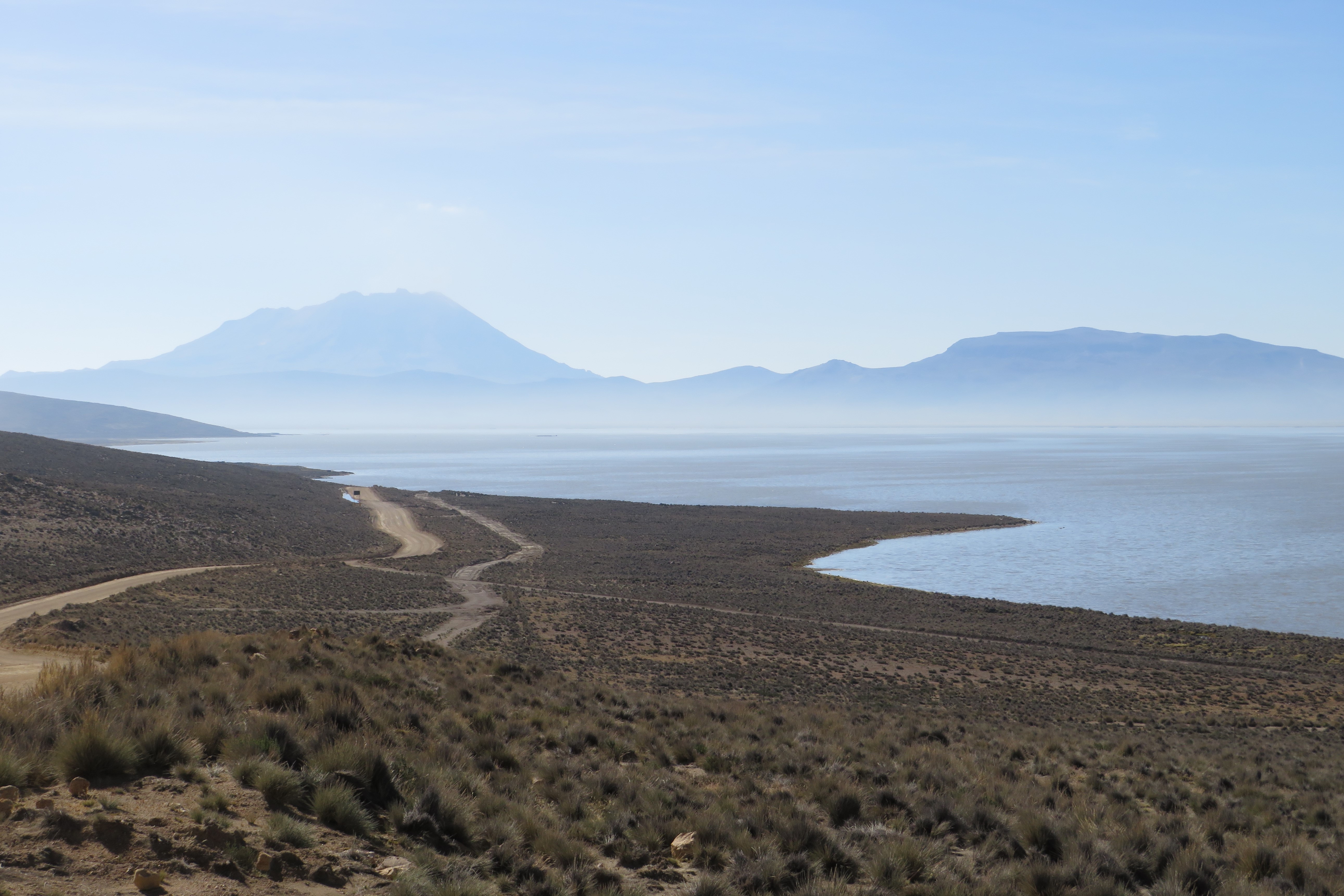
On the way back this morning, we caught some stunning views of Laguna Salinas.  It's now full of water after the summer rains, and has heaps of flamingos wading around.  The Peruvian Andes really are spectacular; every ridge you come over, every valley you drive down, every river you cross, every town or settlement you come to... just wonderful.  (Hint: if you want to see any of the images in these blog posts in more detail, just right-click and select 'Open image in new tab' or the equivalent.)

Above: crossing over from Laguna Salinas to the valley where Tarucani and Patimayo are.

Below:  Looking east across Laguna Salinas to the active volcano Ubinas.

The gentle subject of huaycos...

17 Apr 2024

If you do a lot of travelling in el campo ('the countryside') here in Peru, you really should be doing it in a 4WD.

Above: The mighty Hilux in the Paracas desert, on our way back from the Feb. 2023 SIM 'Spiritual Life Conference' in Lima.

Now we Australians are fairly familiar with 4-wheel driving; it's part of what we do.  I spent some of my youth on the farm putting the old '72 Landrover through its paces on the steep shaley hills in the bush backblock, and like most of us I've had the pleasure of digging out a few thoroughly bogged 4WD's (and one bus here in Peru, but that's another story).  So whether it's 'bush bashing' or going on off-road holidays or getting around on the land, we Australians feel pretty familiar with the Australian terrain.

The danger, we have discovered, is when you get into unfamiliar terrain with a 4WD.  Like the Andes mountains, for example.  It's easy to see the dirt roads, the river crossings, and the semi-desert countryside as something we understand, and therefore we just assume we know what we're doing.  But therein lies the trap!  Because Peru has one thing we don't really get in Australia: the huayco (pronounced 'wai-co'), aka the landslide.

We came across this landslide (below) while taking a break down Quillabamba way last October, out the back of Cusco towards the jungle.  It was on a dirt road that winds up the mountains a few kilometres east of the famous Machu Picchu.  Now, thanks to a load of unseasonal rain, a few landslides had started happening.  And so it was that we came across this beauty:

Now, yours truly took one look at this and said, "No worries, we can get over that!" and then hopped out of the car, levelled it off a bit by pulling a few rocks and small boulders out of the way, popped the Hilux into low range 4WD, and over we went.  But a couple of bends later, we found that the road was completely washed away -- and there was no getting around that!

And then it dawned on me the dangerous situation we were in.  There were small rocks still trickling down from the mountain slopes above, and we needed to get out of there.  With Kerry guiding me, I managed to keep clear of the soft edges and do a 15-point turn in the Hilux, and then we headed back to the landslide we had just crossed.  This time I got Kerry and Megan to get out of the car while I drove it back over the pile of mud and rocks.

But as I was crossing it this time, the boulders under the rear wheels suddenly slipped sideways, and for a moment there I thought I was going over the edge and into the river a hundred meters (or so) below.  But thankfully (very thankfully) the rocks stopped rolling, and I got the Hilux over the pile and back onto the road.  Kerry and Megan clambered back in, and we headed back the way we had come.  A few minutes later Kerry asked, "That was a close one, was it?"  "Yeah," I said with the usual degree of Australian understatement about these things, "it was a bit ropey!"

A month or so ago there was this landslide (video below) in Peru.  You just won't believe the violence and power of these things until you see the video.  Thankfully both truck drivers survived, but their trucks were utterly trashed.

So anyway, now that we're a bit wiser about travelling in Peru, we can travel a bit more safely.  Just remember: the real danger is the danger you don't recognise. ;-)

A successful EBdV!!

18 Feb 2024

What is EBdV you may ask?  It is 'Escuela Bíblica de Vacaciones' or 'Vacation Bible School' in English!  Last Tuesday through Friday, from 3 to 6 pm each afternoon, we put on a program based on the Old West with a sheriff, outlaws, horse-shoes and branding.  My prayer before the event was that we wouldn't have too many or too few kids participate and God answered those prayers, as we had 10-20 kids each day!  It was exhausting doing all the decorating, learning lines for sketches and organizing games, crafts, choreography and Bible studies.  By the end, even the most sullen, uninterested kids were jumping up and down excitedly!  It's a good thing Mary Beth and I have a good marriage, as preparing such a thing in one's church (which is also our house) was a stressful event!

Workshop in Paquenta

03 Nov 2023

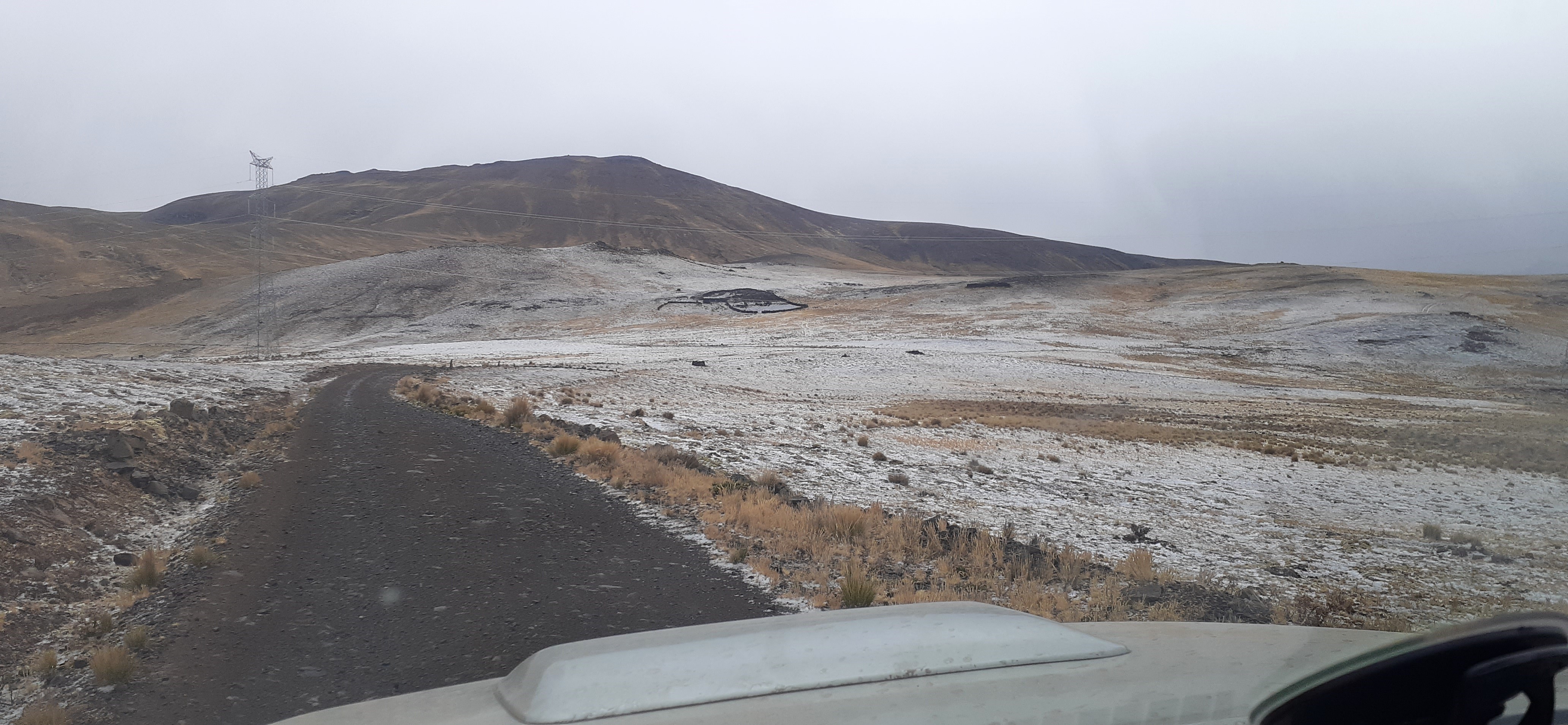
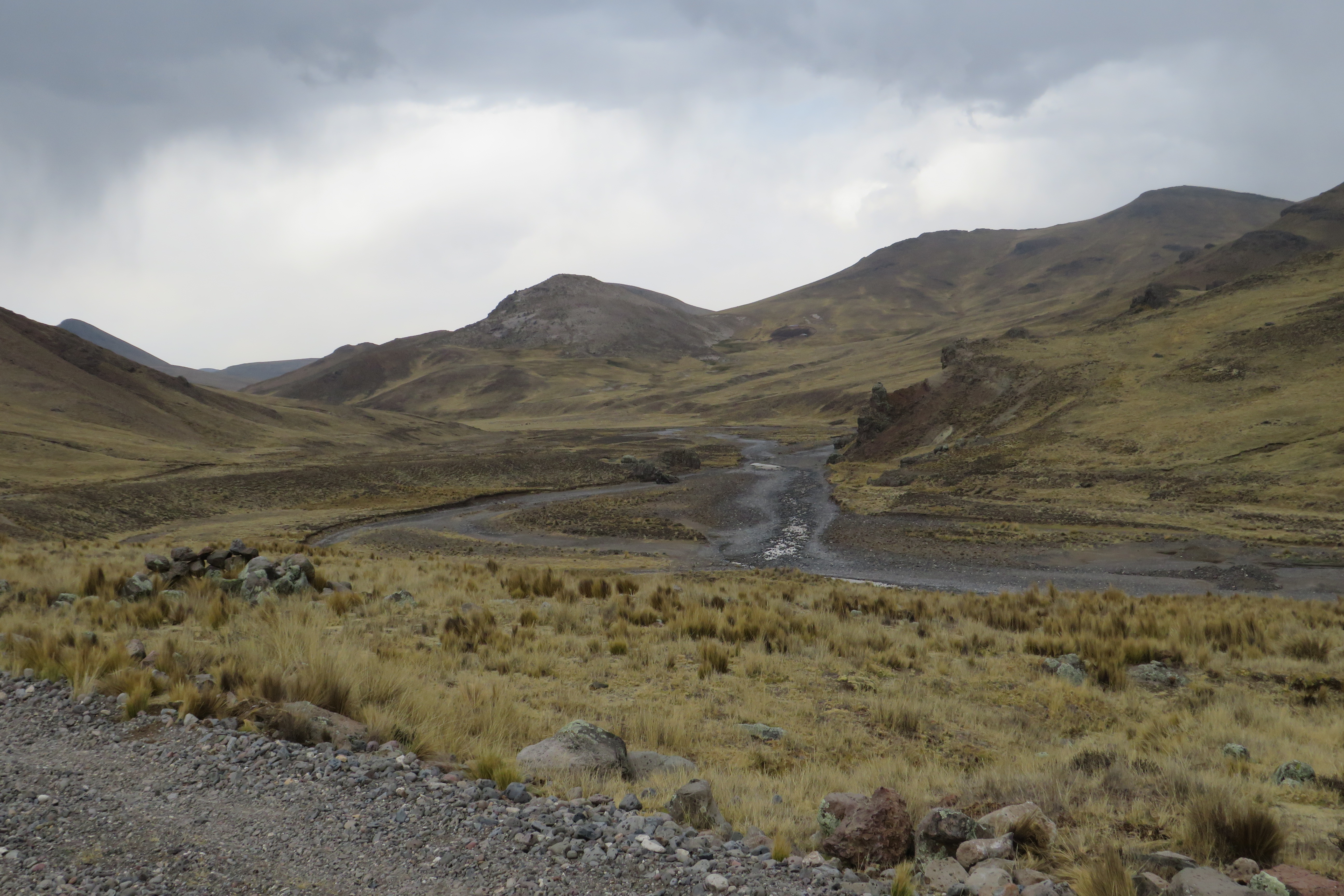
Hot on the heels of the last ETE (Educación Teológica por Extensión) workshop in Chivay, the weekend of 13-15 October saw us in the village of Paquenta.  Where is this?  Well... it's out the back of Cota Cota, which is out the back of Tisco, which is out the back of Chivay, which is out the back of Arequipa.  You get the drift.  On the way there was a fair bit of wet weather blowing through, and we even copped a bit of snow:

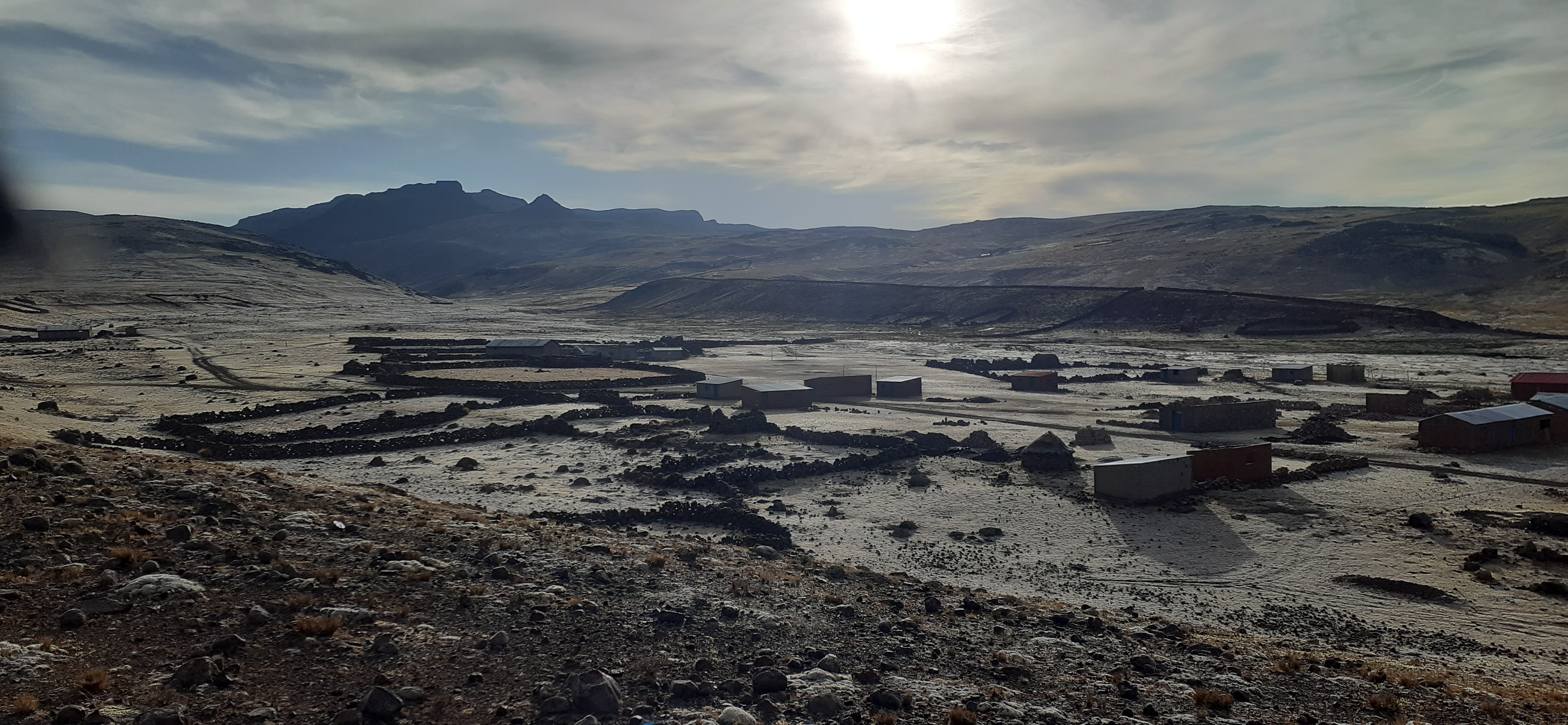
This has to be the most remote location I've been to with René and Roberto: a gathering of houses and huts in a shallow valley.  There are quite a few buildings in the village, but most of them aren't occupied.  Only a few families live there; about 5 of these people are ETE students.

Below: A frosty Saturday morning in Paquenta.  The peaks on the horizon rise to over 5000m.

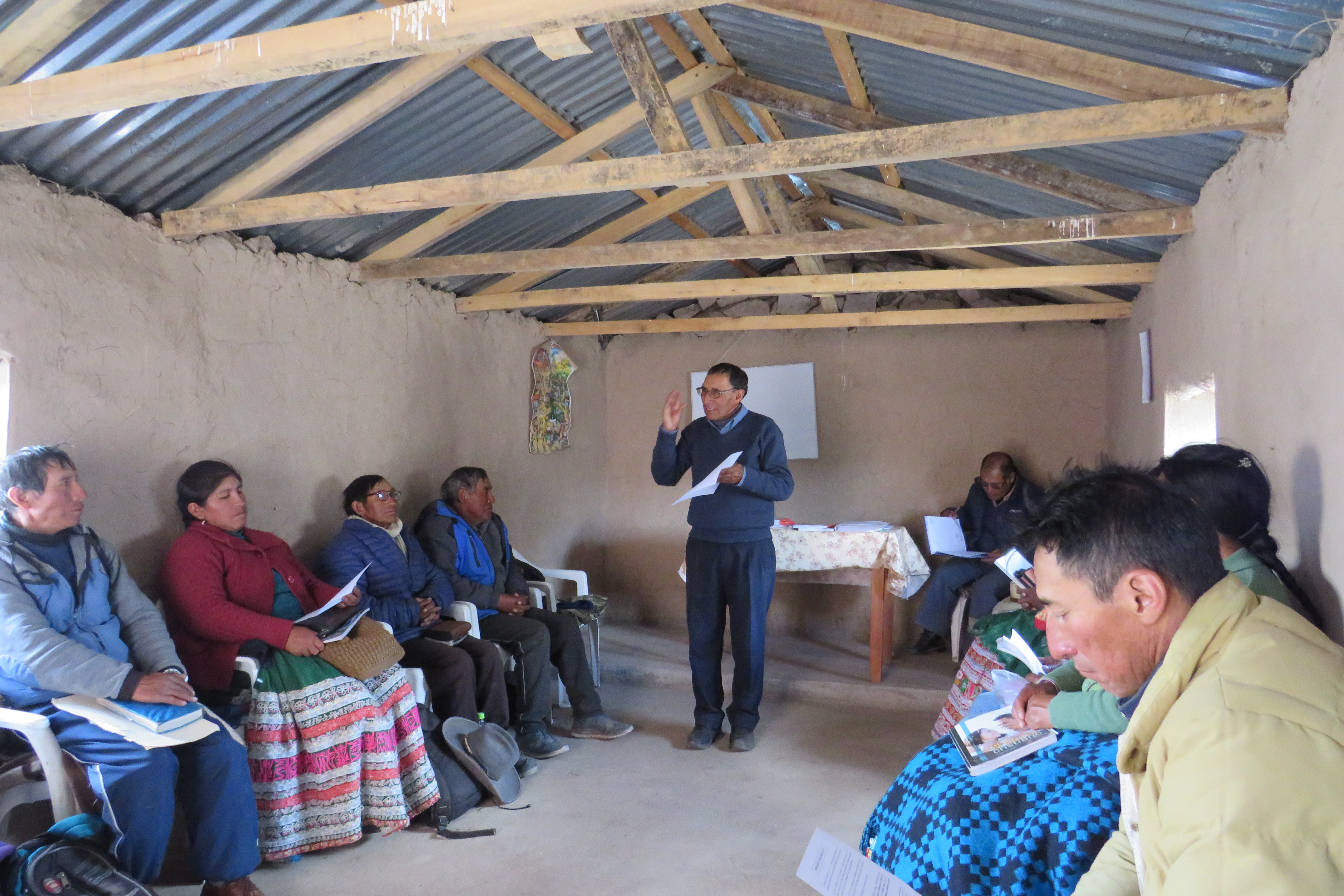
René got the Saturday workshop up and running with the 5 Paquenta students and another 6 or so joining from Cota Cota and Tisco.  As a group we worked our way through a text from the Gospel of Matthew, helping the students to analyse the text, explore its context, and figure out how you'd prepare a teaching session based on it.

For me it's been a real eye-opener to see how René patiently, clearly, and methodically explains things.  Now this is not because the students are dumb; far from it, there are some very sharp tools in this shed!  But most people in these areas have very little (if any) formal education, and the many benefits schooling can bring.  This means there isn't much you can assume when taking these classes.  So, while you and I might find a given method for analysing a text fairly straight forward, well... can you imagine how you'd go if you'd never done this before?

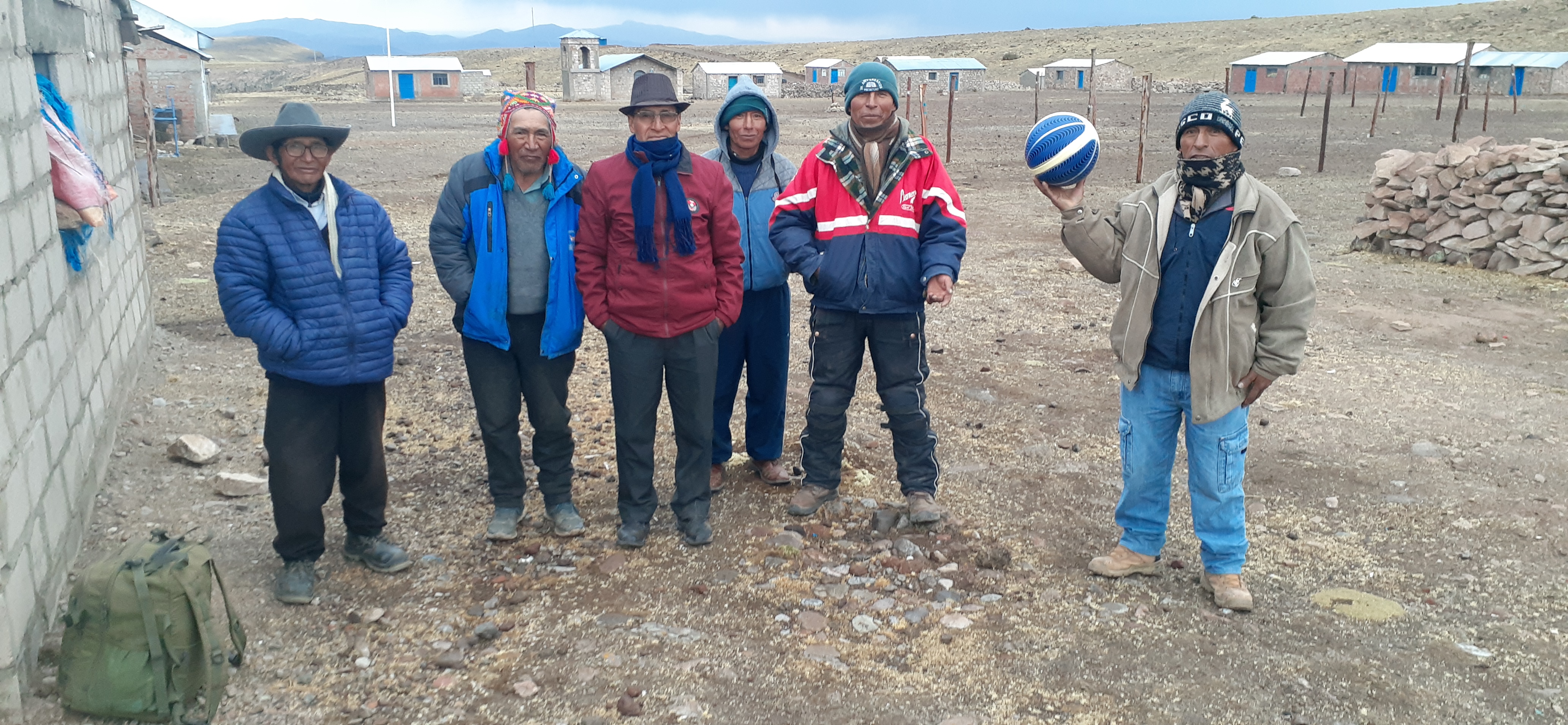
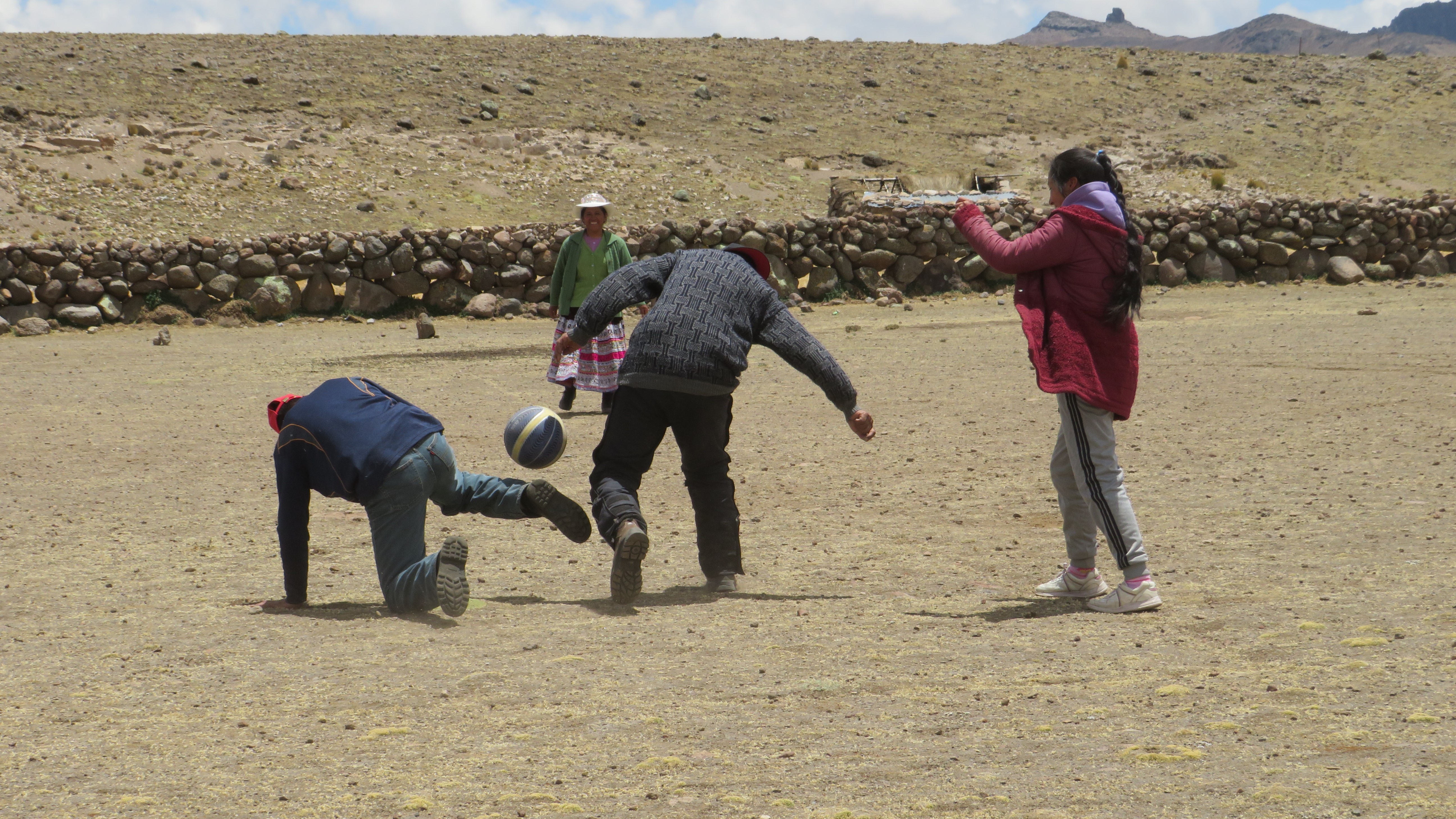
One thing you can assume, though, is that everyone knows how to play football.  Paquenta FC was quickly formed and the game kicked off:

As you can see not much quarter was given, and Peruvian footy passions were well-stirred.  I was happy to be team photographer and marvel (as usual) at the fitness of these people who can slam a ball around at 4400m for 45 minutes and not really get that puffed.

On the way back to Arequipa I had the usual stimulating conversation with René and Roberto about the challenges of delivering Christian education in the rural backblocks.  It was a strange consolation to realise that, even though Roberto and René have been doing the ETE gig for decades now, and they have all the advantages that come with being a part of the culture they're working in, at the same time they keenly feel the challenges too.  As an outsider with a different perspective, but with the same desire to help train competent and effective teachers of the Bible in these churches, these guys are more than happy to toss stuff around and let this greenhorn join in the action.

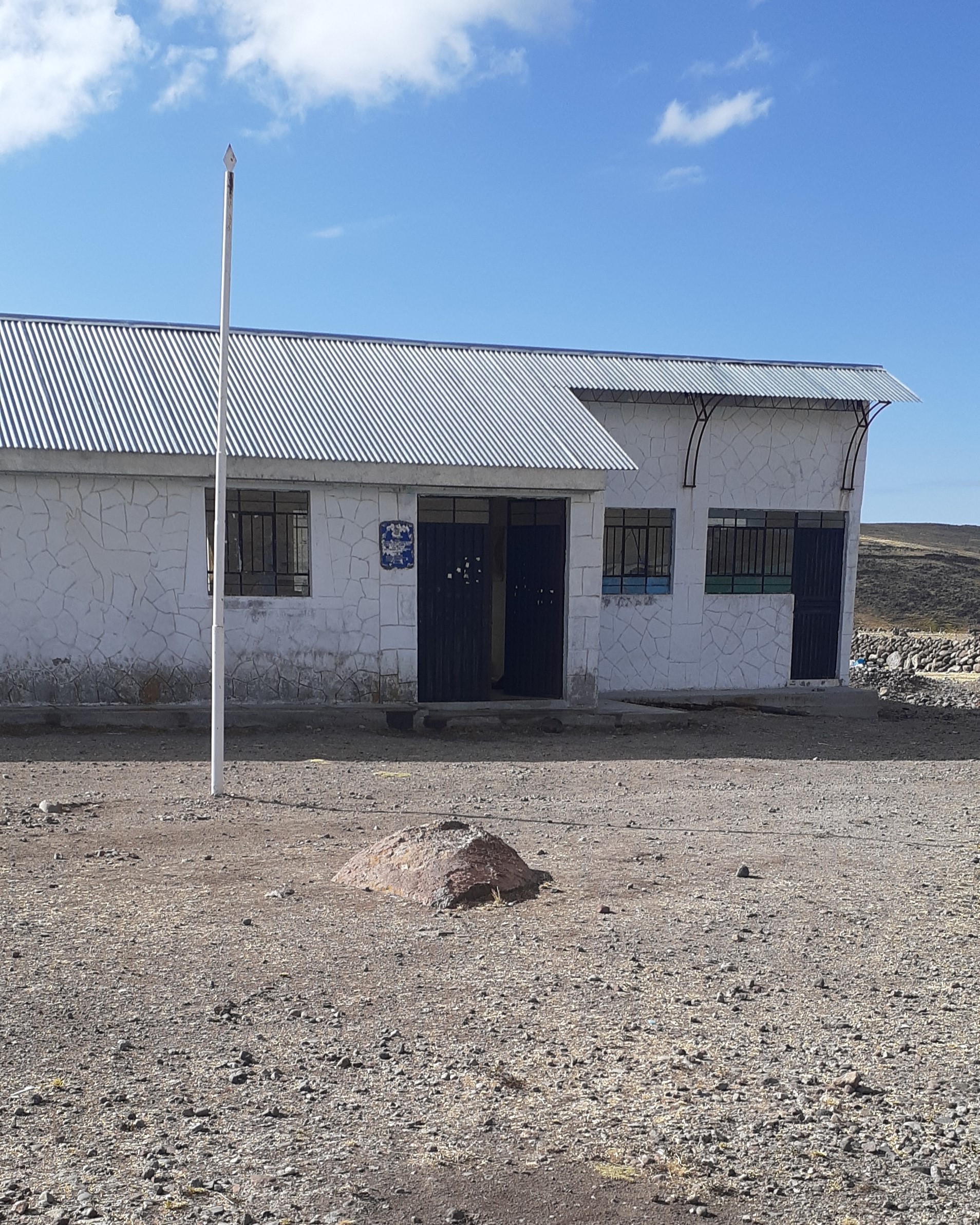
As we were stumping our way across the pitch black plaza to our sleeping quarters late on Saturday evening, a couple of the brothers cautioned me not to trip across a huge rock which is still embedded in the plaza surface.  You can see where it's situated, right in front of the flag pole:

I haven't yet asked anyone about this, but it's got me wondering: Why, in an otherwise flat, clear and level plaza, would you leave a rock like this sitting there?  Maybe it was too big to move... but no, moving rocks is one thing the locals are very good at, and access to heavy machinery isn't that far away.

So what is it doing there?  My suspicion is that it's a huaca -- a sort of sacred object in the Quechua scheme of things that is/ was believed to have supernatural properties.  One thing the Spanish were keen to do when they colonised Peru was obliterate all these remnants of Inca religion.  I've read how the Catholic establishment was frustrated by the fact that while many of these sacred objects still existed in plain sight, only the locals knew which rocks were huacas and they weren't about to let the Spaniards in on the secret!

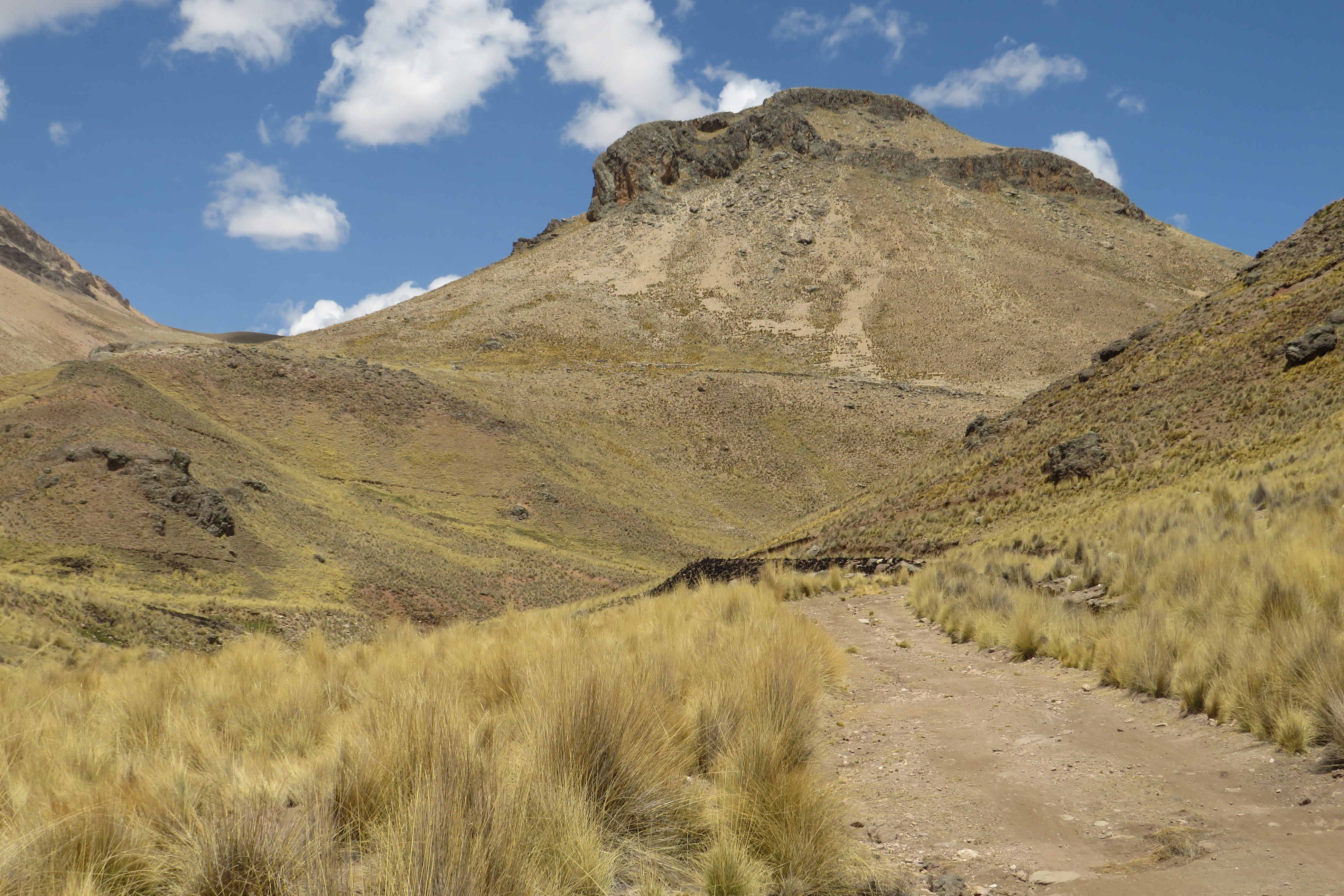
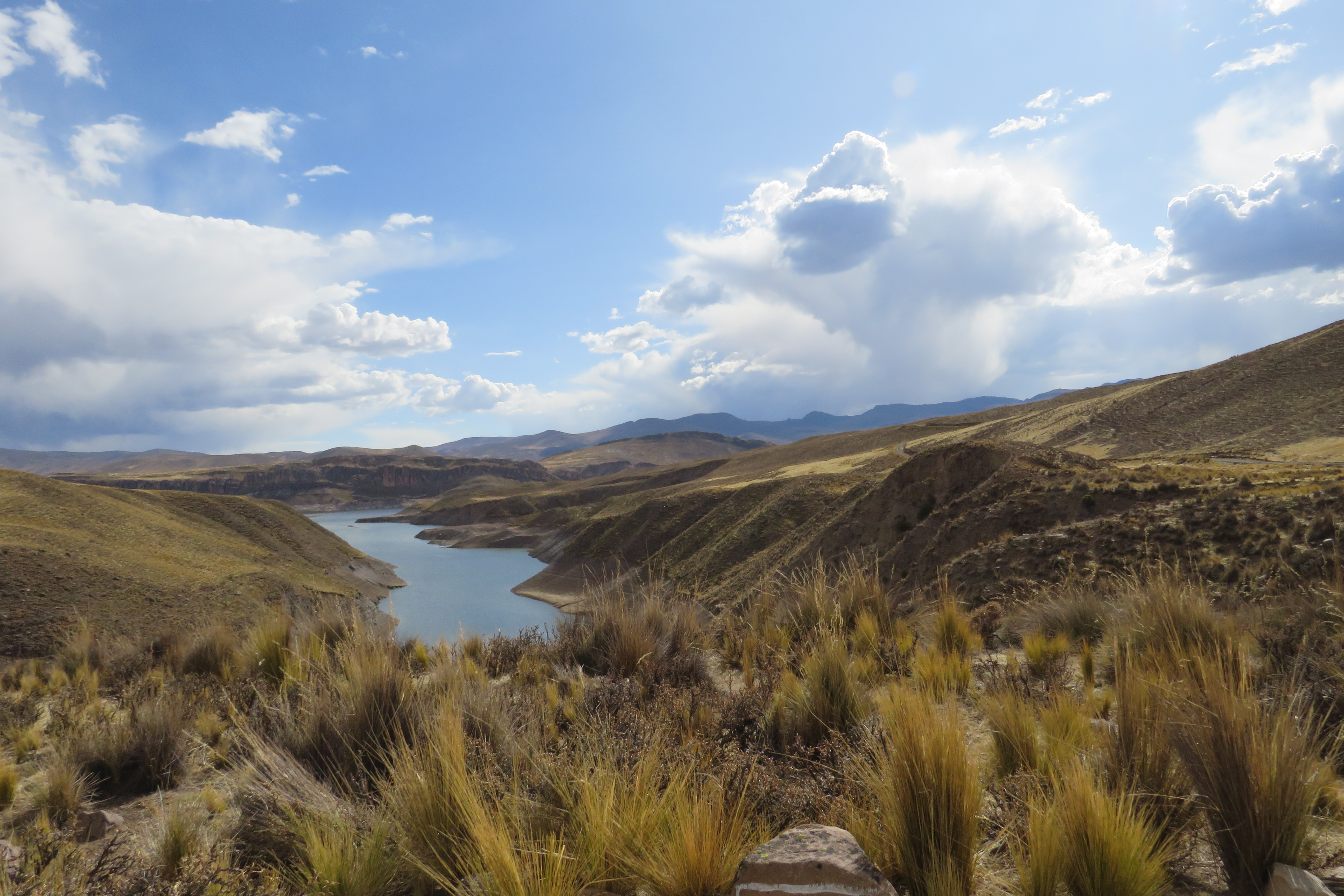
On the way back home, as we chatted about ETE training and the associated issues, the landscape of the altiplano did its usual breathtaking thing...

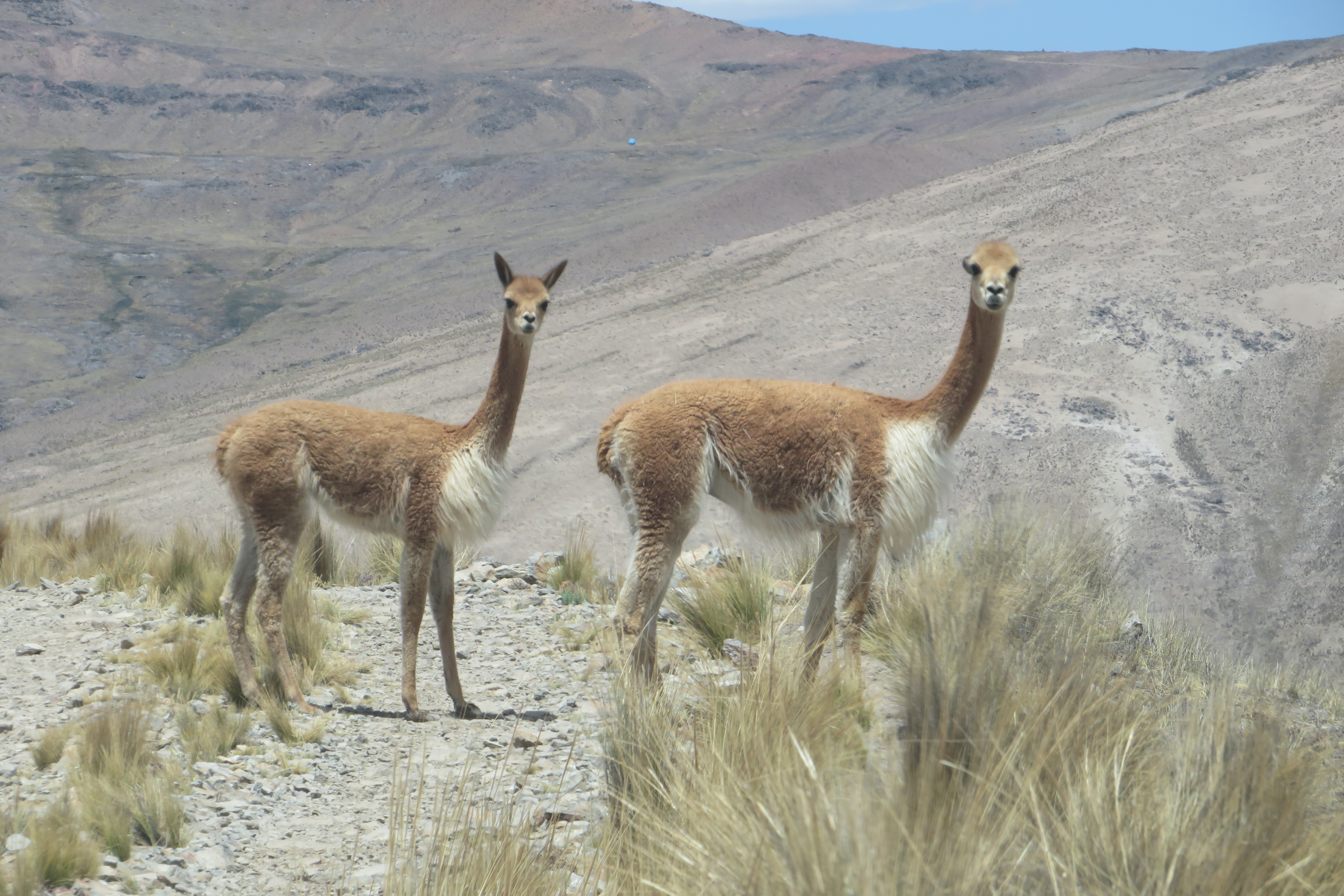
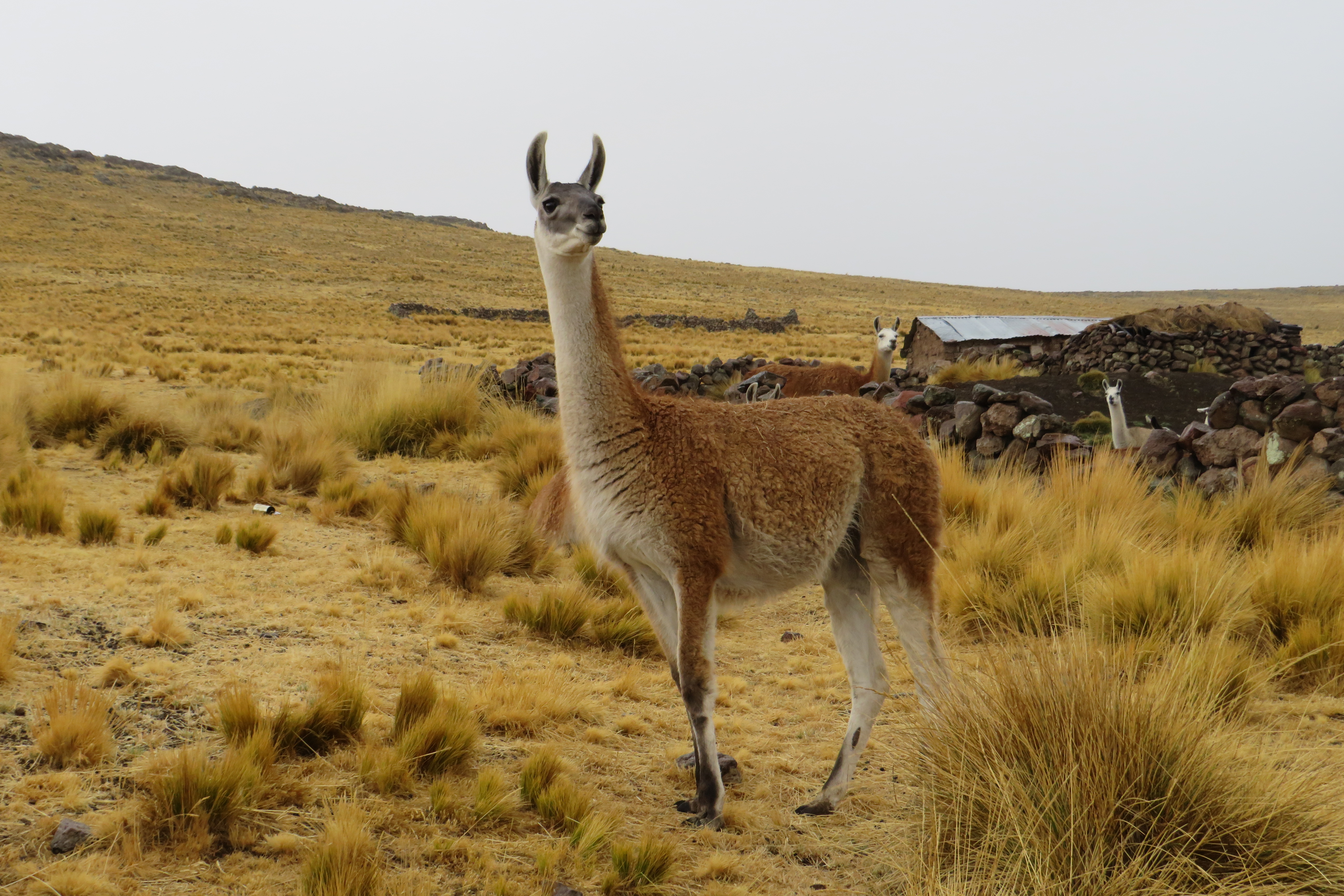
Above: a couple of tetchy vicuñas.  Below: a llama.  Even though you can be standing quite close to them, they have perfected the art of (seemingly) not paying you any attention while they gaze off into the distance.

Below: a rain storm bringing another dumping of snow and ice somewhere.

Workshop in Paquenta

03 Nov 2023

Hot on the heels of the last ETE (Educación Teológica por Extensión) workshop in Chivay, the weekend of 13-15 October saw us in the village of Paquenta.  Where is this?  Well... it's out the back of Cota Cota, which is out the back of Tisco, which is out the back of Chivay, which is out the back of Arequipa.  You get the drift.  On the way there was a fair bit of wet weather blowing through, and we even copped a bit of snow:

This has to be the most remote location I've been to with René and Roberto: a gathering of houses and huts in shallow valley.  There are quite a few buildings in the village, but most of them aren't occupied.  Only a few families live there; about 5 of these people are ETE students.

Below: A frosty Saturday morning in Paquenta.  The peaks on the horizon rise to over 5000m.

René got the Saturday workshop up and running with the 5 Paquenta students and another 6 or so joining from Cota Cota and Tisco.  As a group we worked our way through a text from the Gospel of Matthew, helping the students to analyse the text, explore its context, and figure out how you'd prepare a teaching session based on it.

For me it's been a real eye-opener to see how René patiently, clearly, and methodically explains things.  Now this is not because the students are dumb; far from it, there are some very sharp tools in this shed!  But most people in these areas have very little (if any) formal education, and the many benefits schooling can bring.  This means there is very little you can assume when taking a lot of these classes.  So, while you and I might find a given method for analysing a text fairly straight forward, well... can you try to imagine how you'd go if you'd never done this before?

One thing you can assume, though, is that everyone knows how to play football.  Paquenta FC was quickly formed and the game kicked off:

As you can see not much quarter was given, and Peruvian footy passions were well-stirred.  I was happy to be team photographer and marvel (as usual) at the fitness of these people who can slam a ball around at 4400m for 45 minutes and not really get that puffed.

On the way back to Arequipa I had the usual stimulating conversation with René and Roberto about the challenges of delivering Christian education in the rural backblocks.  It was a strange consolation to realise that, even though Roberto and René have been doing the ETE gig for decades now, and they have all the advantages that come with being a part of the culture they're working in, at the same time they keenly feel the challenges too.  As an outsider with a different perspective, but with the same desire to help train competent and effective teachers of the Bible in these churches, these guys are more than happy to toss stuff around and let this greenhorn join in the action.

As we were stumping our way across the pitch black plaza to our sleeping quarters late on Saturday evening, a couple of the brothers cautioned me not to trip across a huge rock which is still embedded in the plaza surface.  You can see where it's situated, right in front of the flag pole:

I haven't yet asked anyone about this, but it's got me wondering: Why, in an otherwise flat, clear and level plaza, would you leave a rock like this sitting there?  Maybe it was too big to move... but no, moving rocks is one thing the locals are very good at, and access to heavy machinery isn't that far away.

So what is it doing there?  My suspicion is that it's a huaca -- a sort of sacred object in the Quechua scheme of things that is/ was believed to have supernatural properties.  One thing the Spanish were keen to do when they colonised Peru was obliterate all these remnants of the Inca religion.  I've read how the Catholic establishment was frustrated by the fact that while many of these sacred objects still existed in plain sight, only the locals knew which rocks were huacas and they weren't about to let the Spaniards in on the secret!

On the way back home, as we chatted about ETE training and the associated issues, the landscape of the altiplano did its usual breathtaking thing...

Above: a couple of tetchy vicuñas.  Below: a llama.  Even though you can be standing quite close to them, they have perfected the art of (seemingly) not paying you any attention while they gaze off into the distance.

Below: a rain storm bringing another dumping of snow and ice somewhere.

Workshop in Paquenta

03 Nov 2023

Hot on the heels of the last ETE (Educación Teológica por Extensión) workshop in Chivay, the weekend of 13-15 October saw us in the village of Paquenta.  Where is this?  Well... it's out the back of Cota Cota, which is out the back of Tisco, which is out the back of Chivay, which is out the back of Arequipa.  You get the drift.  On the way there was a fair bit of wet weather blowing through, and we even copped a bit of snow:

This has to be the most remote location I've been to with René and Roberto: a gathering of houses and huts in shallow valley.  There are quite a few buildings in the village, but most of them aren't occupied.  Only a few families live there; about 5 of these people are ETE students.

Below: A frosty Saturday morning in Paquenta.  The peaks on the horizon rise to over 5000m.

René got the Saturday workshop up and running with the 5 Paquenta students and another 6 or so joining from Cota Cota and Tisco.  As a group we worked our way through a text from the Gospel of Matthew, helping the students to analyse the text, explore its context, and figure out how you'd prepare a teaching session based on it.

For me it's been a real eye-opener to see how René patiently, clearly, and methodically explains things.  Now this is not because the students are dumb; far from it, there are some very sharp tools in this shed!  But most people in these areas have very little (if any) formal education, and the many benefits schooling can bring.  This means there is very little you can assume when taking a lot of these classes.  So, while you and I might find a given method for analysing a text fairly straight forward, well... can you try to imagine how you'd go if you'd never done this before?

One thing you can assume, though, is that everyone knows how to play football.  Paquenta FC was quickly formed and the game kicked off:

As you can see not much quarter was given, and Peruvian footy passions were well-stirred.  I was happy to be team photographer and marvel (as usual) at the fitness of these people who can slam a ball around at 4400m for 45 minutes and not really get that puffed.

On the way back to Arequipa I had the usual stimulating conversation with René and Roberto about the challenges of delivering Christian education in the rural backblocks.  It was a strange consolation to realise that, even though Roberto and René have been doing the ETE gig for decades now, and they have all the advantages that come with being a part of the culture they're working in, at the same time they keenly feel the challenges too.  As an outsider with a different perspective, but with the same desire to help train competent and effective teachers of the Bible in these churches, these guys are more than happy to toss stuff around and let this greenhorn join in the action.

As we were stumping our way across the pitch black plaza to our sleeping quarters late on Saturday evening, a couple of the brothers cautioned me not to trip across a huge rock which is still embedded in the plaza surface.  You can see where it's situated, right in front of the flag pole:

I haven't yet asked anyone about this, but it's got me wondering: Why, in an otherwise flat, clear and level plaza, would you leave a rock like this sitting there?  Maybe it was too big to move... but no, moving rocks is one thing the locals are very good at, and access to heavy machinery isn't that far away.

So what is it doing there?  My suspicion is that it's a huaca -- a sort of sacred object in the Quechua scheme of things that is/ was believed to have supernatural properties.  One thing the Spanish were keen to do when they colonised Peru was obliterate all these remnants of the Inca religion.  I've read how the Catholic establishment was frustrated by the fact that while many of these sacred objects still existed in plain sight, only the locals knew which rocks were huacas and they weren't about to let the Spaniards in on the secret!

On the way back home, as we chatted about ETE training and the associated issues, the landscape of the altiplano did its usual breathtaking thing...

Above: a couple of tetchy vicuñas.  Below: a llama.  Even though you can be standing quite close to them, they have perfected the art of (seemingly) not paying you any attention while they gaze off into the distance.

Below: a rain storm bringing another dumping of snow and ice somewhere.

Workshop in Paquenta

03 Nov 2023

Hot on the heels of the last ETE (Educación Teológica por Extensión) workshop in Chivay, the weekend of 13-15 October saw us in the village of Paquenta.  Where is this?  Well... it's out the back of Cota Cota, which is out the back of Tisco, which is out the back of Chivay, which is out the back of Arequipa.  You get the drift.  On the way there was a fair bit of wet weather blowing through, and we even copped a bit of snow:

This has to be the most remote location I've been to with René and Roberto: a gathering of houses and huts in shallow valley.  There are quite a few buildings in the village, but most of them aren't occupied.  Only a few families live there; about 5 of these people are ETE students.

Below: A frosty Saturday morning in Paquenta.  The peaks on the horizon rise to over 5000m.

René got the Saturday workshop up and running with the 5 Paquenta students and another 6 or so joining from Cota Cota and Tisco.  As a group we worked our way through a text from the Gospel of Matthew, helping the students to analyse the text, explore its context, and figure out how you'd prepare a teaching session based on it.

For me it's been a real eye-opener to see how René patiently, clearly, and methodically explains things.  Now this is not because the students are dumb; far from it, there are some very sharp tools in this shed!  But most people in these areas have very little (if any) formal education, and the many benefits schooling can bring.  This means there is very little you can assume when taking a lot of these classes.  So, while you and I might find a given method for analysing a text fairly straight forward, well... can you try to imagine how you'd go if you'd never done this before?

One thing you can assume, though, is that everyone knows how to play football.  Paquenta FC was quickly formed and the game kicked off:

As you can see not much quarter was given, and Peruvian footy passions were well-stirred.  I was happy to be team photographer and marvel (as usual) at the fitness of these people who can slam a ball around at 4400m for 45 minutes and not really get that puffed.

On the way back to Arequipa I had the usual stimulating conversation with René and Roberto about the challenges of delivering Christian education in the rural backblocks.  It was a strange consolation to realise that, even though Roberto and René have been doing the ETE gig for decades now, and they have all the advantages that come with being a part of the culture they're working in, at the same time they keenly feel the challenges too.  As an outsider with a different perspective, but with the same desire to help train competent and effective teachers of the Bible in these churches, these guys are more than happy to toss stuff around and let this greenhorn join in the action.

As we were stumping our way across the pitch black plaza to our sleeping quarters late on Saturday evening, a couple of the brothers cautioned me not to trip across a huge rock which is still embedded in the plaza surface.  You can see where it's situated, right in front of the flag pole:

I haven't yet asked anyone about this, but it's got me wondering: Why, in an otherwise flat, clear and level plaza, would you leave a rock like this sitting there?  Maybe it was too big to move... but no, moving rocks is one thing the locals are very good at, and access to heavy machinery isn't that far away.

So what is it doing there?  My suspicion is that it's a huaca -- a sort of sacred object in the Quechua scheme of things that is/ was believed to have supernatural properties.  One thing the Spanish were keen to do when they colonised Peru was obliterate all these remnants of the Inca religion.  I've read how the Catholic establishment was frustrated by the fact that while many of these sacred objects still existed in plain sight, only the locals knew which rocks were huacas and they weren't about to let the Spaniards in on the secret!

On the way back home, as we chatted about ETE training and the associated issues, the landscape of the altiplano did its usual breathtaking thing...

Above: a couple of tetchy vicuñas.  Below: a llama.  Even though you can be standing quite close to them, they have perfected the art of (seemingly) not paying you any attention while they gaze off into the distance.

Below: a rain storm bringing another dumping of snow and ice somewhere.

Workshop in Paquenta

03 Nov 2023

Hot on the heels of the last ETE (Educación Teológica por Extensión) workshop in Chivay, the weekend of 13-15 October saw us in the village of Paquenta.  Where is this?  Well... it's out the back of Cota Cota, which is out the back of Tisco, which is out the back of Chivay, which is out the back of Arequipa.  You get the drift.  On the way there was a fair bit of wet weather blowing through, and we even copped a bit of snow:

This has to be the most remote location I've been to with René and Roberto: a gathering of houses and huts in shallow valley.  There are quite a few buildings in the village, but most of them aren't occupied.  Only a few families live there; about 5 of these people are ETE students.

Below: A frosty Saturday morning in Paquenta.  The peaks on the horizon rise to over 5000m.

René got the Saturday workshop up and running with the 5 Paquenta students and another 6 or so joining from Cota Cota and Tisco.  As a group we worked our way through a text from the Gospel of Matthew, helping the students to analyse the text, explore its context, and figure out how you'd prepare a teaching session based on it.

For me it's been a real eye-opener to see how René patiently, clearly, and methodically explains things.  Now this is not because the students are dumb; far from it, there are some very sharp tools in this shed!  But most people in these areas have very little (if any) formal education, and the many benefits schooling can bring.  This means there is very little you can assume when taking a lot of these classes.  So, while you and I might find a given method for analysing a text fairly straight forward, well... can you try to imagine how you'd go if you'd never done this before?

One thing you can assume, though, is that everyone knows how to play football.  Paquenta FC was quickly formed and the game kicked off:

As you can see not much quarter was given, and Peruvian footy passions were well-stirred.  I was happy to be team photographer and marvel (as usual) at the fitness of these people who can slam a ball around at 4400m for 45 minutes and not really get that puffed.

On the way back to Arequipa I had the usual stimulating conversation with René and Roberto about the challenges of delivering Christian education in the rural backblocks.  It was a strange consolation to realise that, even though Roberto and René have been doing the ETE gig for decades now, and they have all the advantages that come with being a part of the culture they're working in, at the same time they keenly feel the challenges too.  As an outsider with a different perspective, but with the same desire to help train competent and effective teachers of the Bible in these churches, these guys are more than happy to toss stuff around and let this greenhorn join in the action.

As we were stumping our way across the pitch black plaza to our sleeping quarters late on Saturday evening, a couple of the brothers cautioned me not to trip across a huge rock which is still embedded in the plaza surface.  You can see where it's situated, right in front of the flag pole:

I haven't yet asked anyone about this, but it's got me wondering: Why, in an otherwise flat, clear and level plaza, would you leave a rock like this sitting there?  Maybe it was too big to move... but no, moving rocks is one thing the locals are very good at, and access to heavy machinery isn't that far away.

So what is it doing there?  My suspicion is that it's a huaca -- a sort of sacred object in the Quechua scheme of things that is/ was believed to have supernatural properties.  One thing the Spanish were keen to do when they colonised Peru was obliterate all these remnants of the Inca religion.  I've read how the Catholic establishment was frustrated by the fact that while many of these sacred objects still existed in plain sight, only the locals knew which rocks were huacas and they weren't about to let the Spaniards in on the secret!

On the way back home, as we chatted about ETE training and the associated issues, the landscape of the altiplano did its usual breathtaking thing...

Above: a couple of tetchy vicuñas.  Below: a llama.  Even though you can be standing quite close to them, they have perfected the art of (seemingly) not paying you any attention while they gaze off into the distance.

Below: a rain storm bringing another dumping of snow and ice somewhere.
Workshop in Paquenta

03 Nov 2023

Hot on the heels of the last ETE (Educación Teológica por Extensión) workshop in Chivay, the weekend of 13-15 October saw us in the village of Paquenta.  Where is this?  Well... it's out the back of Cota Cota, which is out the back of Tisco, which is out the back of Chivay, which is out the back of Arequipa.  You get the drift.  On the way there was a fair bit of wet weather blowing through, and we even copped a bit of snow:

This has to be the most remote location I've been to with René and Roberto: a gathering of houses and huts in shallow valley.  There are quite a few buildings in the village, but most of them aren't occupied.  Only a few families live there; about 5 of these people are ETE students.

Below: A frosty Saturday morning in Paquenta.  The peaks on the horizon rise to over 5000m.

René got the Saturday workshop up and running with the 5 Paquenta students and another 6 or so joining from Cota Cota and Tisco.  As a group we worked our way through a text from the Gospel of Matthew, helping the students to analyse the text, explore its context, and figure out how you'd prepare a teaching session based on it.

For me it's been a real eye-opener to see how René patiently, clearly, and methodically explains things.  Now this is not because the students are dumb; far from it, there are some very sharp tools in this shed!  But most people in these areas have very little (if any) formal education, and the many benefits schooling can bring.  This means there is very little you can assume when taking a lot of these classes.  So, while you and I might find a given method for analysing a text fairly straight forward, well... can you try to imagine how you'd go if you'd never done this before?

One thing you can assume, though, is that everyone knows how to play football.  Paquenta FC was quickly formed and the game kicked off:

As you can see not much quarter was given, and Peruvian footy passions were well-stirred.  I was happy to be team photographer and marvel (as usual) at the fitness of these people who can slam a ball around at 4400m for 45 minutes and not really get that puffed.

On the way back to Arequipa I had the usual stimulating conversation with René and Roberto about the challenges of delivering Christian education in the rural backblocks.  It was a strange consolation to realise that, even though Roberto and René have been doing the ETE gig for decades now, and they have all the advantages that come with being a part of the culture they're working in, at the same time they keenly feel the challenges too.  As an outsider with a different perspective, but with the same desire to help train competent and effective teachers of the Bible in these churches, these guys are more than happy to toss stuff around and let this greenhorn join in the action.

As we were stumping our way across the pitch black plaza to our sleeping quarters late on Saturday evening, a couple of the brothers cautioned me not to trip across a huge rock which is still embedded in the plaza surface.  You can see where it's situated, right in front of the flag pole:

I haven't yet asked anyone about this, but it's got me wondering: Why, in an otherwise flat, clear and level plaza, would you leave a rock like this sitting there?  Maybe it was too big to move... but no, moving rocks is one thing the locals are very good at, and access to heavy machinery isn't that far away.

So what is it doing there?  My suspicion is that it's a huaca -- a sort of sacred object in the Quechua scheme of things that is/ was believed to have supernatural properties.  One thing the Spanish were keen to do when they colonised Peru was obliterate all these remnants of the Inca religion.  I've read how the Catholic establishment was frustrated by the fact that while many of these sacred objects still existed in plain sight, only the locals knew which rocks were huacas and they weren't about to let the Spaniards in on the secret!

On the way back home, as we chatted about ETE training and the associated issues, the landscape of the altiplano did its usual breathtaking thing...

Above: a couple of tetchy vicuñas.  Below: a llama.  Even though you can be standing quite close to them, they have perfected the art of (seemingly) not paying you any attention while they gaze off into the distance.

Below: a rain storm bringing another dumping of snow and ice somewhere.
Pages

Subscribe to RSS - blogs